


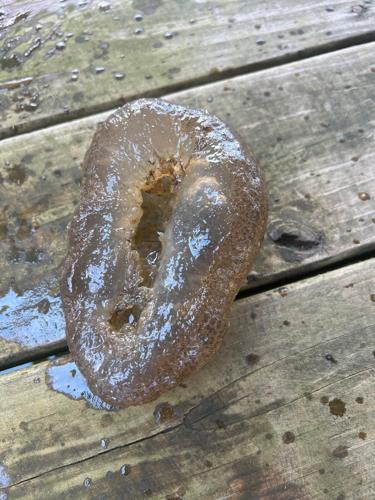
Mysterious blobs are taking over Lake of the Ozarks, and every summer it gets boaters buzzing.
This year, it was Gerald Johnson's turn to experience the "what is this this" bewilderment. He posted on a Lake Ozarks Facebook group, wondering what this was...
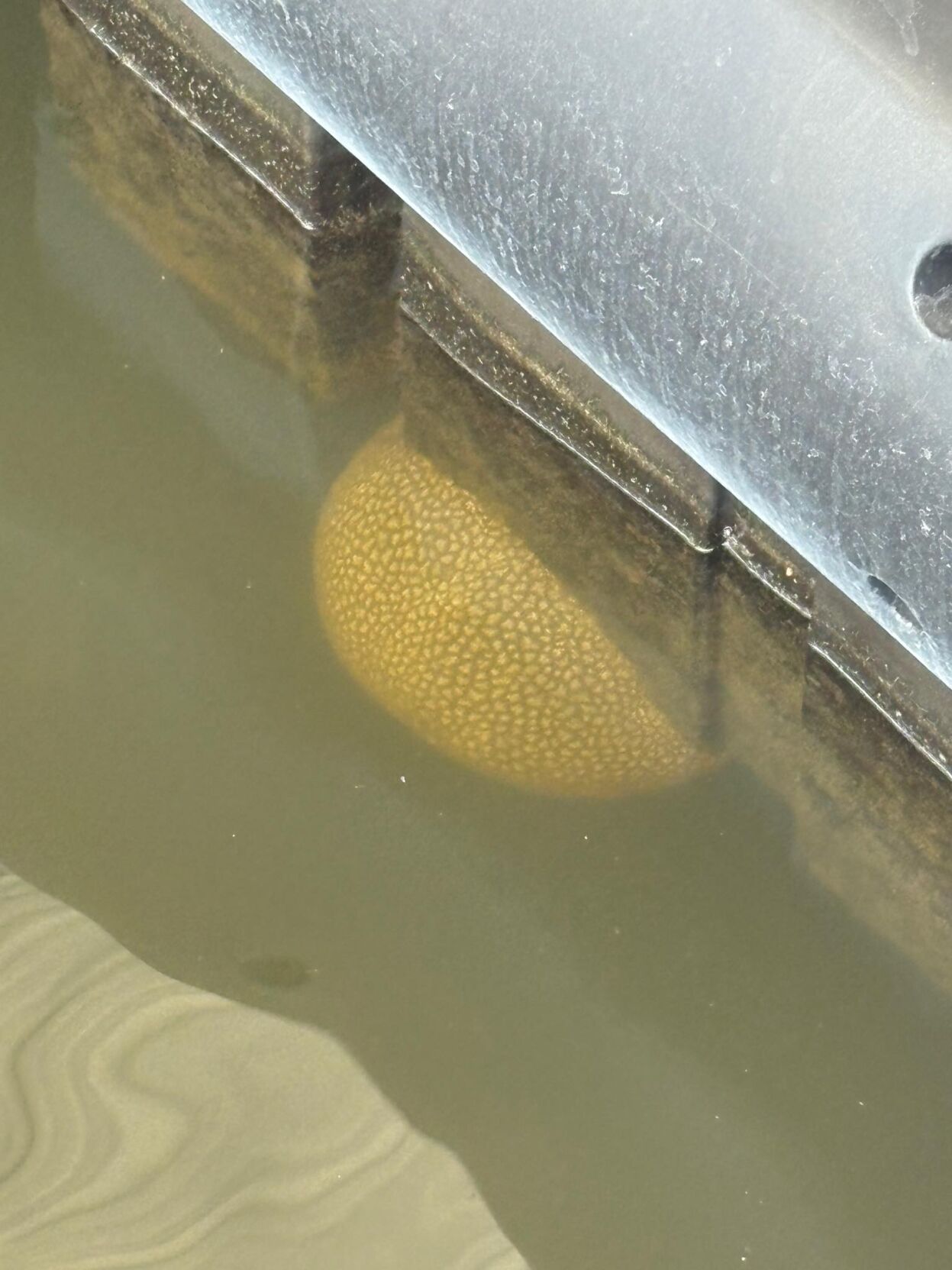
"Scrape it off or leave it?" he asked Facebook. His brand new dock at the 25 Mile Marker had a hanging friend that creeped him out. Johnson said it made him want to swim in the pool instead.

But don't worry, these blobs are nothing harmful or scary, just funky looking.
So, what are these odd creatures? It's a common question this time of year, and it has an easy answer: bryozoans.
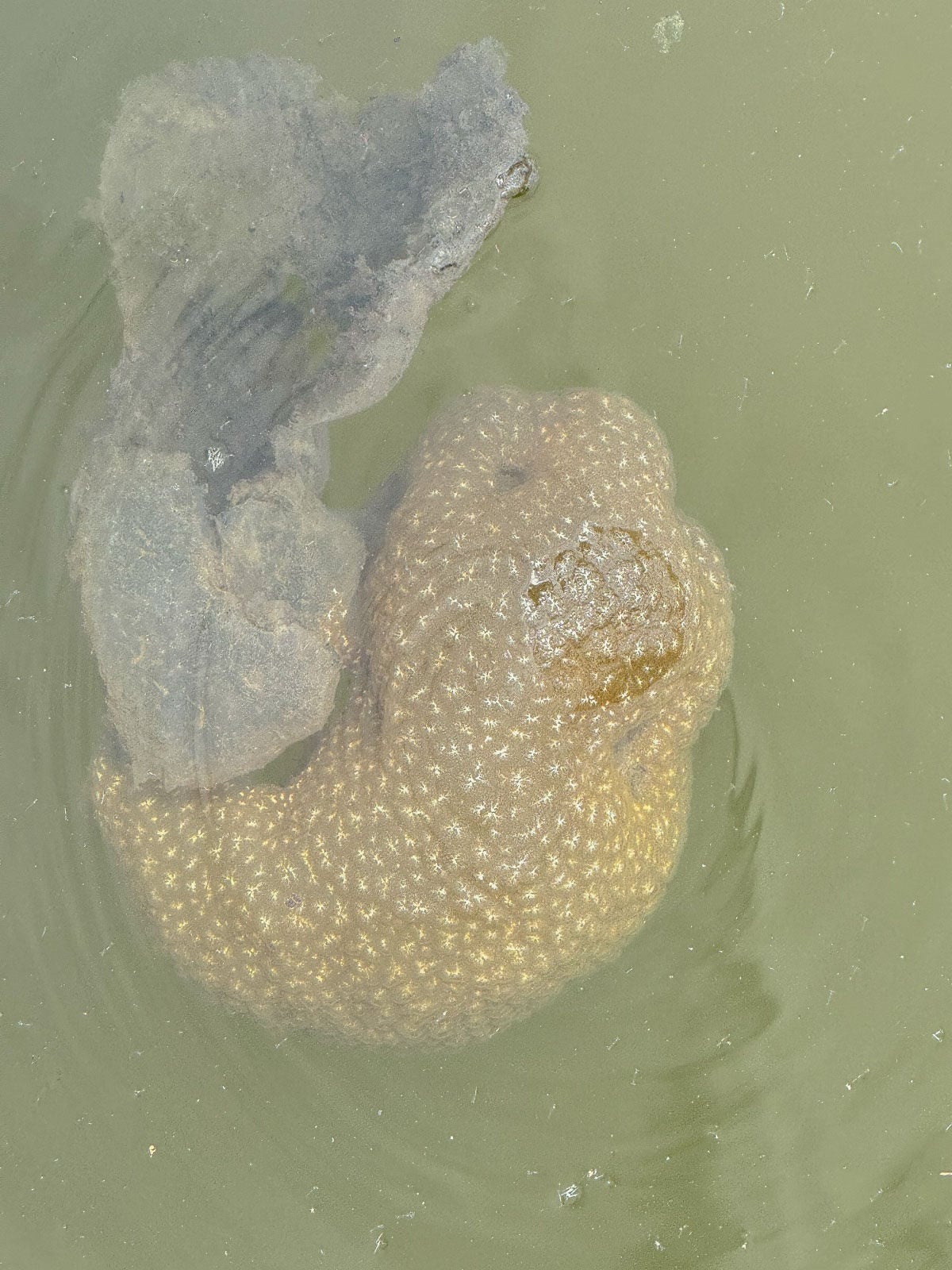
According to the Missouri Department of Conservation (MDC), bryozoans are “moss animals” that live in colonies and build exoskeletons, similar to corals. “The species that creates the round, jellylike masses is Pectinatella magnifica.” So the blob you see is an entire colony of tiny animals. Sometimes they'll be floating freely; frequently, the colonies are anchored to something.
Bryozoans cause a buzz on Lake area social media pages every year, late in the summer, as their large colonies bump up against boats or are found growing on something submerged in the water near the dock. They're not jellyfish, although Lake of the Ozarks has those, too!
But they're tiny compared to the average bryozoan colony.

“[Bryozoan] Colonies are usually no more than 2-4 inches long or high, but some can be 12 inches or wider,” MDC says. Colonies grow throughout the summer and reach their largest size in late summer or fall, and then die off in the winter.
Within a colony, individual bryozoans (known as "zooids," a term that refers to a single animal that's part of a colonial animal) can be seen up close with the use of a magnifying glass. Truly ancient creatures, bryozoan fossils are commonly found throughout the region.

Why are bryozoans a good sign?
• They clean the water. MDC explains that bryozoans, as filter feeders, are cleaning the water as they float along.
• They like clean water. The presence of bryozoans usually indicates the water around them is clean, too, MDC noted.
The bryozoans need water to survive. So if you see a colony out of the water, give them a hand back in. Sometimes the colonies look round and intact; other times, they're more visibly broken apart. But a broken colony doesn't mean a dead one. The Monterey Bay Aquarium writes: "If a piece of a bryozoan colony breaks off, the piece can continue to grow and form a new colony."

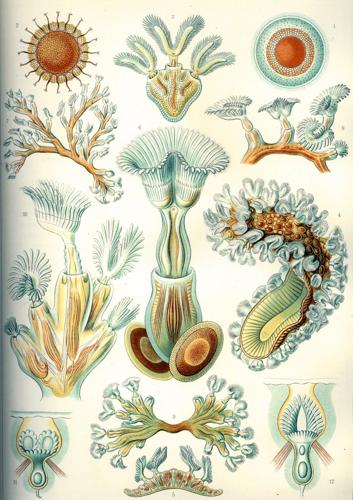
by Ernst Haeckel - Kunstformen der Natur (1904)
Bryozoan Usefulness
Bryozoans aren't known to cause any major problems other than perhaps occasionally clogging a pipe. They can be good for the water, though, and they may even have medicinal uses.

The U.S. Geological Survey, in its article on Bryzoans, cites researcher T.S. Wood, who points to the water-cleansing qualities of Bryozoans. "Pectinatella magnifica can increase water clarity by removing large quantities of suspended material from the water, including diatoms, suspended algae, and inorganic clay/silt. Over time, the clearer waters may promote algal and macrophytic growth that can restructure the ecosystem."
Medicinally, Bryozoans produce a group of chemicals called bryostatins, which one study showed had significant positive effects on the brains of Alzheimer's patients. Bryostatins are still being studied, but it could be that someday these floating blobs could help humans far beyond their humble appearance suggests.


