


The Bagnell Dam Strip is one of the most nostalgic places at the Lake of the Ozarks. Countless people cherish memories of the old Strip: most remember a special summer vacation, but for others, the Strip recalls the glory days of entrepreneurial success. The Strip is now experiencing something of a revival, as old buildings are torn down and new investors imagining the area for a new generation. But with every building that disappears, two siblings who grew up here say a little piece of history fades further from reach.
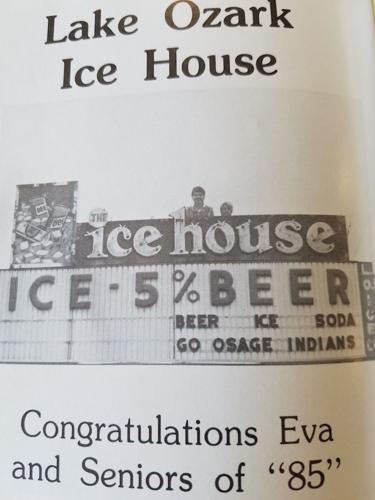
Doug Fields and Eva Cannon especially feel that way about the Ice House. It’s one man’s derelict building. The land under it is another man’s opportunity. But for Doug and Eva, it’s home, a place where they grew to adulthood, a place evoking good memories.
Doug Fields contacted LakeExpo in the interest of setting the record straight. He wanted people to know what the Ice House was to Lake Ozark’s past and what the place meant to its present. His sister, Eva Cannon, agreed to help by adding photos and her memories so other Lake Ozark residents can remember, too.
Some need no help remembering. Eva offered an example about the tall figure—known as “Chief Bagnell” or “Injun Joe”—who stood guard for decades at Two Bit Town. When he disappeared from the Bagnell Dam Strip, those who had fond memories of Chief Bagnell were initially worried. Similarly, when word spread that the Ice House would come down, one of Eva’s friends said simply, “Progress sucks.”
The Chief is back, restored and still standing sentry near the top of the Bagnell Dam Strip. His return and the changes being made up and down the Strip make those who grew up on it hope that some of what the Strip was will be again. To them, the Strip was charmed: a place where kids could play, safe in the knowledge that any adult nearby would recognize them and guide them.
The Ice House was bought and expanded by Orlin and Evelyn Nelson. In 1957, they joined Evelyn’s parents, Glen and Florence Smith, and her Great-Uncle Chuck as business owners on the Strip. Those relatives had moved to Lake of the Ozarks about five years earlier. Evelyn’s parents owned Smith’s Café and her uncle owned Smitty’s Bait and Tackle. He even raised the fish sold as bait in 29 ponds dug into Lake Ozark ground. Orlin asked Evelyn’s kinfolk to keep an eye out for a good business he could buy, and that business was the Ice House.
At first, the Ice House provided ice to Lake Ozark, before the city was even incorporated. It was a fishing destination, “an easier and quieter life,” according to Evelyn Nelson in an interview for a Lake Times article, “Evelyn Nelson’s Philosophy--‘Never Say Never!’” (25 Dec 1985: 7A).
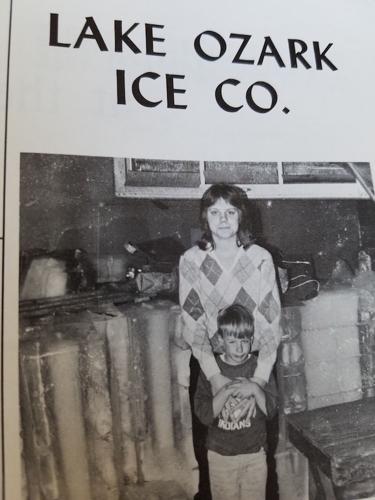
One load of ice weighed 14,700 pounds and came by truck from Jefferson City. Once at the lake, 49 blocks, each about 300 pounds, were cut into 25 and 50-pound blocks, then ground for 25, 10, or 5 pound bags. The 25-pound ones originally sold for 25 cents.
Little Eva was too small for those. She was given the task of filling and delivering even smaller ones, and she was paid 10 cents per bag, but by the time she’d grown old enough, the bags cost $1 each. Big Brother Doug was the one helping his grandparents chop and move around those big blocks of ice, and he continued to help until his grandmother Evelyn closed the Ice House in 1985.
Eva Covington Cannon saved her dimes to play Ski Ball on the Strip. It was her absolute favorite pastime. Later, she worked at the batting cages when Two Bit Town was still thriving. She’ll feel a bit sad and nostalgic when those cages come down, too.
In those days, local law enforcers were from Miller County or the Westside of the lake. Fires were fought by volunteers, and they worked well together. They staged frequent fireworks displays, and once, fought a fire that burned the Ice House, a meat packing plant, and a bait shop. No lives were lost, and the fire was contained before other businesses were destroyed.
Still, in the mid-1960s, trouble found its way to the Strip. Orlin Nelson slept in the back room of the Ice House many nights in order to protect his property. He and other concerned citizens decided the time had come for law and a police department. They held meetings, and according to Doug Fields, some of those grew out of Lake Ozark’s first community center, the Ice House. Doug remembers business owners, town fathers, professionals, and blue collar workers mingling to share the latest news and plans for the future. He has committed to memory a long list of names for people who were weekly or even daily regulars at the Ice House. They’d stop in for a beer, sit on unopened cases of beer, buy a snack, and exchange ideas as well as neighborly gossip.
The years have not been kind to the Strip, in Fields’ opinion. Now living in Florida, he returns to the Lake Ozark area at least three times each year. He regrets the loss of some family venues and hopes the future of the Strip includes plans for family entertainment.
What Doug Fields remembers is a time when the Bagnell Dam Strip was a village where adults raised children, not just their own. His great-grandparents, grandparents, aunts, uncles, and parents were all in businesses that built the area, and the Ice House was at the heart of Strip business because that’s where people met—not just fishermen visiting, but people who had put down roots to make a life on Lake Ozark ground.
When Doug’s grandfather, Orlin Nelson, passed away, the Ice House stopped making ice. His wife, Evelyn Nelson, who would go on to become a Lake Ozark Alderwoman, continued the business, but instead of ice, the Ice House offered pinball and pool, beer and snacks. Those blocks of ice were too much for her to manage even with the help of a strong grandson.
In 1985, on Memorial Day, when the summer season opened in earnest, the business closed for good. Doug drank the last beer ever served from the Ice House, and he drank it at 4:00 a.m. sitting on the roof of the place that for the community was a central meeting place, but for him, was a second home.


