An estimated 5 million people will visit Lake of the Ozarks this year. And everyone knows a trip to the Best Recreational Lake In The Country doesn’t count unless you’ve eaten frozen custard, taken a boat ride, and hopped into the water.
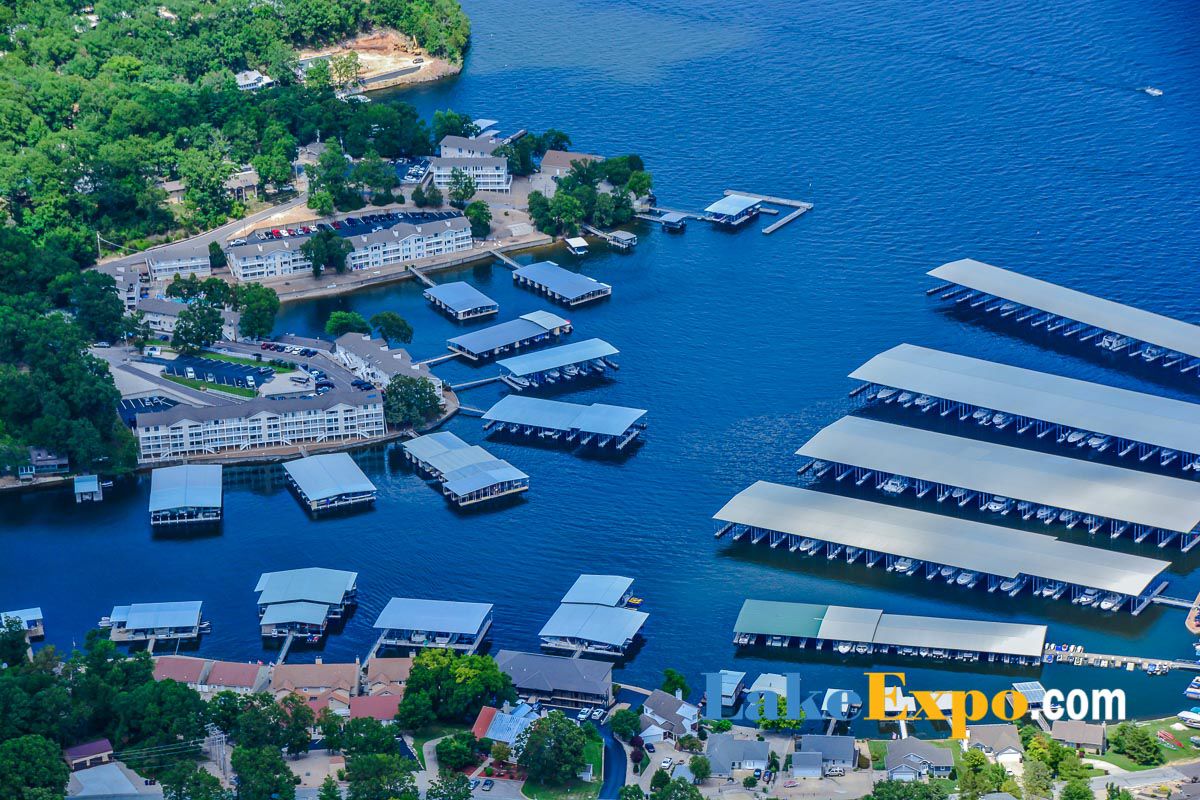
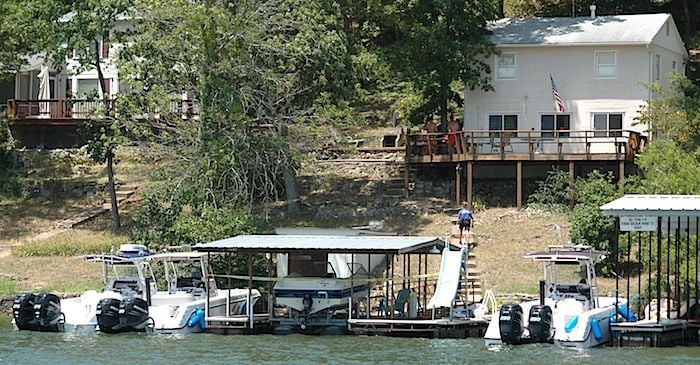
A proposed law in 2017 would have nearly banned that last part: SB 297, known as the “Alexandra and Brayden Anderson Electric Shock Drowning Prevention Act,” prohibiting swimming near docks. That idea was a nonstarter, on a lake with an estimated 25,000+ docks and where most vacationers see dockside swimming as a nice way to cool off, relax, and play.
A Rough Start
Missouri State Senator Jason Hummel, who sponsored the bill, caught plenty of grief for it last year, and he admits, “The bill had lots of problems.” It saw plenty of changes throughout the 2017 session, but never came close to becoming a law. Hummel says that bill was a starting point that he picked up, verbatim, from former State Rep. Caleb Jones, who had filed the bill in a previous session on behalf of the Anderson family, whose children Alexandra and Brayden were fatally electrocuted while swimming near their dock in 2012. It was determined that a lack of grounding protection on the dock had caused the tragedy, and though such incidents are rare at Lake of the Ozarks, Hummel emphasized dock electric safety still needs to be improved.
LakeExpo.com photo
For the 2018 session, Hummel has filed a new version of the bill, this time without the swimming ban. His SB 622 would require:
1. All docks with an electric connection to have a proper electrical grounding and bonding system, and a working shoreline-to-dock ground fault circuit interrupter
2. All newly constructed docks with electricity, all existing dock modifications with electricity, and all changes in ownership of a dock with electricity to be inspected, beginning Sept. 15, 2018
3. Dock permitting authorities (Ameren, at Lake of the Ozarks) to mail every dock permit holder an annual notice of inspection requirements
4. Anyone who finds an immediate safety hazard or unsafe condition to contact law enforcement or the local fire protection district, which would be empowered to shut off the dock power if the conditions were found to be unsafe. The dock could not be re-energized until passing inspection.
5. All primary Water Patrol boats to be equipped with a defibrillator and staffed with at least one person trained to use it
6. All water patrol officers to be trained in rescuing victims of electrocution injuries and in using defibrillator devices on them
(The House companion bill to SB 622 is HB 1682)

No Law Needed?
But Hummel says his conversations with fire districts (who are the dock inspection authority) and Ameren have been so encouraging, he’s not sure the bill will be needed. Instead, he calls the bill a “placeholder,” holding out hope that dock inspectors (fire districts) and dock permitters (Ameren, at Lake of the Ozarks) can work together to improve safety.
Hummel was previously an electrician by trade, and he knows the issue is a complicated one. At Lake of the Ozarks, the shoreline spans myriad municipalities, counties and fire districts. He points out that in 2005, after multiple electrocution incidents created public pressure for someone to take responsibility for dock inspections, the fire districts took the job. Now they have the enormous task of inspecting docks when they are newly built, resold, or modified.
Those inspections have made a dramatic improvement in dock safety.
But some docks are not within a fire district, so there’s no inspection authority there. Hummel says Ameren typically issues a permit for those docks, despite there being no fire district to inspect them.
Hummel says he has discussed the issue with state representatives Rocky Miller and Diane Franklin, who represent most of the Lake area. He has also been meeting with many of the fire districts at Lake of the Ozarks to get their input on how to improve dock electric safety.
Fire districts, he said, would like two things:
1) Uniform safety/inspection standards across the Lake
2) Additional training for inspectors
“They have been proactive in this,” he said of the fire districts.
Osage Beach Fire Protection District Division Chief Ed Nicholson explained the current inspection and permitting process, emphasizing, “The fire districts and Ameren have always worked together on this dock inspection program.” When a dock owner (or aspiring dock owner) wants to build a new dock or remodel/upgrade their existing one, Ameren first points that person to their respective fire district. The district issues the person an inspection number, and then Ameren will issue the paperwork to apply for a dock permit. That process puts the dock owner’s plans on the fire district’s radar, Nicholson explained, so they can follow up with the owner and inspect the dock when the work is finished.
But the whole thing is a losing proposition for the fire districts. The inspection fee charged to the dock owner does not really cover the district’s costs of shouldering the responsibility for inspections. What’s the ideal solution? “If we had dedicated dock inspectors for the whole lake, that would make it better,” Nicholson said plainly. Whether that idea would ever gain traction is another question altogether.
Who’s Liable?
Hummel says there is no clear legislative direction or litigative precedent to determine who should be liable when a dock-related electrocution takes place.
Ameren, which owns the Lake and issues dock permits, does not want to be directly involved in the inspection process, Hummel explained, due to liability concerns. The Anderson family sued the company following the children’s deaths, but that lawsuit ultimately failed when a judge ruled Ameren was protected by a Missouri law that exempts from liability a property owner who allows the public to freely use their property.
Nicholson’s impression of the wrangling around SB 622 is that it’s an attempt to “work so that Ameren takes a little more responsibility for some of [the inspections],” specifically in areas of the Lake where there is no fire district. “Right now the uncoded areas are having no inspections, or the dock electrician is doing it, and there’s no guarantee that they’re doing it per code standard,” he said, adding, “Basically, it’s ‘Wild West’ for the electricians.”
Whether Ameren would be willing to do that is unclear.
“Ameren has never been the one that set the standards. It’s been the fire districts,” Nicholson emphasized. The districts consulted with local electricians to develop standards, he explained, and then Ameren is involved in the process of issuing dock permits.
The company declined to comment on the issue beyond a statement issued by Ameren’s Director of Hydro Operations Warren Witt. “Ameren Missouri continues to be supportive of Senator Hummel's efforts centered on safety around the lake,” Witt said. “This is extremely important to Ameren Missouri and we continue to work with dock owners and Fire Districts to increase dock safety at the lake, as well as, raise awareness about dock safety with billboards, newsletters and safety ads.”
Accidents and Education
“Some of these docks are incredibly expensive,” said Senator Hummel, who has a vacation home on Lake of the Ozarks. “A lot of them are put in with really good electrical installations.” But, he points out, despite the many quality electrical contractors at the Lake, there are also less-than-reputable businesses. In some situations, a homeowner may not know if their contractor cut corners. But even on quality installations, docks subjected to the natural wear and tear of a year on the Lake can eventually have a problem where previously there was none.
Will Ameren and local fire districts forge a way to ensure all docks at the Lake are inspected? Or will Hummel's bill gain traction in the Missouri Senate and end up legislating changes to the rules for dock electric inspections?
Either way, Mike Kenagy, Executive Director of the Lake of the Ozarks Marine Dealers Associatio (LOMDA), says personal responsibility is the most important element of dock electric safety. Some electric companies at Lake of the Ozarks offer free dock inspections, he points out. “Everybody should get their dock checked on a regular basis,” Kenagy said.
No one wants a tragedy on their dock, and Hummel emphasized, "I think the vast majority of homeowners down there are incredibly responsible people." But some are simply unaware that a faulty dock electrical connection could be catastrophic. As a result, in recent years, LOMDA and Ameren have launched public awareness campaigns, to educate dock owners and Lake vacationers about dock electric safety. Whether the push for safer docks will include a new law remains to be seen.