
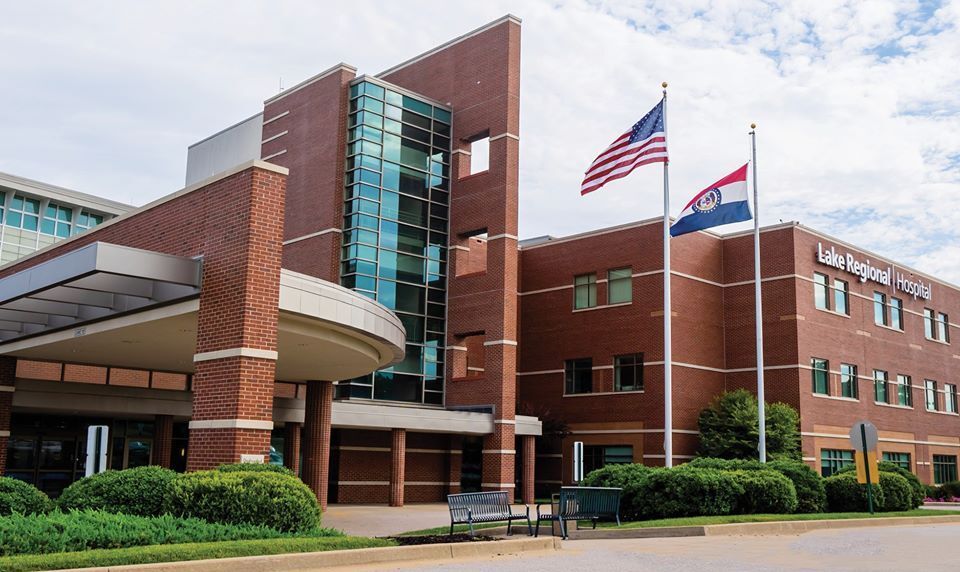
LAKE OF THE OZARKS, Mo. — Lake Regional Health System is responding to rumors the Lake's largest healthcare provider laid off staff at the onset of the Covid outbreak in the spring.
Vice President of Public Relations and Marketing Jennifer Bethurem said plainly, "That’s simply not true." She says Lake Regional "took very deliberate action" to keep all staff on the payroll. And it turns out that was a prudent move, as the Lake area along with much of the U.S. experiences an increase in Covid cases and hospitalizations. In fact, while discussion about the virus often centers on hospital bed capacity, Bethurem said if the swell in cases does cause problems at Lake Regional, it will not be due to bed shortages, but rather because the needs outweigh the capacity of the region's healthcare professionals.
"If we encounter staffing capacity issues in the future, it will not be because we did not plan for an increase in patients," she said. "It will be because the surge of patients is greater than the region’s health care system collectively can support. That’s why hospitals are asking people to take steps to avoid getting sick, like masking, social distancing and hand hygiene. Our communities need us to be here to care for other injuries and illnesses, too, not just COVID-19."
Bethurem answered several questions from LakeExpo about how Lake Regional is handling the recent increase in Covid cases, treatment procedures, and hospital capacity. Her answers are presented verbatim, below, in a Q&A format.
-
1) What is the general, or most common, treatment regimen that patients at LR are receiving? Maybe a quick explanation of treatment for more mild/moderate cases vs. more severe ones.
According to Harbaksh Sangha, M.D., critical care specialist and chief medical officer at Lake Regional Health System, the most common treatment regimen for patients at Lake Regional includes the following.
a. Milder cases are treated with Oxygen, Remdesivir, IV fluids and blood thinners
b. For more severe cases, Dexamethasone, noninvasive and invasive ventilator support, and sometimes dialysis treatment, is given
2) My understanding is that ventilators are, nationwide, being used much less-frequently, and more as a last-resort. Is that accurate about how LR is approaching patient treatment?
“Ventilator support has always been used as the last resort because it is considered invasive,” Dr. Sangha said. “There is no evidence yet that delaying ventilator use saves lives. On the other hand, not using the ventilator when indicated may jeopardize patient safety and life. So the decision on when to use the ventilator is made on a case-by-case basis.”
3) The “Inpatient Positive” number here: https://www.lakeregional.com/health-resources/covid-19/. That is counting all inpatients who have tested positive, regardless of whether they actually came to LR because of Covid symptoms, correct?
Lake Regional reports the number of inpatients who are COVID-positive on our website, along with the number people tested for COVID-19 at a Lake Regional facility, both inpatient and outpatient. Census data is updated twice weekly. (Testing data is updated less often because it requires a manual calculation.)
Inpatient positivity data reflects all inpatients who are positive at the time of reporting, regardless of the reason they presented to the hospital.
Some additional stats that might be helpful:
-Lake Regional Health System is currently treating 22 COVID-positive inpatients. Today’s inpatient census is 94.
-Our census of COVID-positive inpatients has been at or above 20 for the last month. We hit 30 for the first time on Nov. 17.
-On Monday, Nov. 30, tested 225 individuals (Express Care and hospital combined), the highest one-day testing count to-date.
4) How are things looking on Covid inpatients vs bed capacity at LR? My understanding is all Covid-positive patients are sequestered in a certain area (is it ICU?)… so would like some info on whether LR is close to or has recently hit capacity.
Lake Regional Health System is a 116-bed hospital. Currently, our total census is 94 inpatients; 22 inpatients are positive for COVID-19. Patients are assigned to a unit within the hospital based on acuity, or the level of care they require. All patients who require ventilators are placed in the ICU, which has 18 beds. Less-acute patients are cared for on other units using isolation protocols to ensure the safety of patients and employees.
Lake Regional has developed surge plans that would allow us to convert certain other spaces within the hospital to inpatient care. However, staffing likely would limit capacity before bed space.
Since the pandemic began, Lake Regional has anticipated the need to keep our team whole. As other hospitals laid off workers in the spring, we kept our team together. While elective procedures were on hold, some employees were reassigned to different departments, screening stations and PPE positions, but no one was laid off or furloughed. Today, we are thankful to have our workforce intact and ready to care for this community. We also continue to recruit to help manage our consistently high volumes, but nurses and therapists are in high demand nationwide.
5) Has reaching (or near) capacity resulted in LR transferring patients to other regional hospitals?
Our goal is to keep patients close to home, whenever possible. We do occasionally transfer patients based on their needs for services we do not offer or for continuity of care. During the past few weeks, all of the hospitals in our region have experienced an increase in volumes and have had fewer beds available. In some cases, we’ve been contacted by other hospitals seeking to transfer patients to Lake Regional.
6) Other than the obvious recent spike in case numbers, is LR seeing any trends in how patients are presenting?
According to Dr. Sangha, there are no new trends regarding how patients present.
7) Acknowledging that each case is patient-specific, are there any specific indicators LR physicians look for that would result in a patient being admitted vs. being sent home to recover?
“Severity of symptoms, age, comorbid conditions, social support structure, ability and access to technology to be monitored remotely, and ability to seek timely emergency help are all taken into account before deciding if the patient can go home,” Dr. Sangha said.


