
With the country deep into the Vietnam War and a family of service members who shaped him as a young man, Anthony Ewen decided to enter the United States Air Force on Nov. 10, 1970.
Tony began at Lackland Air Force Base in San Antonio before heading to Sheppard Air Force Base in Wichita Falls, Texas. There, he learned to climb towers, scale telephone poles, lay cable, and "put up or bury whatever they needed to be able to communicate."
His work became the backbone for communications between bases, nations, and families stretched across oceans. Tony was assigned to the 218th Electrical Installation Squadron (El for short), where he specialized in communications infrastructure—the hidden architecture for military might.

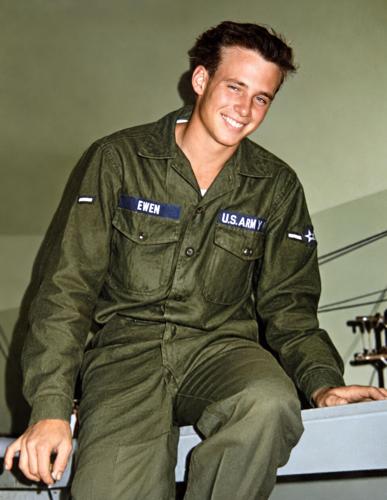
Anthony "Tony" Ewen in August 1971 at Sheppard Air Force Base in Wichita Falls, Texas.
Then the orders came that would take him far beyond Texas.
Temporary duty stints brought him to Jefferson Barracks in St. Louis, Richards-Gebaur in Kansas, Edwards Air Force Base in California, and then the Canadian Forces Station in Val-d'Or, Quebec, Canada.
In Quebec, Tony helped build a "monstrous tower" with the Canadian Air Force to pull signals from across the Atlantic. He recalled directions from a lieutenant in the shack below as he stood on the top with a single stripe on his sleeve. Together, they fine-tuned the antenna to lock in the strongest signal.
What came through that signal stayed with him, cutting him like a knife.
"I heard mothers crying and talking to their injured sons in overseas hospitals. I had to ask the lieutenant to turn off that portion of the communications," Tony said with cracking emotion. "I was having a hard enough time up there that high, and then listening to them, and hearing the moms, helpless and so far away from their sons as they were suffering, not knowing if they would live or die."
These towers connected more than troop movements or military communications—they connected families in hope, fear, and love.
That sense of service was already deeply rooted in Tony's family.
Tony's family military service spans a century. Three of his mother's brothers—Norbert, Joseph, and Alfred Kreutz—served during World War II.
"Can you imagine a mother sending all three of her boys to war?" Tony said.

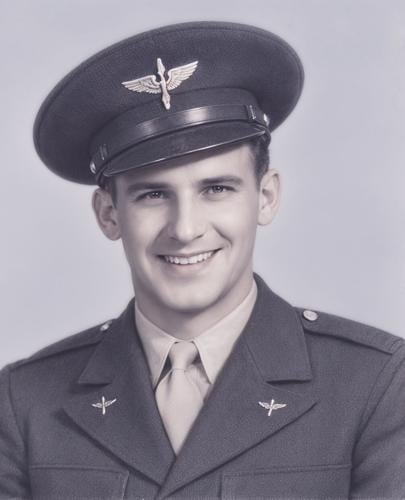
Sgt. Albert Kreutz, World War II
During WWII, Staff Sgt. Alfred Kreutz was assigned to the 535th Bomb Squadron as the B-17 "Chug-A-Lug" navigator. On Nov. 6, 1944, he was flying a mission over Hamburg, Germany, when enemy fire brought the plane down. Two members were killed while Kreutz and the other survivors were captured by Nazi forces.
As a prisoner of war at Stalag Luft IV in what is now Poland, Kreutz faced cold, overcrowded barracks and scarce food. The conditions only became more desperate as Soviet forces advanced.
Then on Feb. 6, 1945, German authorities forced approximately 6,000 prisoners, including Sgt. Kreutz, out of the camp. This evacuation became known as the "Death March," encompassing nearly 600 miles across northern Germany in brutal winter weather with little food, shelter, or medical care.
The march ended around May 2, 1945, when Allied forces liberated surviving prisoners. Sgt. Kreutz was a POW for nearly six months, enduring one of the most grueling marches of the war. His story became one more example of the service and sacrifice Tony grew up hearing about.
Kristiana Valencia, great niece of WWII POW Sgt. Alfred Kruetz, honored him at a Veteran's Day Ceremony in 2024 at Hillsboro High School in Hillsboro, Mo.
Tony's other uncles also returned home: Joseph, who landed in Normandy and marched across Europe until Germany's surrender, and Norbert, who served on a naval tender moving supplies in the South Pacific. Their youngest brother, William Kreutz, later joined the Marines and served in Korea.
The military tradition reached even further back. Tony's grandfather, Anthony Charles Ewen, was a "doughboy" in World War I who was called back when the armistice was signed. Sgt. Charles Ewen, Tony's father, continued the legacy as an Air Force crew chief on a radar squad.
And it continued after Tony. His son, Charles William Ewen, later worked on fighter jets for the Air Force in Kuwait.
"Less than 1% of the U.S. population is currently serving in the military," Tony said. He thinks every young person should spend time serving the country. "They taught me how to have confidence in myself. They taught me a strong work ethic and a respect for authority... I was successful for 42 years because of the things I learned while I was in the Air Force."
Decades later, that commitment to service has followed Tony to Lake of the Ozarks, where he and his wife, Rose, moved in 2000 and made their permanent home in 2018. Now, much of Tony's energy goes toward serving fellow veterans.

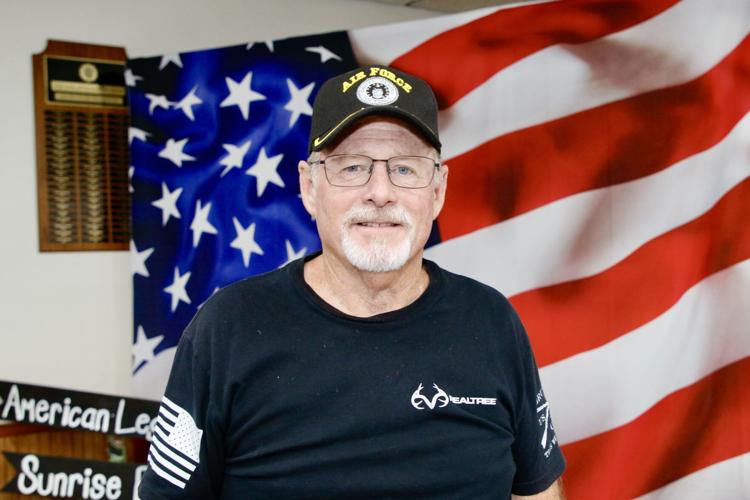
Tony Ewen, July 2026, at the American Legion Zack Wheat Post No. 624 in Sunrise Beach.
Tony is the adjutant for local American Legion Post No. 624, under the direction of Post Commander and former Brig. Gen. John Seward. He encourages everyone to spend at least one afternoon at the VA center.
"There is a high suicide rate among veterans. They could use a friend," Tony said.
For Tony, remembering veterans means more than looking back at their service. It also means showing up for them now. The local American Legion post could use volunteers and continued community support as it works to serve area veterans.
One way to support the post is by attending its Veterans Day celebration today, Nov. 11. Breakfast is open to the public from 8-10:30 a.m., followed by an Honors Ceremony at 11 a.m. Attendees can also help raise funds for veterans through a bake sale.
A sense of gratitude—for veterans, for family, and for the country they served—hit Tony during a recent drive back from St. Louis.
"I was not stopped at one checkpoint. You are not free to do that in most countries," he said. "I would be willing to go back into service if asked. You have to protect what you love."


