
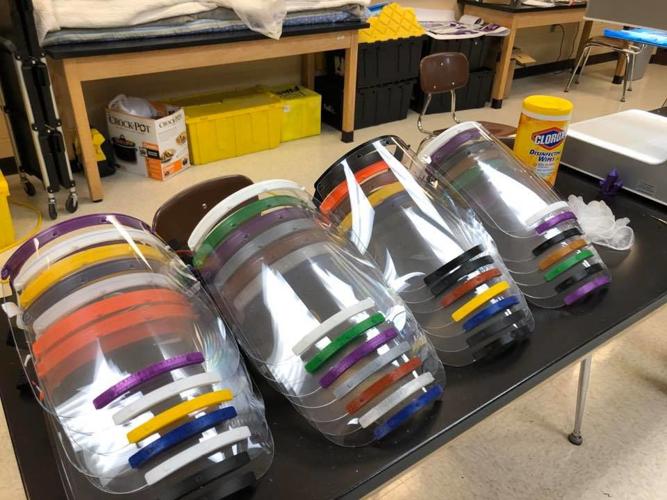
CAMDENTON, Mo. — It’s manufacturing on a micro-scale, with macro results: a local high school robotics team at Lake of the Ozarks has been using tech to build face shields by the hundreds and donating them to hospitals and medical workers across the globe.
The Camdenton FIRST LASER 3284 Robotics Team is doing the work, assisted by donations from the community, and medical professionals from Lake Regional Hospital to Afghanistan are reaping the benefits.
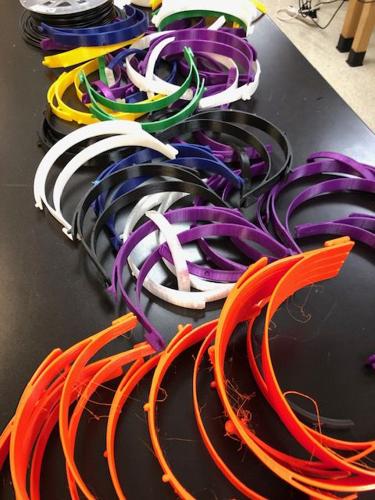
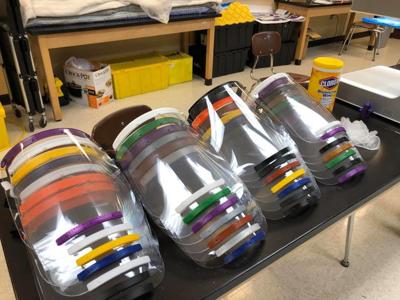
The FIRST LASER team is using die-cut acrylic-type shields and then 3D-printing headbands to attach to them, with elastic straps for fastening. According to Sherry Comer, who leads the robotics team with her husband Mitch as well as Scott Sonksen, the idea was a collaborative one. LASER team coaches spoke with some of the Camdenton High School team members about wanting to find a way to help during the COVID-19 pandemic, and so they texted Tom Williams at Lake Regional. The concept of 3D printing face shields took off from there.

The FIRST LASER team has a whopping 412 student participants from PreK-12 grades. Thirty-five of those members are at the high school level. Due to coronavirus safety concerns, those students have not been able to be on-site to do the 3D printing—although senior Zane Foulk helped originally set up the 3D printers. But—as they are doing with so many things these days—students found ways to help from home. They contributed by slicing files, putting together footage and photos shared via their robotics google drives for videos and social media, writing blogs, and updating the website. Meanwhile, the team’s coaches are on-site and resetting the 3D printers and assembling.

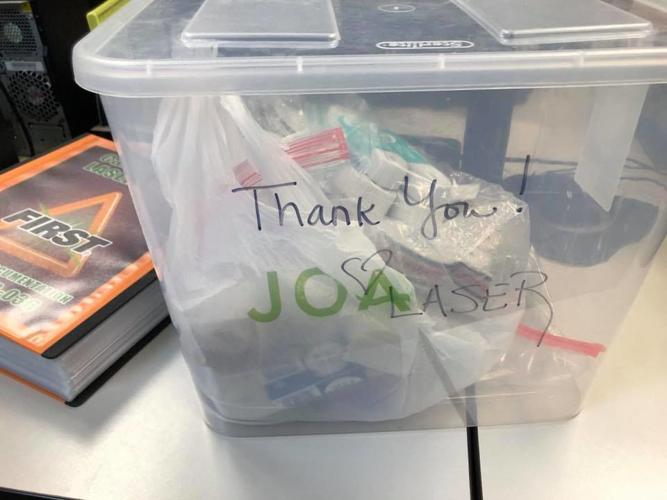
Others have joined in to help: the Camden County Library has used their 3D printer to print headbands that the FIRST LASER team can add shields to, and Osage Beach resident Nathan McKinney has been using his own personal 3D printers as well, adding to the stack of donations. Camdenton Middle School also provided their 3D printers and filament. Camdenton VFW Auxiliary and Post has provided monetary support. Potter’s House Church in Camdenton streamlined the process: the FIRST LASER team was laser-cutting the shields out of PETG (an acrylic-type material), but then volunteers from Potter’s House made a die for a machine to stamp out the shield part. Potter’s House also donated a much-needed supply of PETG to continue making shields. Members of the community have been dropping off elastic in a box outside the school, which are used for the elastic strap to secure the shields.

Each 3D-printed headband takes a little over 3.5 hours to get a high-quality print. “Now that we have die-cut shields thanks to the Potter House, it greatly speeds up having to laser cut individual shields,” Sherry Comer said. Each headband also has a laser cut piece of elastic that takes 2 minutes to complete. As of Friday, April 10, more than 400 face shields had been built by the Camdenton team, in addition to the 700 shields donated by the Potters House to other FIRST robotics teams in Sedalia, Harrisonville, St. Louis, for those teams to assemble the shields with their own 3D-printed headbands.
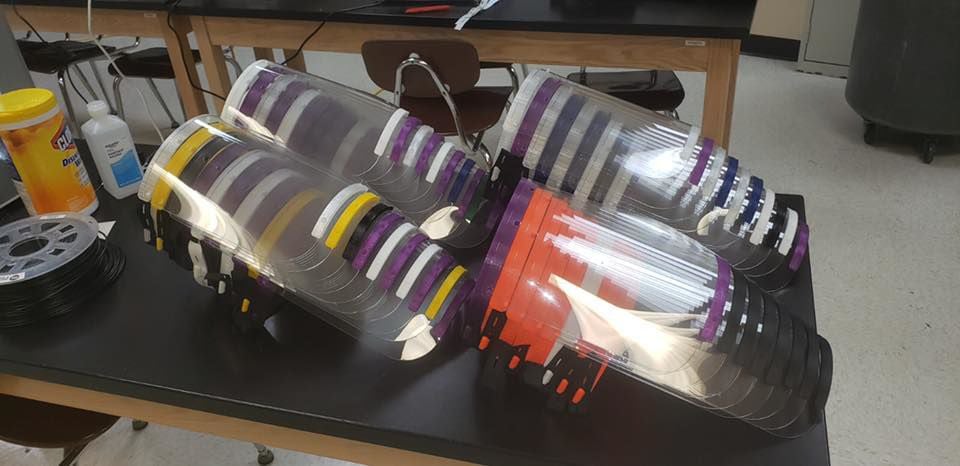
The Camdenton team’s work is actually part of a national effort, as FIRST teams throughout the United States print masks for their regional health personnel. Plans are available on the Camdenton FIRST LASER team’s website.
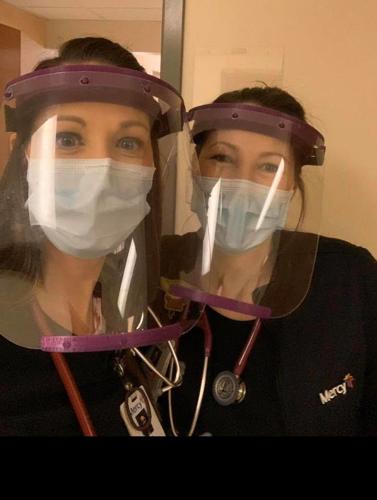
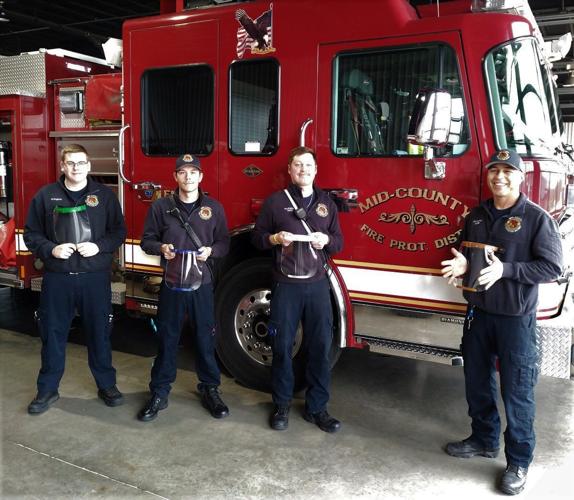
Meanwhile, these 3D-printed face shields are being used across the region, and even around the world. “We have had additional requests from the Army, local doctor’s offices, dental offices and nursing homes,” Comer said. Shields have made their way to Lake Regional Health System, Lake Dental, Mercy Hospital, Ft. Leonard Wood, local doctor’s offices, and even medics in Afghanistan. A global crisis, but alleviated by local communities who have pooled resources and manpower to make a measurable difference.


