





Lake of the Ozarks State Park is a summer hotspot known for its scenic trails and access to the water. Nestled deep within the park, along a long-abandoned shoreline stands a weathered sign, visible from the water: "Property of State Correctional Facility."
These quiet shores once housed a prison camp.
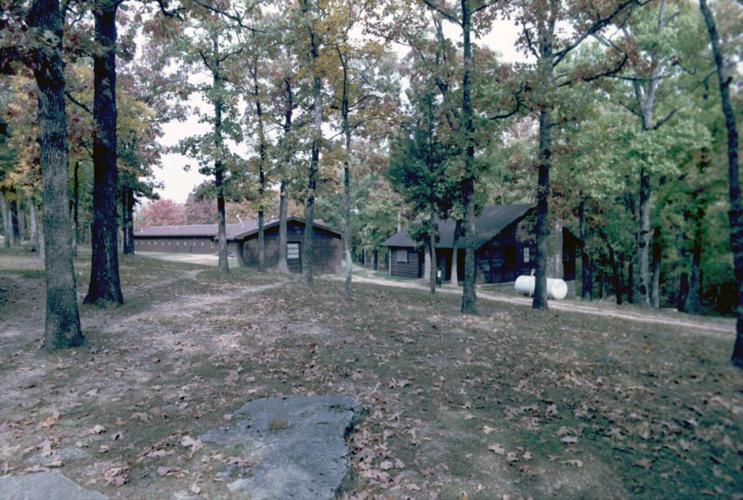
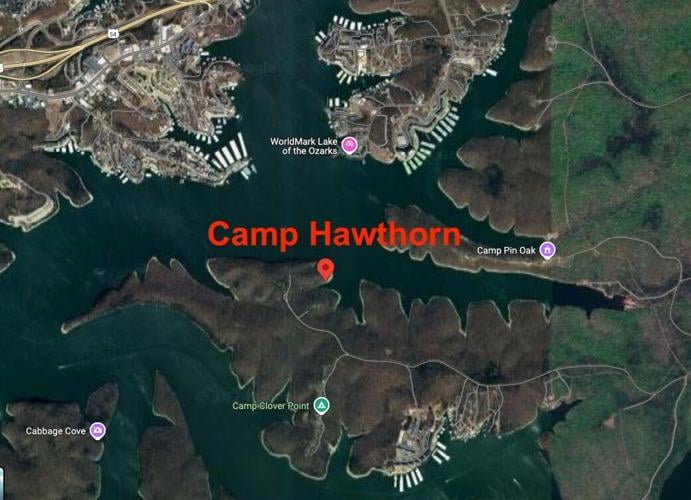
Situated west of Camp Pin Oak, the historical Camp Hawthorn spanned about 175 acres on a peninsula around the 2 Mile Marker of the Grand Glaize Arm. There, on the peaceful shores of Lake of the Ozarks, prisoners labored under the watchful eye of the Missouri Department of Corrections.


Life In The Prison Camp
The Ozark Correctional Center opened in 1963 in Fordland, Mo. after being converted from a former military base. Offenders assigned to the OCC are enrolled in basic pre-release preparation programs. One of those programs was at Camp Hawthorn.
The camp housed work-release inmates from 1982 to 2005.
But not just anyone was allowed to leave the confines of prison walls for the open-air beauty of the Lake.
In order to qualify for Camp Hawthorn, inmates had to have a history of "adjustment" to corrections facilities, little time left to serve, request to be assigned there, and sign a document agreeing to work for the DNR while there, since the camp was on DNR property.
These offenders worked on conservation and maintenance projects under DNR supervisors for $7.50 per day. They did not compete with civilians for work and didn't work side-by-side with other DNR employees.

For Eddie Bruhn, his short stint at Camp Hawthorn in 1986 was a turning point.
"I basically learned how to treat people, and that not everyone is out to harm you," Bruhn said of his time there, where he was tasked as a gatekeeper. "Hawthorn was about getting you working with the public to do right when released."
Bruhn landed in prison after participating in burglary as a young man. His path to Camp Hawthorn began at the OCC in Fordland, where he became friends with the recreational supervisor Larry Clark.
Known for his softball skills, Bruhn earned special privileges with Clark's varsity team and was offered a transfer to Hawthorn, where he spent his last six months before release.
"Clark said, 'I can get you moved to Hawthorn, if you want.' I'll get you the easiest job, and you can fish and swim all you want," Bruhn said. "So I agreed and he did it. I'd been fishing that whole Lake since I was 5, so it was hard from time to time knowing my parents were in Lebanon."
Bruhn said the prison camp was relatively quiet. The living conditions were basic, with dorm-style sleeping arrangements and simple, campground-style bathrooms.
Once a month, he’d prepare a fish fry for inmates and staff using the crappie and catfish he caught from the Lake. His good behavior kept him out of trouble—fights were not tolerated at the camp and would result in a quick return to a higher-security facility.
But when other prisoners learned the gate schedule and snuck out to visit their wives, Bruhn kept his mouth shut.
"I preferred to live a long life," he mused.
Like Bruhn, up to 45 inmates would spend their court-ordered time working at and preserving the park for thousands of visitors.
One prisoner, Weldon Richard, later sued the Department of Corrections after being denied workers' compensation for an injury sustained during his time at Camp Hawthorn. His case gave more insight in the prisoners' day-to-day life:
While at Camp Hawthorn, Mr. Richard worked nine to ten hours a day, five days a week — and sometimes on Saturday — in return for wages and the opportunity to live in a somewhat more pleasant and somewhat less restrictive environment. Mr. Richard's duties in winter included trimming trees and cutting logs. In the summer, he mowed, operated a weed eater, welded, and performed other handyman work.
The DOC retained custody of these inmates at all times. They were restricted from freely coming and going, with "out of bounds" signs marking the camp's perimeter. If someone crossed these boundaries or left an off-site job, they were considered an escapee.
Ultimately, the camp served as a test to see how inmates would adjust to re-entering society.
But Camp Hawthorn didn't start out as a prison camp...
A Jewish Summer Camp
Between 1934 and 1938, the Civilian Conservation Corps constructed a group camp facility at the site, as part of the Recreational Demonstration Area (RDA) program through the National Park Service. This federal initiative aimed at developing land as public parks near populated areas while providing work during the Great Depression. Like the construction of Bagnell Dam, which had only recently been completed, the project employed people hit hard by the national economic crisis.
Missouri established three of the country's 46 RDA projects, including: Cuivre River; Montserrat, now Knob Noster State Park; and Lake of the Ozarks. Here, on the newly-filled lake in central Missouri, workers constructed five group camps which became the Lake of the Ozarks State Park in 1946.
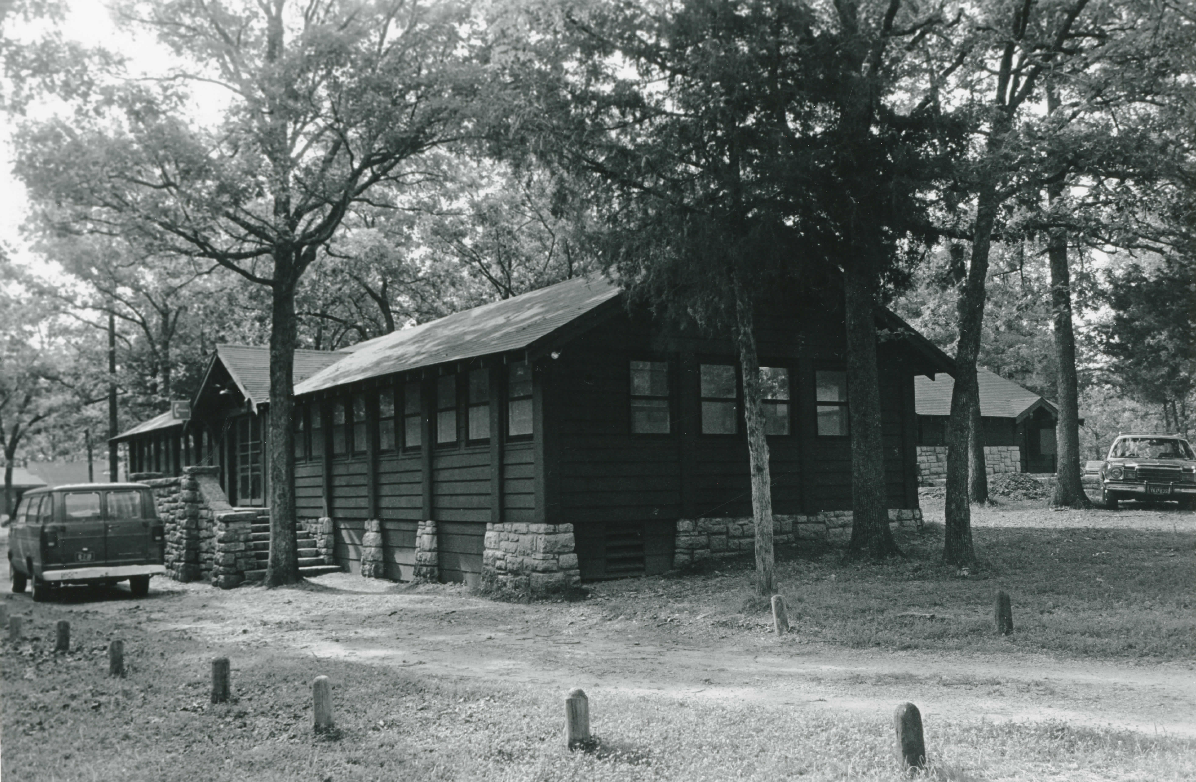
Mess Hall, June 1982
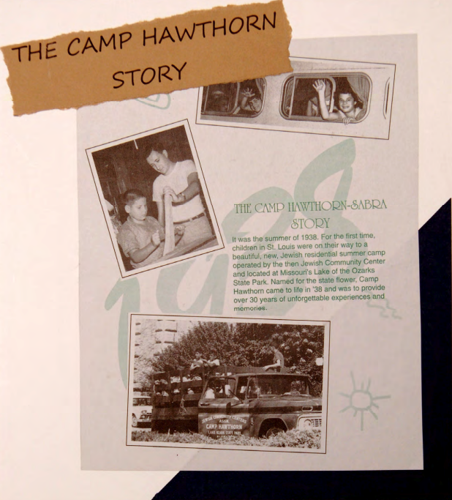
Ten years prior to the camp completion, David Wohl had donated $10,000 for the Young Men's Hebrew Association to start a residential summer camp away from St. Louis. The group eventually secured one of the RDAs and held its first season with 332 campers at Camp Hawthorn in 1938.
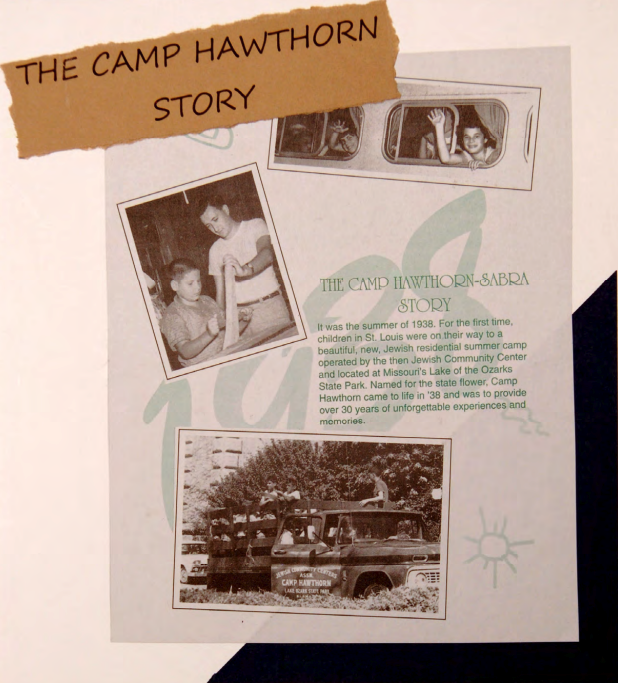
The year 1969 marked the last summer for the Jewish camp at that location...
But Benny Kessler sold the 940 acres of Camp Wah-Kon-Dah to the Jewish Community Center of St. Louis, paving the way for the expansion of the camp. This transition allowed for the opening of Camp Sabra in 1970, which continues to serve as a beloved summer destination.
While the thirty original camper cabins were torn down, central service buildings remained in a wooded area, including: a T-shaped dining hall, a small infirmary, crafts building, well house, and a storage building.

Well House, June 1982
Though it's unclear what happened after the Jewish camp left, by the 1980s, the site was repurposed for a different kind of camper.
Preserving The Legacy

While still operating as a work-release area, Camp Hawthorn, with its five original structures, was added to the National Register of Historic Places in 1985.
According to Tisha Holden, a Missouri State Parks Division information officer, Camp Hawthorn closed in 2005 after the Department of Corrections ended its work release program there.
It has not been open to the public since then.
With four other organized group camps already active in Lake of the Ozarks State Park, the decision was likely made to concentrate resources on those currently in use. Holden said the organized group camps remain active, including the Pin Oak facility, which share similar history with Camp Hawthorn.
More examples of the Civilian Conservation Corps' work can be found throughout the park. The Highway 134 Historic District for instance has these historic structures in use today. Visitors can get a self-guided driving tour of the district at the park office.
Though visitors cannot appreciate Camp Hawthorn's old buildings and scenic location in person, its past is enshrined in archives (and LakeExpo.com), ensuring it is not forgotten.


