

LAKE OF THE OZARKS, Mo. -- Fish are being found dead by the hundreds from the 50MM of Lake of the Ozarks to Truman Dam. Biologists say the death toll is yet to peak.
The Missouri Department of Conservation is attributing the kill to a naturally occurring fish disease. Catfish, crappie and walleye have been the most common species found floating.
While in the field investigating a fish kill under the Truman Dam in the wake of May flooding, Truman Reservoir Fisheries Manager Mike Bayless and Missouri Department of Conservation Fish Pathologist Tim Bruce caught wind of a second kill on Friday, June 16, near the 50MM.
“This is a natural fish kill,” MDC Resource Scientist Rebecca O’Hearn said. “It is related to fish disease. There is no concern or risk to human health, as this is a fish disease, not a human disease. Humans cannot contract it.”
According to MDC scientists, this is a naturally occurring phenomenon that happened the same time last year on the Lake of the Ozarks. It also happened in 2010 in the Gravois Arm.
The disease is caused by a combination of bacteria. “Most of the bacterial infections in wild fish are caused by naturally occurring bacteria… secondary infections,” O’Hearn explained. “Something is causing fish stress, which lowers their immunity, just like in humans.”
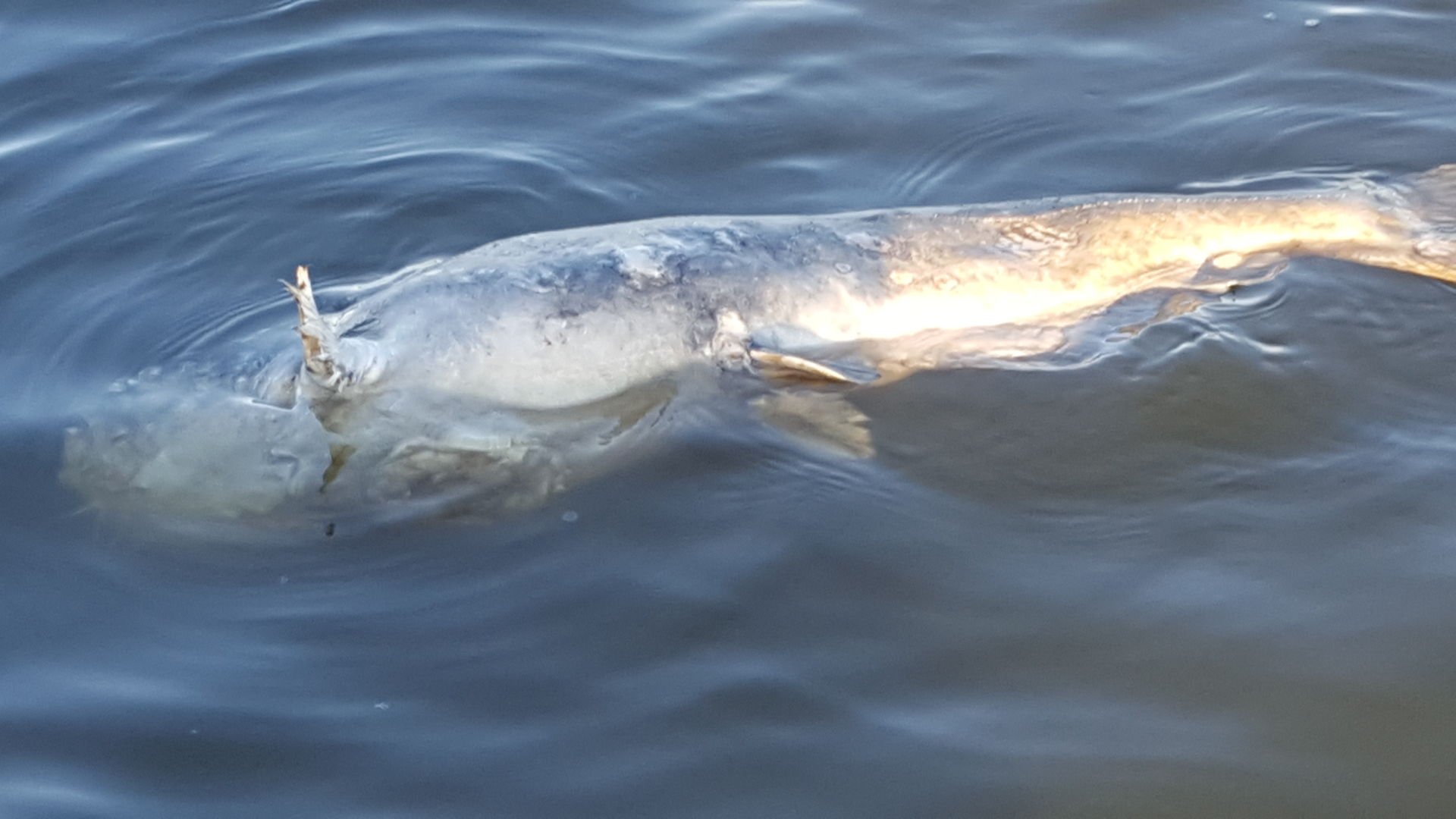
Coming off the spring spawning season, fish are naturally stressed as rising water temperatures increase the level of bacteria in the water. Higher water temperatures dissolve oxygen, creating a smaller livable habitat for fish. “Despite rumors, the dissolved oxygen levels in the Lake of the Ozarks are fine,” O’Hearn clarified.
Experts speculate there will be more dead fish to come. “Typically, with disease related natural fish kills, the fish die in a bell curve. They start dying slowly, a few at a time, the first day, then the next day five fish will die, and it exponentially increases, eventually reaching the maximum curve. This fish kill has not reached its peak, it is on the upward curve and we are tracking it daily.”
It took two weeks for the cycle to end during last year’s kill.
There is no way to say how many fish have been killed due to the Lake of the Ozarks being such a large reservoir. Biologists do know dead fish have been found from the 50-mile marker to the Truman Dam, mostly in the Osage Arm and some in the Niangua Arm. “Since this is a naturally occurring disease kill, we have faith the system will rebound on its own like it did last year, with no negative impact to the fisheries,” O’Hearn assured.
“We have received reports of people who are shocked they have seen all the dead fish, but it is perfectly safe to swim in the water.”
Decapitated Fish
Another possible “stress” factor could be attributed to the flooding event in the upper reaches of the Lake of the Ozarks at Truman Dam in May. During the flood, the Army Corps of Engineers released massive amounts of water out of the spill gates at Truman Dam. Large paddle fish trying to swim in front of the spill gates were decapitated or suffered lacerations from the force of the water. These were primarily paddlefish, but the smaller fish passing through the turbines could have suffered laceration and decapitation as well. “The lacerated open spots can allow bacteria to enter,” O’Hearn explained.
Moving forward, MCD is tracking calls from the public, mapping the locations of fish kills, and getting a feel for the species impacted. Catfish, crappie and walleye have been the hardest hit. Call 573-346-2210 to report a fish kill.


