
A booming economy has always been good for Lake of the Ozarks—even as early as the 1940s. When people have money, they love spending it on the boating lifestyle.
In the 40s, throughout the country, the turbulence of the war years gave way to a new prosperity and hopefulness, as the world and America settled into a peaceful routine that included more leisure time and more money for discretionary spending.
According to the Bureau of Labor Statistics (BLS), Monthly Labor Review, May 2001, the typical family budget in 1917-1919 reflected that over 93% of the family income went to food, housing, transportation, clothing, and health care. This left about 6.7% falling within the “other” category. That would have been discretionary spending for entertainment such as vacations and hobbies among other things. But coming out of the war years and into the last half of the 1940’s, the BLS review indicated that discretionary spending almost doubled, hitting 11% in 1950 and holding at that level for several decades.
Lake of the Ozarks matured into a real destination for vacationers, as the American consumer had a greater amount of money to spend on boats and trips dedicated to hunting and fishing, and later into cruising in a family speed boat and waterskiing. Vacations were getting longer, too. The one-day fishing trip was still popular, but weekend and even week-long camping, cabin, and lodge trips were becoming more common.

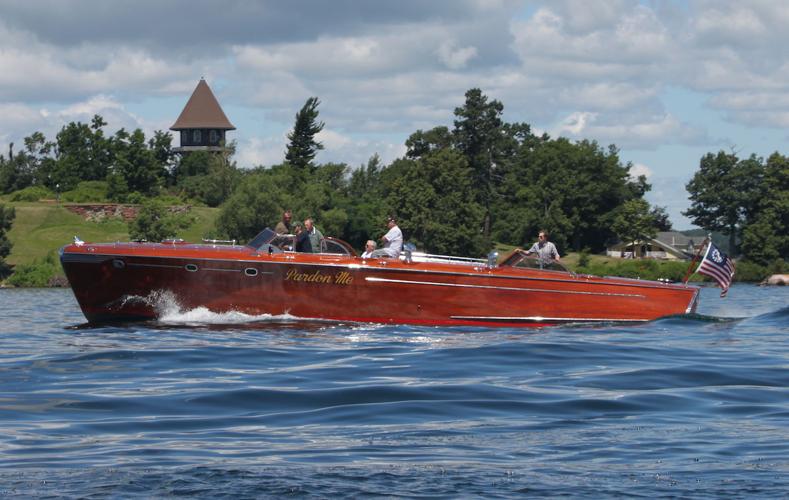
Pardon Me, a fairly famous boat designed by John Hacker (Hacker designed many boats and different firms built them) and built by Hutchinson Boat Works in Alexandria Bay, NY. Pardon Me is referred to as the “world’s largest runabout” and is part of the the Antique Boat Museum's collection. photo courtesy of the Antique Boat Museum
One other post-war effect was a boom in manufacturing. When the major boat manufacturers of the 1930’s geared up for war-time production, they developed techniques and equipment that allowed them to meet demand. After the war, they transferred what they’d developed to the private sector’s desire for leisure activity on the water.
Boats had been made of wood for thousands of years. But new materials were gaining momentum in the post-war years, and soon, aluminum was showing up on Lake of the Ozarks.
Prevalent in the aircraft industry during the war years, aluminum became a cheap material because of the surpluses after war-time production ended. The AeroCraft line of boats in 1949 included 12 separate aluminum models, ranging from 12 feet to 18.6 feet, all powered by outboards from 10 HP to 25 HP. The growing recognition of Lake of the Ozarks as a remarkable fishing destination meant that simple fishing boats such as the AeroCraft aluminum offerings were prevalent here.
Prices were modest. Lighter-weight, aluminum models of AeroCraft at that time cost between $175 and $400. Some came with an optional center dash for an additional $10. Their lighter weight appealed to anglers mostly. They were easier to load on and off trailers, and they moved through the water at slightly higher speeds than heavier, wooden boats. Some had flat bottoms: that shallow draft appealed to duck hunters.
Both fishermen and hunters enjoyed Lake of the Ozarks. Both were listed in the literature of many of the resorts springing up around the lake so AeroCraft boats were seen on the lake often.
As prosperity grew, more upscale boats were launched on Lake of the Ozarks. And the Lake that is now known for its incredible powerboat events such as the Shootout and Lake Race was already beginning to host the earliest “go-fast” boats.
One manufacturer, Century Boats, came to the Lake and built a loyal following here. Century had a long-standing reputation for quality and speed. The Century Hurricane in the 1930’s held the world’s Outboard Speed record. This wooden runabout attained the blazing speed of 50.93 mph. During the war years, Century Boats were awarded major government contracts, producing a total of 3,600 bottoms for the war effort.
This experience along with their history of quality construction and expensive materials would lead Century Boats into a dominant position in the industry, and Lake of the Ozarks would play a major part in that dominance during the 1950s and 1960s. Vacationers wanted faster boats, and that speed boost brought waterskiing to the forefront of a Lake vacation.
Lakeview Resort put down roots in 1946. Jake Drake came to Lakeview as a customer and loved it so much he bought it that year. The Drake family still owns the resort and has guided its growth and modernization while carefully maintaining the original charm and ambiance. One of the first cabins, Sparrow’s Nest, is still in regular use today by guests. That historical cabin remains decorated in the style of the early days when it was first built.
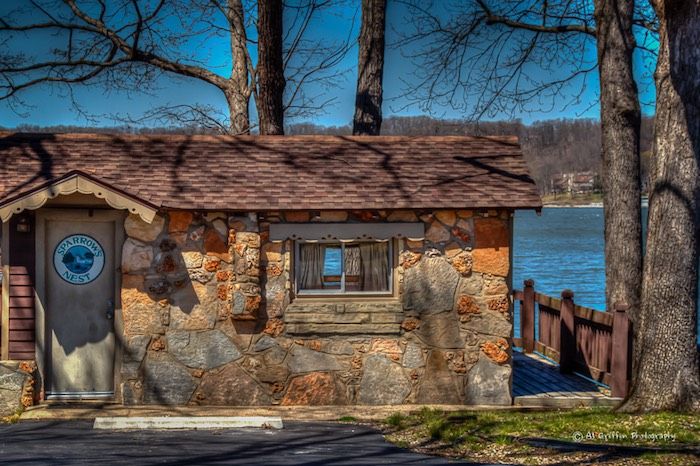
photo by Al Griffin
In the 30s, Lakeview Beach attracted mostly fishermen, but its appeal diversified in the 1940s. Although many still came for the great fishing, others just wanted a quiet, scenic place to relax in the beautiful Ozarks. Others were attracted to the novelty of the “largest manmade lake” in the United States, and others loved the sheer size of such an impoundment as they lined up for cruises on larger boats or thrilling speed boat rides. Many began to rent or bring their own faster and fancier boats to Lake of the Ozarks.
Another developing resort on the Lake was Old Hickory, just off O Road in the Gravois Mills area. After the war, Elom and Janet Carlson came from Texas and started with a piece of dirt on the lake’s shore, building the cabins themselves, as they were able. They provided a boat for guests, taking them out on the Lake for water skiing. In the late 40’s, most of the Old Hickory guests did not own their own boats, but water skiing shows on the lake attracted attention and crowds. Guests wanted to learn.
A major tourist attraction for the area, Lake of the Ozarks State Park was created in 1946. This park was adjacent to the Grand Glaize Arm of the Lake and would grow to include twelve separate hiking or biking trails, cave tours, and ultimately cover 17,626 acres.
Other attractions springing up around the lake included resorts, lodges, gas stations, ice houses, and stores. Commercial marinas were added as boat dealers answered the call of the vacationing public.
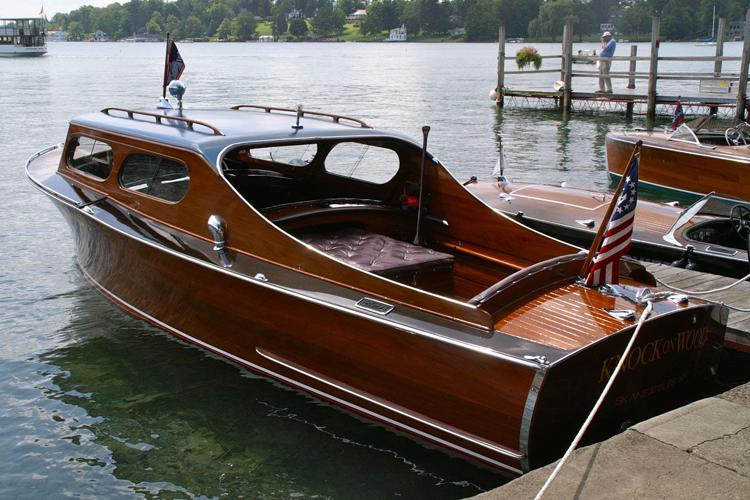
However, one of the casualties of the post-war years was the Gar Wood Boat company. Under new management, the old line of boats gave way to a newly re-styled line.

photo courtesy of The Antique & Classic Boat Society, Finger-Lakes Chapter
Not only did Gar Wood abandon the classic look and solid performance which had won a worldwide following, the new design required an expensive retooling of the entire factory. Introduced at the 1946 National Motorboat Show, the new design met an enthusiastic audience of consumers, but that enthusiasm didn’t translate to dealer purchases. Higher costs, post-war shortages in necessary materials, and labor stoppages all combined to stall shipment to dealers.
An excited buyer would not wait for delivery, and dealers did not want to lose a sale. They simply steered the buyer to other brands in stock, and so Gar Wood’s sales plummeted. To avoid the supply problems of mahogany, Gar Wood started concentrating on a 16-foot utility boat with painted sides and very little bright work as the hardware was still in short supply.
For the 1947 boat show, Gar Wood introduced four new models. All had painted sides without any varnished mahogany. The public showed little enthusiasm for the new, cheaper designs, and within six months Gar Wood closed its doors forever. Two other makers, Truscott Boats and Cygnet Boats, followed Gar Wood into the new, post-war design, and both builders folded within two years. Although new, better, and cheaper materials were on the very near horizon, spurred by the war-time development of aircraft components such as aluminum, the boating public was still in love with the classic materials and designs of the previous decade. Buyers were slow to give up on the tradition, beauty, and longevity of their wooden boats.
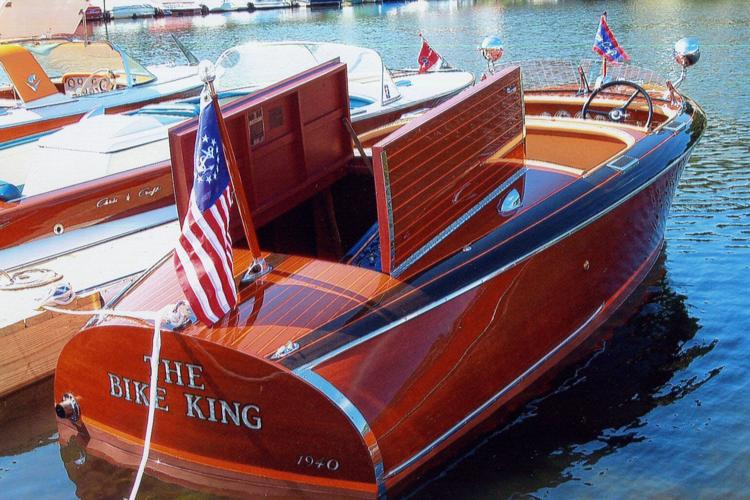
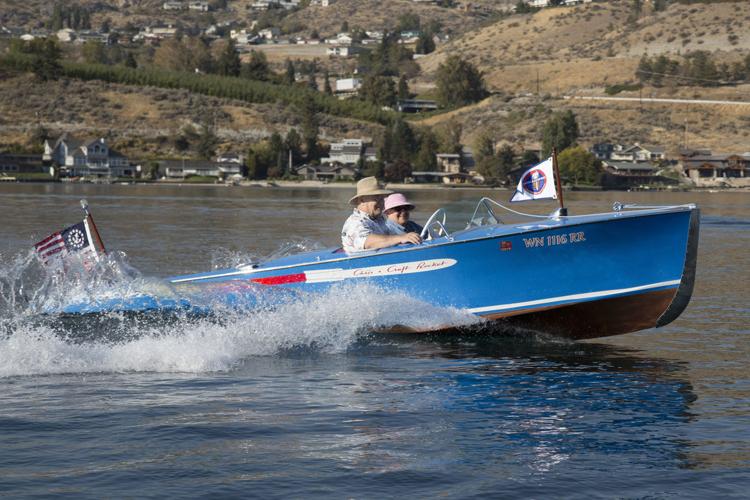
But another old-time boat maker, Chris Craft, changed with the times, adapting both designs and materials throughout the years. The popularity of Chris Craft remained strong with the changes from the pre-war designs to the post-war designs.
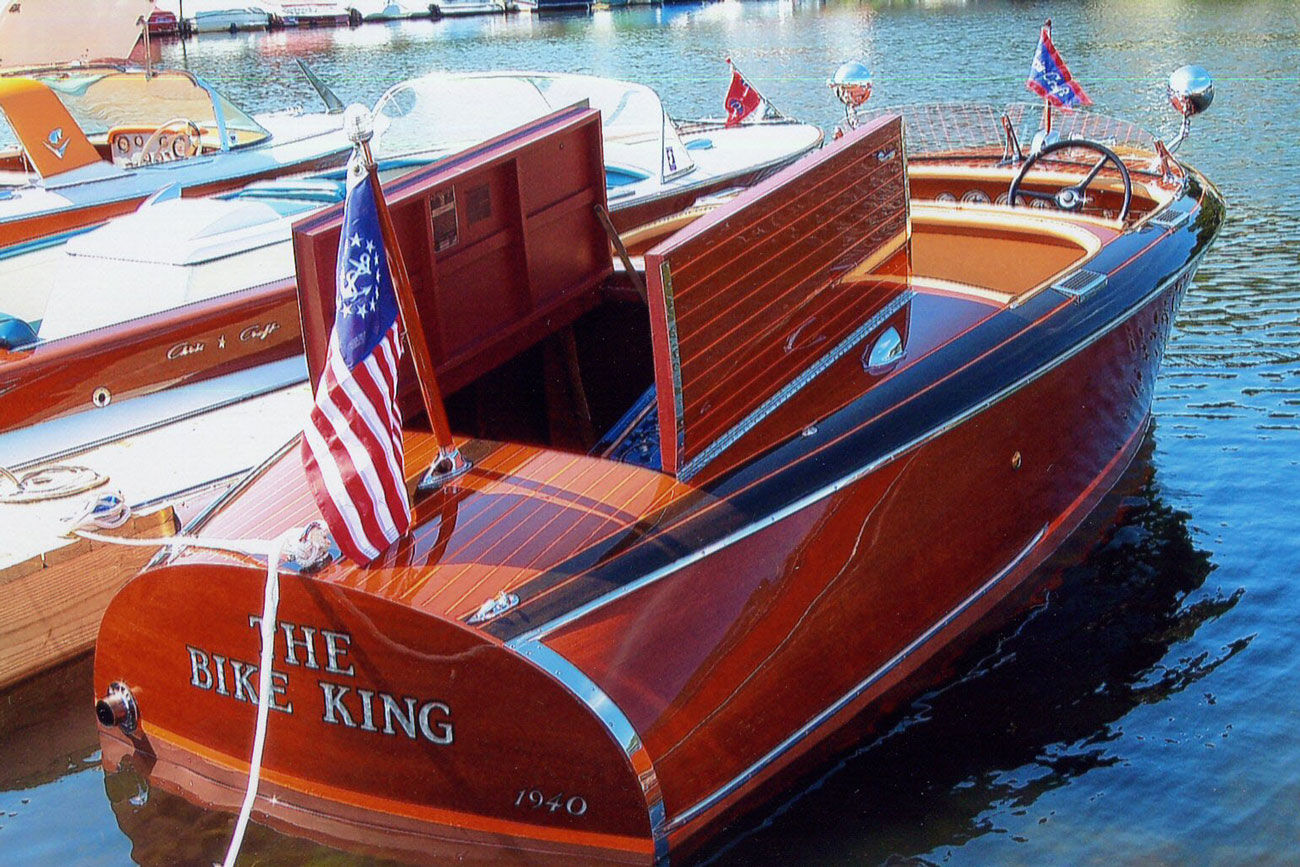
photo courtesy of The Antique & Classic Boat Society, Penn NE/Harveys Lake Chapter

photo courtesy of The Antique & Classic Boat Society, Pacific –NW Chapter
Another offering introduced after the war was the Lyman Boat Works 18-foot Islander, the company’s most popular and most manufactured model powered by an inboard engine. Many of these were on Lake of the Ozarks, according to Forrest Bryant, a member of The Antique & Classic Boat Society.
The 1940s plowed the ground for development at Lake of the Ozarks, as visitors began to see the true value of this unique lake nestled in the heart of Missouri. But the developments of the late 1940s were only a taste of what the 50’s would bring.


