
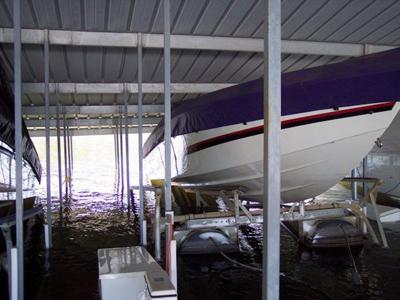

On the boater’s calendar, January is generally considered the middle of a vessel’s long winter nap. It’s time to check up on her. Why? How your boat fares over the long and, in some cases, brutal winter will help ensure a timely spring launch.
At Lake of the Ozarks, some boaters stash their vessel in indoor, climate-controlled storage. In that case, let her rest 'til spring. But if you're keeping your boat in outdoor storage, or especially in your dock on the lift, there are some good reasons to check in on it:
1. Water/Snow-proofing.
After a good snow (or rain), you'll want to see how your tarp/cover is fending off the elements.
2. Nip Problems In The Bud.
You may notice a new issue on your dock or lift that needs to be addressed before the season begins. Ice accumulation around dock and lift flotation can be a big problem. As of now, the Lake has had a warm enough winter that the coves have seen minimal ice. But that could change in short order.
Take a glance at your neighbor's dock and boat (don't trespass, of course), and if they're not a full-timer at the Lake, it's a good opportunity to let them know about any problems you spot.
Sometimes a heavy snow can spell disaster for a dock, when the weight of the snow on the roof causes the dock to begin sinking. It's always a good idea to check after a snow, or send a nearby neighbor to take a look.
-The boat below was running out of room, when its dock began to sink due to the weight of snow on the roof, in the blizzard that hit Lake of the Ozarks in 2011.-

3. Keep It Lifted!
Cold air has a funny effect on air: you see it when your car tires suddenly get a little flatter in the winter. The same thing can happen to boat lift flotation. If the air gets cold enough, there's a chance your boat lift no longer has enough air pressure in the flotation to keep your boat up!
This is a good reason to tie-off your boat to the dock, even when it's on the lift... and a good reason to have a lift alert system like First Mate. But a winter checkup on your boat lift can be a good opportunity to make sure everything's staying where it should.
-
However, checking up on a boat during winter requires unique seasonal safeguards according to the BoatUS Foundation for Boating Safety and Clean Water. U.S. Coast Guard statistics show that January has the most number of accidents that result in death.
Here are eight tips for doing it safely:
- If your boat is stored in the water, consider making a visit with a friend. That’s because there’s a good chance that in the dead of winter no one would hear a potential call for help if you accidentally slipped and fell overboard.
- If there’s ever a reason to wear a life jacket, now's the time, especially if you’re solo. A simple little slip could have big consequences, and a life jacket could buy you the time for self-rescue, which tees up the next tip:
- Know where the dock ladders are located.
- Fluffy snow can be deceptively slick, so save the smooth-soled boat shoes for the summer and wear something with traction. According to BoatUS Marine Insurance, slip and falls are a common claim occurring in a marina.
- Be extremely careful if using a ladder when boarding a boat stored in the marina yard or on a trailer. Ensure it is firmly planted, secure it with a line at the top to avoid shifting, and if possible, have a friend hold it when you’re ascending/descending. Use bucket and line tied to a cleat to help move tools and supplies to keep your hands free to hold the ladder.
- Heavy snow loads can add tremendous weight. Now is the time to ensure any tarps or coverings haven’t been loosened and enough pitch remains to slough off snow and ice. As during boating season, always “keep one hand on the boat” when adjusting covers or lines that are difficult to reach.
- Check jackstands to ensure they haven’t moved, but don’t ever attempt to move or adjust one by yourself – that’s the marina’s job. Do not tie off tarps to stands as winds could pull them out.
- Shoveling or chipping away ice on your boat may cause damage. A stiff broom is best to clear a path. For more tips on winter boat storage, additional information can be found at https://www.boatus.com/expert-advice/how-to-diy/winterization.


