
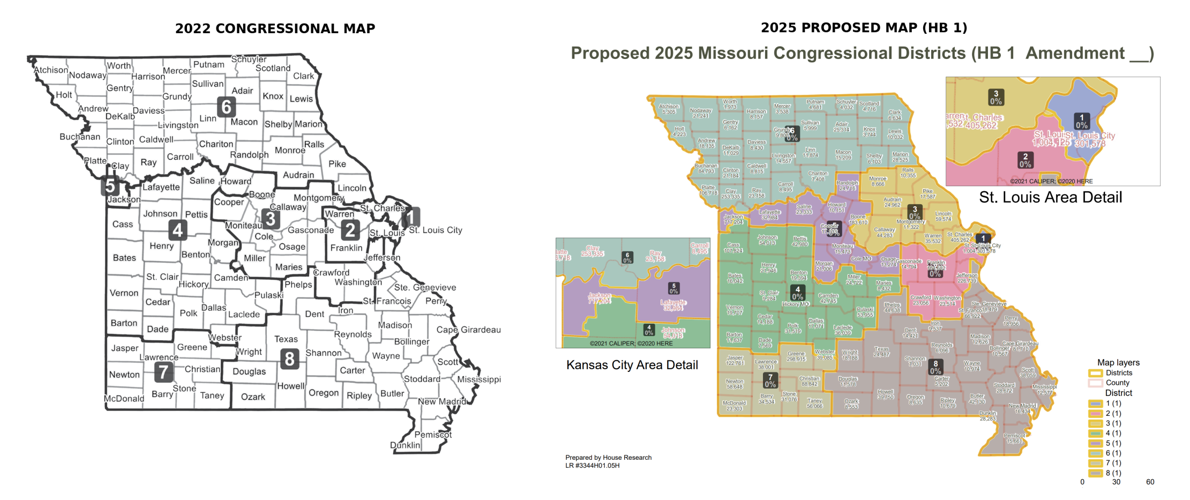
Missouri Secretary of State Denny Hoskins has announced the state will not be using the most recent legislature-approved congressional map in the November 2026 elections.
The announcement comes after Hoskins was held in contempt of court by the Missouri Supreme Court, which had decided the most recent map – which was approved by the legislature in 2025 and was expected to give Republicans an additional congressional seat in the state — was not to be used in the Nov. 2026 elections.
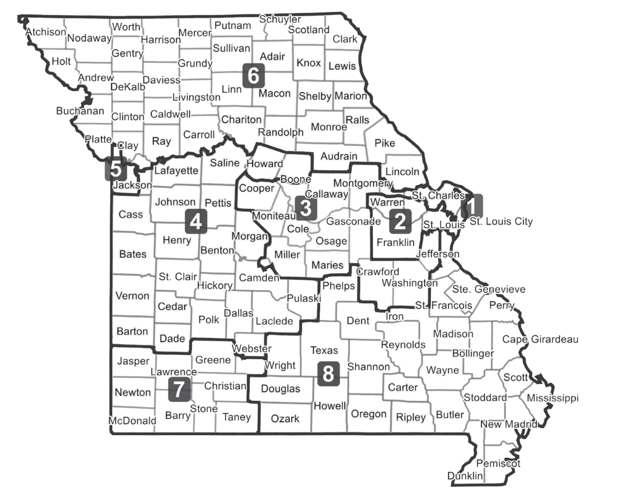
So Hoskins has directed his office to use the prior-approved, 2022 map on Tuesday, Nov. 3. On Thursday, Sept. 10, he announced, "Following the United States Supreme Court’s stay, the only governing court order in effect is from the Missouri Supreme Court. In accordance with that order, my Office is directing local election authorities to use the 2022 congressional map."
What Happened?
The Missouri legislature enacts congressional district boundaries. And the map approved by the legislature in 2022 resulted in 2 Democrats and 6 Republicans serving as U.S. Congressmen from Missouri.
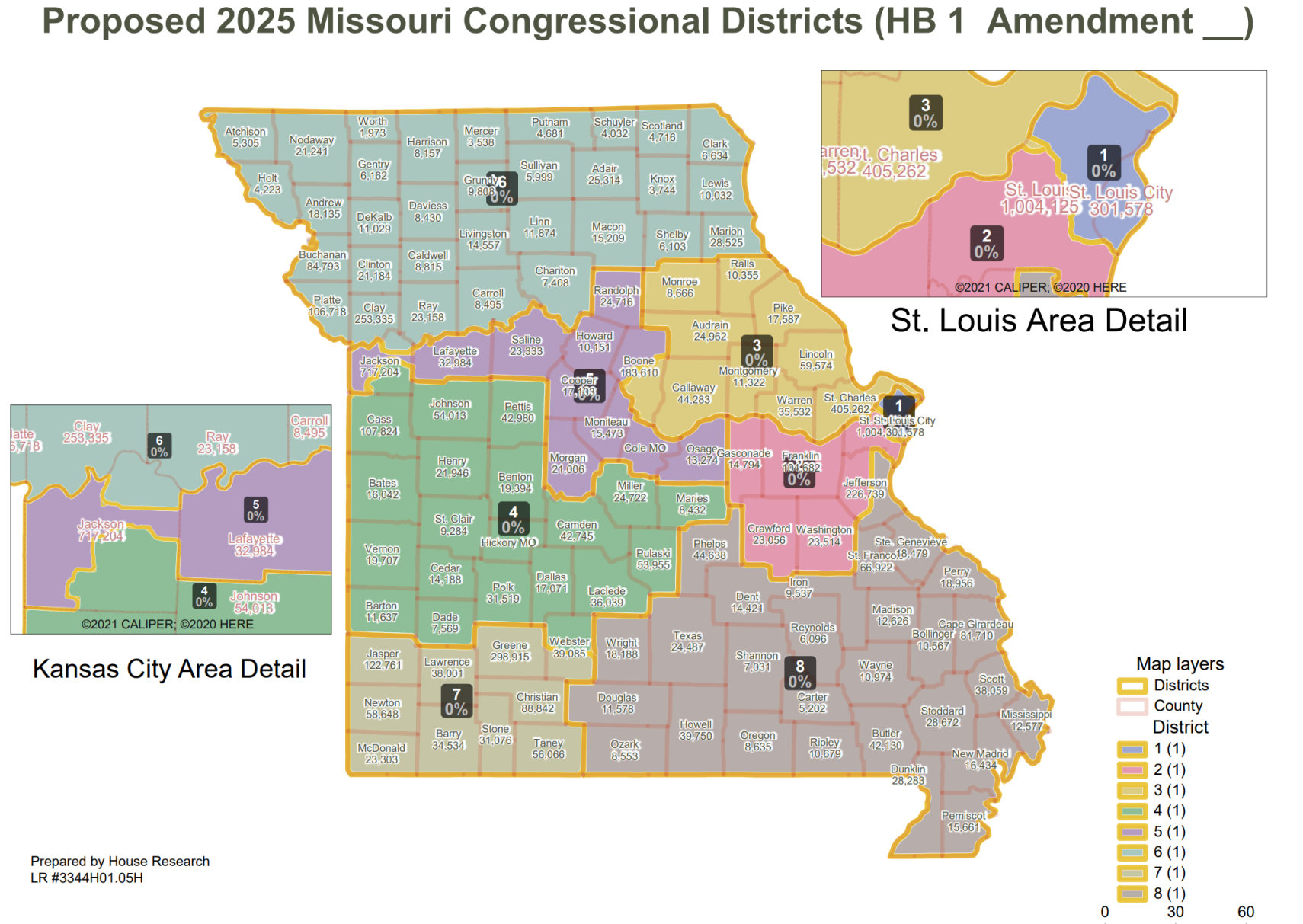
In 2025, Governor Mike Kehoe called a special legislative session for the purpose of redrawing the congressional districts. The result? A new map that had redrawn District 5 in a way that Republicans appeared likely to take over what had previously been a Democrat-controlled seat. It was called the "Missouri First Map."
But the Missouri constitution allows citizens to challenge and require voter approval for acts of the legislature. So shortly after the new map was drawn in 2025, a group called People Not Politicians launched a campaign to put a referendum petition in front of Missouri voters that would either overturn or affirm that 2025 map. The constitution requires that kind of petition to get signatures from 5% of the legal voters in 2/3rds of Missouri's congressional districts. The petition was designated Referendum Petition 2026-R004.
People Not Politicians submitted the signatures on Dec. 9, 2025.
The constitution says if a valid petition is submitted within 90 days of the legislative session in which the legislative act it's challenging took place, then that legislative act is suspended from taking effect until the issue is put to a vote of the people.
A legal battle ensued.
Secretary of State Denny Hoskins contended that congressional redistricting acts are not subject to the referendum petition power. So in the August 4, 2026 primary elections, Missouri used the newly drawn map.
A lower circuit court agreed with Hoskins. But on Sept. 3, 2026 the Missouri Supreme Court ruled unanimously that the state constitution does apply that citizen-overrule power to congressional district map drawing.
Hoskins took the issue to the U.S. Supreme Court, arguing the U.S. Constitution trumps the Missouri Supreme Court's interpretation. He pointed to the Elections Clause of the U.S. Constitution, which states that the "times, place, and manner" of elections in each state shall be determined by the legislature. He asked SCOTUS to stay the Missouri court's ruling.
But on Sept. 8, Justice Brett Kavanaugh denied Hoskins' request to stay the Missouri Supreme Court's ruling.
Then U.S. District Judge Stephen Clark issued a separate temporary restraining order requiring Missouri to use the 2025 map. That put the federal court's order in conflict with the Missouri Supreme Court's order requiring the 2022 map.
People Not Politicians went to SCOTUS, asking it to stay Judge Clark's ruling, and the high court did so.
So after that back-and-forth, the Missouri Supreme Court's ruling is in effect, while the issue continues to be litigated.
And that means in November Missourians will vote on congressional candidates using a 2022 congressional map, despite those candidates winning their primary elections using the 2025 congressional map.
And that same day, they'll vote on Proposition A, the petition on whether to adopt the 2025 map or keep the 2022 map. A "YES" vote will approve the 2025 map. A "NO" vote will keep the 2022 map.


