
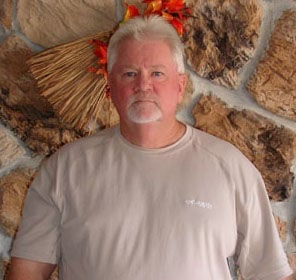
Often in the same way we are comforted, we are able to comfort others. Lansing (Lance) Kellogg is the VFW's District 2 Commander and Assistant Chief of Staff for the VFW in Missouri. He served as the local Camdenton VFW Post 5923 Commander, before stepping into the District Commander role earlier this year.
Kellogg has turned the very things that used to torment him into a passion for helping veterans. He is a survivor of Post-Traumatic Stress Disorder (PTSD), caused while he was deployed to Vietnam.
“It was surreal, I was so young and when I first arrived in the field to join my unit we came upon a place where the Vietnamese Army had made penetration in defenses the night before. There were dead soldiers laid out on the ground everywhere,” Kellogg recalled. “It was an awakening and terrifying moment that brought me into the reality of where I truly was, and what I was doing there.”
He, like many Vietnam veterans, doesn’t like to talk about the horrors experienced in the war. As an Army tank commander his job was to patrol dark and desolate Vietnam jungles with a mission to stop supplies and equipment from being transported to the Viet Cong Army.
The VC slithered about at night, packing rocket-propelled grenades that could easily shoot through the steel of a tank, planting explosives and killing all who were inside the huge, slow-moving targets.
Add to this extreme danger the element of betrayal, as those they were there to aid, the Vietnamese people, often turned on their allies, for fear of the VC, who frequently came into their villages and committed horrific war crimes against the people to force them to cooperate.
“They would be nice to your face and then send their children to throw grenades and plant land mines in the roads,” Kellogg remembered. Many times he searched trucks carrying commodities to villages and found hidden enemy supplies
Kellogg’s company also escorted convoys providing security, and they heroically went out ahead of the army to scope an area for enemies, radioing back when the road was safe for the rest to proceed.
A vivid memory he says still causes flashbacks is when his unit was ambushed while entering Cambodia. They came upon 50 bicycles in the bush, and there was a large tree over the road. “We just knew something was wrong,” Kellogg said. The commander erroneously ordered them to move forward. The enemy allowed three troops over the tree before the VC came out of the bush and attacked them. Two entire troops and the troop commander were helicoptered out to Quanloy.
“This gory ambush still sticks in my mind anytime I think about Vietnam,” Kellogg mused.
“The Vietnam era dramatically changed a lot of soldiers, and for me it was not a good change,” he said. After Vietnam, he served in the military for 21 years in several capacities, always careful to keep his PTSD hidden. He said he was in denial that he had a problem, and even if he asked for help he risked the chance the military would discover his disorder and disqualify him for promotion status.
After retirement, Kellogg came to the realization that he had a big problem, and he decided to seek help. “Everything I kept quiet about came out. Therapy [drags] all out into the open so you can deal with it, and heal,” Kellogg said. “You just can’t see that many people blown into pieces, and a soldier cannot watch his friends die, and not be affected, if you’re a normal human being.”
He believes PTSD destroyed his marriage and hindered him from living a normal life. “The therapy was good, and it helped me considerably by making me stop and take a hard look at the warped way I interpreted reality.” Over the years, he had learned to bury his torment and live with paranoia, anger and anxiety. “In therapy they guide you,” he explained, “and if you listen to them you learn how to see and handle things better.”
Kellogg says there are many soldiers with PTSD who don’t even know they have it, noting, “It took me 19 years to realize I had it and therapy helped me.” Now, he says he can recognize PTSD symptoms in other veterans that come into the VFW post. “We like to be there to talk to them and they open up because they trust us to understand what they are going through, because we have been there. We can refer them to a service officer who can assist them in getting an evaluation and in finding the exact resources they need.”
The post is currently in the construction stages of a new 15,400 sq. ft. building with a restaurant and banquet hall that will be open to the public as well as a bar, and more. “We want the new post to be different. The old VFW reputation is of a place where alcoholic veterans sit and cry in their beer while they share old war stories,” he said.
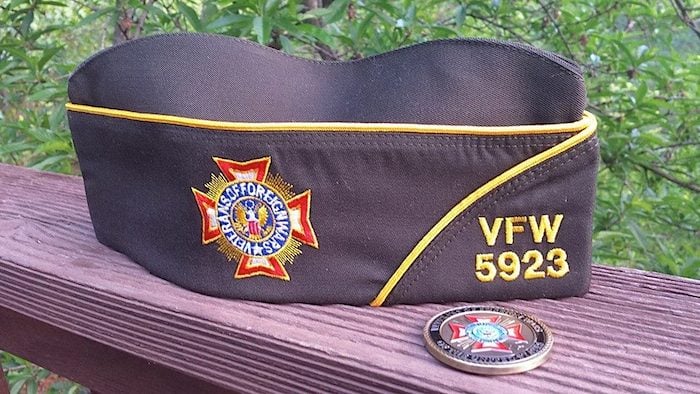
CAMDENTON, Mo. — Camdenton’s VFW has put out a call for help, as the post faces the daunting…
Kellogg says this has changed, as many of the post’s veterans don’t even drink. The main priority now is to assist veterans with their needs and offer camaraderie and a place to have fun and form friendships, for both men and women veterans.
“We also want to be open for people in the community to come and use our facility. Without them we would not be here. We are also looking at offering activities for young people,” Kellogg added.
Veterans have paid the ultimate sacrifice to defend the freedoms that many take for granted. Others suffer through life—as Kellogg did for years—with disabilities resulting from their courageous service to their homeland.
Due to exposure to Agent Orange in Vietnam, Kellogg is classified as disabled with diseased hips, Type 2 Diabetes, Avascular Necrosis, and a heart condition. He has had four heart attacks, seven stints, neuropathy, and has arthritis and bursitis in his shoulders from lifting too much weight while in the service. He walks with a cane and he admits there are occasions when he cannot walk, but emphasizes there are days he feels great. “I can’t just sit down and die,” Kellogg said. But he admits there are times he wishes he could.
“I will not quit,” he said, resolutely. “I will work until I fall over. This is a good cause and the organization is on the right road to helping even more veterans. I am a veteran and I see the injustices done to the veterans, and I will fight until it is made right.”
“I figure working for the district I can help even more veterans,” he said, adding, “I saw some of my friends give their lives to protect our country to keep communism from getting a foothold, and I see the government not taking care of our returning soldiers.”
Kellogg says he is disappointed that the Veteran’s Administration, the very entity formed to help veterans, does the most to strip veterans of their benefits. “It is a never ending circle of getting them to give benefits, filling out paperwork, and playing the numbers game. Many veterans just give up,” Kellogg said. “That is where we come in we have people who care about them, whether it is through helping them get their benefits, making their rent, getting them the proper medical treatment or assisting them with other services.”
He added, “I am shocked that more and more soldiers on active duty have to go on welfare to support their families.”
Kellogg related one story about a local female veteran who, while in training, was struck by lightning. The lightning struck her in the head, traveled down through the right side of her body and finally blew off her boot off and turned her foot back.
Kellogg says the right side of her body is "dying," adding, "She has medically progressed into the stage where she is having seizures.
“She has had multiple seizures which resulted in calling 911 and being transported by ambulance to the local hospital to save her life. When she filed a claim to pay for her ambulance and treatment, the VA denied her because when she retired from the service she didn’t take both parts A and B of her Medicare benefits. She didn’t sign up for a part of Medicare because she was instructed she wouldn’t need it because she had military insurance that would cover it.” The woman is a single mother, with a child trying to live on $1,200 a month and pay her medical bills. She quit a good-paying job as a registered nurse to serve her country.
“This is uncalled for and why we are here to help. But we can’t do it alone. If it were not for the generous support of the community we would not be able to help,” Kellogg said.
“If we all come together, we can make a difference in the lives of our brave heroes who were willing to give their all to keep America free,” he encouraged.


