
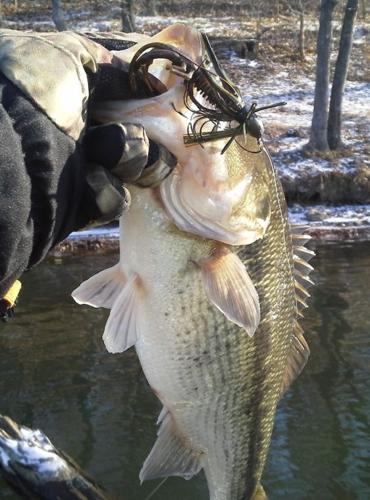
LAKE OF THE OZARKS, Mo. — In classic Missouri style, weeks of brutal winter weather have been abruptly ended with warm, sunny days. There’s likely more cold in store for Missourians, but local fishing pro Jim Dill says the thaw gives anglers time to start searching for spring bass.
In a normal winter, Lake of the Ozarks water temperatures will bottom out in the upper 30s or lower 40s, Dill says. But with this winter’s long stretches of deep chill, many sections of the Lake froze all the way across, and water temperatures dipped into the mid- and low-30s.
“At these temps, fish are almost dormant and need to eat next to nothing to survive,” Dill points out.
But was warm, sunny, lengthening days bring water temperatures back into the 40s, a fish’s natural instincts urge it to begin eating and building strength for the approaching spawn.
“We will notice all of nature’s signs like blue birds looking for nesting areas, robins, turtles sunning on logs, and the familiar smell of skunks on the roadside,” Dill says. “These are all yearly signs I look for… to tell me it’s time for the fishing to get real good.”
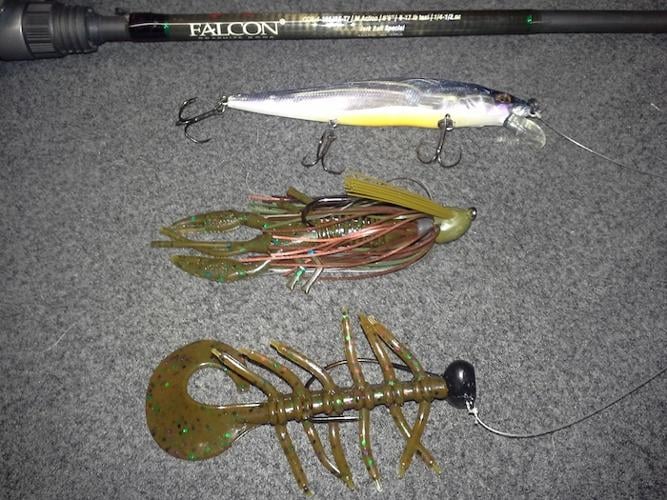
As anglers begin casting in the spring, they’ll need to remember one especially important thing, Dill says: move slowly. Fish are still cold and not as quick to bite, so Dill suggests using a slow-moving bait such as a jig.
Another popular bait this time of year is the suspended jerk bait, Dill points out. It mimics shad, and can be allowed to drop to the depth where fish are hanging out, and then suspended for several seconds. The deep cold has killed lots of shad, giving bass and crappie plenty of easy meals. So Dill suggests not fishing in areas where large concentrations of dead or dying shad can be seen.

Bass will most likely be found over or near deep water, but nearby softball-sized rocks along pea gravel banks or pockets. These areas warm faster because of the dark rocks, so fish gravitate towards them in search for food.
“This is my favorite time of year for fishing,” Dill says. “Pretty much all of the fish will move shallow within the next month, increasing the odds of catching them.”


