

It's a busy time of year on Lake of the Ozarks.
Weekday boating is still often the best-kept secret, for those who seek quieter waters. But the weekends are unsurprisingly full of boats on the water, and when you have boats, you have boat wakes.
The wake. It inspires the adventurous boater, draws the daring wakeboarder, and stirs up the ire of those yearning for the calm waters of yesteryear at Lake of the Ozarks.
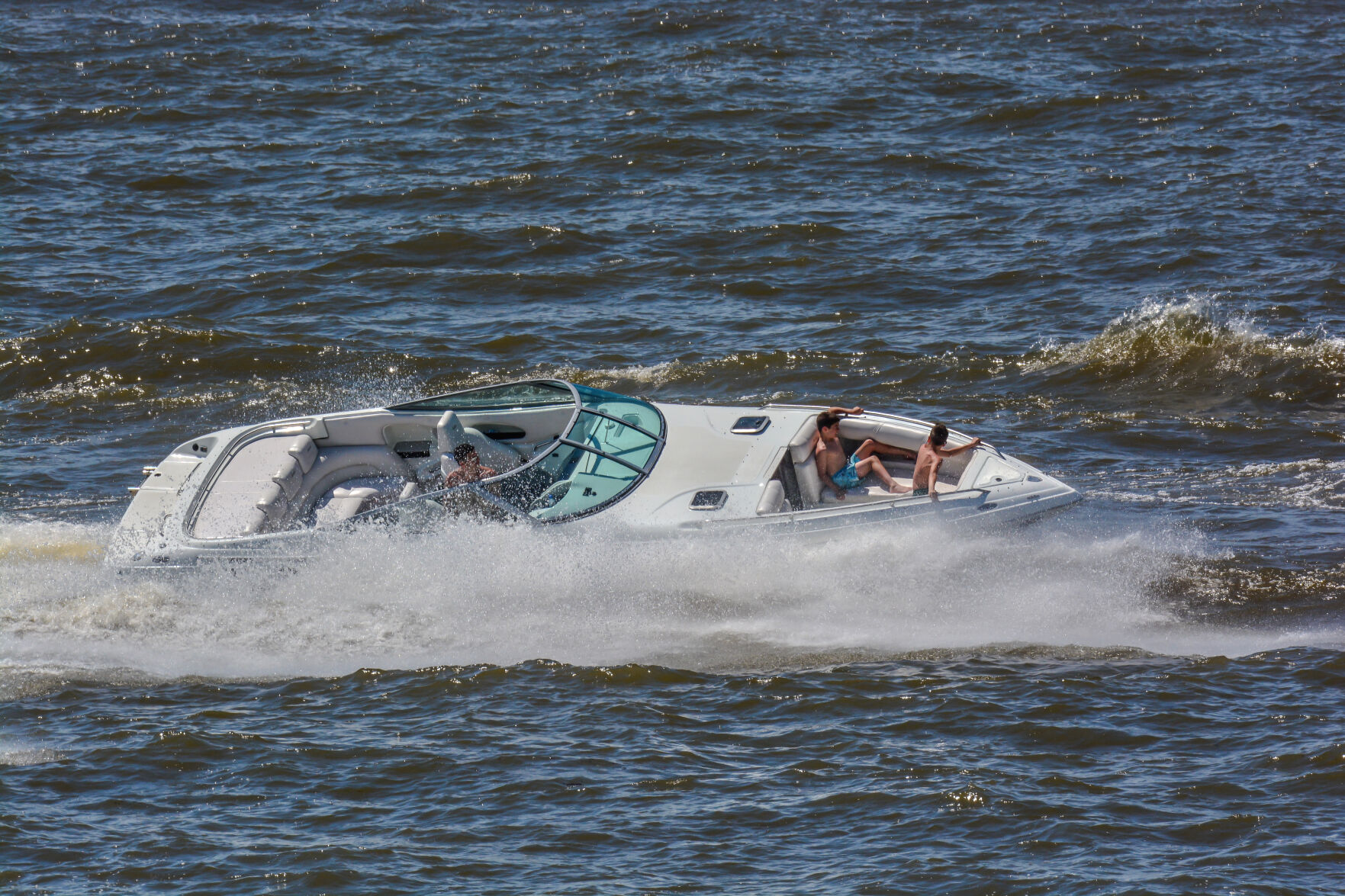
Everyone has something to say about boat wakes. The ‘Wake’ is controversial, with social media ablaze at every mention of the word. The anti-cruiser folks furiously rail against “ocean yachts that have no place on the Lake,” as if thumb-pounding the tiny keyboard on their phone will make big boats disappear. Big boat owners fire back. When in reality, the situation is far more complicated: boat size is only one part of the wake equation.
“Watch Your Wake!” That campaign launched by local marine dealers gets it right by advocating courteous boating.
At the helm of it all is the captain. Captains are responsible for managing their wakes — and for navigating the inevitable wakes that will be thrown their way.
Thousands of boat “drivers” run the gamut of skill and experience. Owning a boat is often the dream, but becoming an excellent captain is something else entirely. Boater education has the most potential to calm the wake issue, but there is no substitute for time on the water. That’s really the Catch-22.
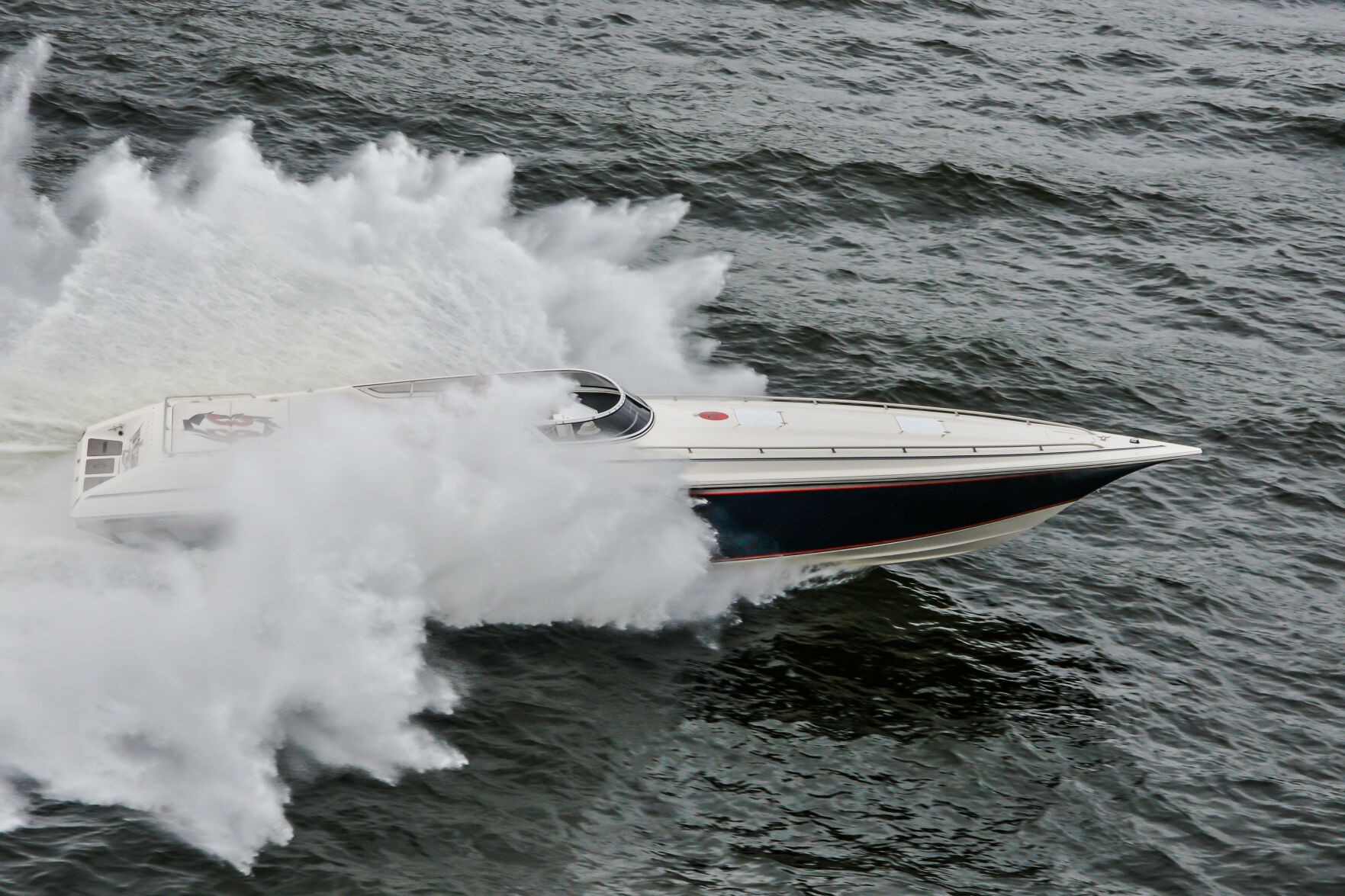
The only constant is: conditions change. Winds will shift, cruisers will plow, and squalls will catch you. With that in mind, here are the best ways to handle rough water at the Lake.
Don't Worry, Boat Happy: Join XTow!
The Lake of the Ozarks' exclusive worry-free boating club makes summer boating better!
-Free towing lake-wide
-Save 10¢ gallon at more than a dozen marinas (view the list)
Tips For Taking A Wake
#1. Know the boat.
No matter the level of experience, knowing the boat is key to taking wakes. Coming to an understanding of speed and trim is the difference between sloshing about and riding above it.
Your boat always has a point at which it’s the most comfortable.
Find the cruising combination that makes the boat happy, and do your best to keep her happy. Ultimately, taking a wake at the point of impact is about feel. If carrying precious cargo, take it slow and throttle through it.
#2. Find the angles.
While 45 degrees has long been the rule, every boat is different when it comes to slicing through wakes — it’s going to take practice.
And keep in mind, on a busy Saturday with boats all around in occasionally tight spaces, boaters just can’t cut in and out of wakes at 45 degrees without considering what’s ahead, what’s at your "6" (behind you), port and starboard.
Designate a first mate and make them a spotter.
#3. See what’s coming.
Predict the next set of challenges by seeing what lies ahead. If there are several cruisers approaching two miles away, make a mental note and anticipate slowing and adjusting for a set of rollers on the way.
#4. Passenger placement matters.
Use common sense when placing passengers in the boat.
She might like the feel of freedom and the wind in her hair, but Grandma should not be sitting in the front of a bowrider. Seat passengers where it makes sense to keep them safe in rough water.
In a smaller boat, balance passenger weight to keep the ride smooth and everyone dry.
#5. Know where you are.
Several locations at Lake of the Ozarks are notorious for rough conditions, especially on a summer Saturday.
Trouble spots:
Always slow your vessel when approaching the confluence of the Main Channel and the Glaize Arm; it has become the most active area, capable of producing five-foot swells.
Only a couple miles downstream, the waters under the Community Bridge are continually torrid.
Watch your crew close when headed upstream rounding the bend after twin islands at the 8 MM.
Two spots on the Gravois are particularly noteworthy: the turn into the bay at the 0.5 MM and the narrowest area of the arm where boats congest and wind picks up at the mouth of Mill Creek Cove near Jolly Rogers.
Finally, take heed at the Four Corners: the convergence of the Niangua Arm, Linn Creek Cove, and the main channel as it bends to the Hurricane Deck Bridge. That big intersection is notorious for rough waters.
Regardless of boat traffic, it’s always a good practice to slow down and heighten awareness in all of these areas.
#6. Act like a Captain.
Captains who have done the training and the hours on the water usually baulk at the term being used loosely.
But “Captain” is more than an earned designation, it’s an attitude. When at the helm, the boater is responsible for the safety of everyone aboard at all times. Act like it.
Take charge, stay sober, encourage lifejackets, and take wakes like a boss.
RELATED ARTICLES
Driving a boat comes with its own set of rules, and on a busy waterway like Lake of the Ozar…
In the song, Against the Wind, Bob Seger and the Silver Bullet Band wonder, “…what to leave …
Sounds somewhat dramatic, doesn’t it? Drama aside, it doesn’t hurt to be prepared for an eme…

Pregnancy makes women think twice about many things they never before questioned, from eatin…

For anyone interested in getting out on the water without the frequent maintenance of owning…

Lake of the Ozarks is busy, especially on summer weekends, and that means Lake Regional's Em…


![[VIDEO]: Ferris Wheel Now Standing Tall At The Oasis](https://bloximages.chicago2.vip.townnews.com/lakeexpo.com/content/tncms/assets/v3/editorial/6/45/645bc455-286b-4556-b486-8f36b333dff4/6ab5949ebf5bf.preview.png?crop=1263%2C1263%2C0%2C60)

![Dinner With THIS View?! Inside 1932 Reserve At Lake Of The Ozarks [FLYTHROUGH]](https://bloximages.chicago2.vip.townnews.com/lakeexpo.com/content/tncms/assets/v3/editorial/b/40/b4047402-5958-4f34-92e1-36da52740fea/6aada39fabf69.preview.jpg?crop=1119%2C1119%2C240%2C0)


