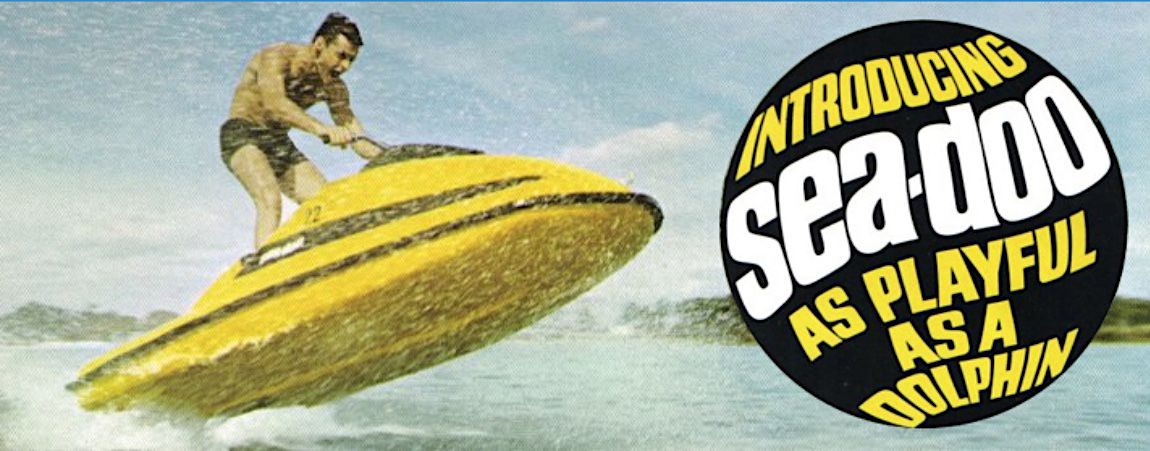
It’s hard to remember a time when personal watercrafts (PWCs), such as wave runners and jet skis weren’t seen all over the Lake of the Ozarks. They're perfect for one, two, and sometimes even three people to make a quick jaunt to their favorite on-the-water restaurant or to just enjoy the thrill of flying across the the Lake at lightning speed while holding on for dear life! Sea-Doo is one of the most frequently seen PWC brands on the Lake, and actually pioneered the earliest PWC in American back in the late 1960s.
The Sea-Doo brand is a subsidiary of Bombardier Recreational Products (BRP), which was founded by Joseph-Armand Bombardier in 1942. (BRP brands also encompass the snowmobile brands Ski-Doo and Lynx, Evinrude Outboard Motors, Rotax, Can-Am Off Road Vehicles and Motorcycles, and Can-Am Spyder Roadsters.) Sea-Doo has been one of most popular brands since the mid-1990s, but its first attempt at marketing a PWC was back in 1968. A banker and aspiring inventor from Southern California named Clayton Jacobson II designed and mentored the creation of the first sit-down PWC. He was inspired by the concept of building a motorcycle for the water. Meanwhile, a BRP employee named Laurent Beaudoin had been trying to promote the idea of bringing the Ski-Doo snowmobile experience to the water, leading him to purchase Jacobson’s design. Jacobson had originally designed a stand-up model until Sea-Doo sent him an 18 horsepower Rotax engine that allowed him to create the sit-down model instead.
VIDEO: STARTING UP AN ORIGINAL 1968 SEA-DOO
The first Sea-Doo PWC was... well... a bit awkward, and somewhat resembled a flying saucer. It was a whopping 5 feet wide (by contrast: Sea-Doos nowadays are about 4 feet wide or less), 7-1/2 feet long, and sported its original trademarked yellow-and-black color scheme. It borrowed its handle bars and minimally padded, flat seat from the actual Ski-Doo design. All of these factors led to a very rough ride, and production of the original PWC ended in 1970. At that point, Jacobsen bought his patent back from Beaudoin and sold it to Kawasaki, who in turn developed it into their well-known Jet Ski.
The idea was good: but the design proved to be a tricky challenge to master. In 1988 the modern Sea-Doo design first arrived on the scene. It was built to hold two adults; however, its design proved to be wobbly and was difficult to maneuver with more than one adult or two children on board. Similarly, in 1990 the first 3-passenger Sea-Doo was introduced that also provided an unsteady ride to three grown adults, especially while making tight turns.
Here's a look at how Sea-Doo models have evolved over the years...
Sea-Doo Through The Years


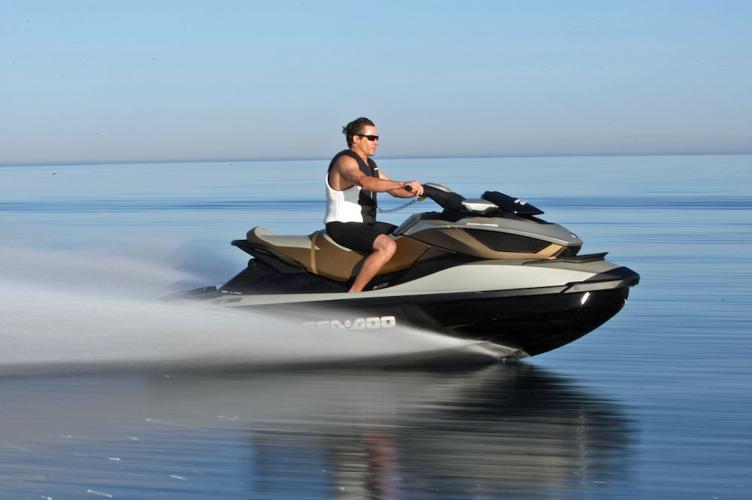


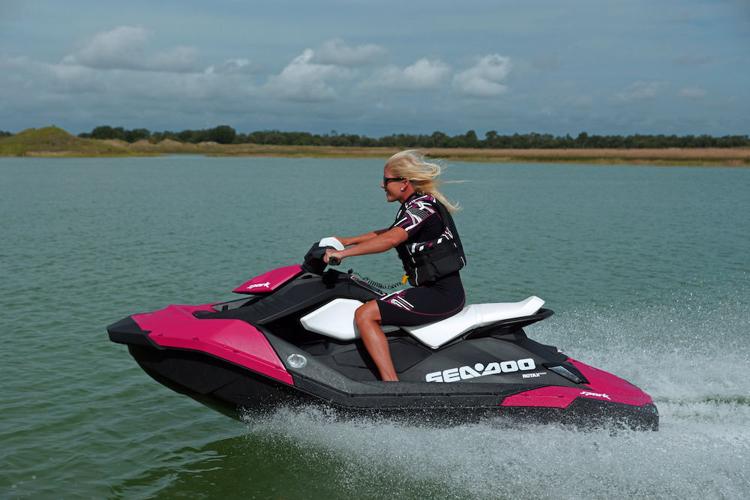


In 1995, Sea-Doo signaled a turnaround for the Bombadier Recreational Products Company with their fiscal year annual sales. They sold 100,000 units, which encompassed half of the sales in the entire PWC market. In 1997, Sea-Doo earned $212 million in revenue.
Sea-Doo's look-and-feel continued to evolve through the years, and now, in 2018, the company has mastered a range of designs that suit boaters' needs: from the simple, compact and playful, to the powerhouse models that can pull a wakeboarder with two riders aboard, to luxury models!
For those shopping in central Missouri, Precision Water & Powersports, located in Jefferson City, features new and pre-owned Sea-Doos. (They offer free delivery to Lake of the Ozarks, too.) View Sea-Doos online at Precision Water & Powersports

THE place to shop in Central Missouri when you're ready to take outdoor exploration to the next level! Precision Water & Powersports sells…
Today there are five official categories of Sea-Doo PWCs to choose from. The “rec light” models are the least expensive, with the smallest engine option, and are made to be playful and compact. The next tier of Sea-Doos include the “recreation” models that are made to be versatile and nimble, with more power than the “rec light” models, but still not enough to support watersports. For that, the active and bold “tow sport” models are the way to go; these are designed to pull skiers, wakeboarders, and other watersport enthusiasts. For those with a need for speed, the powerful and precise “performance” models are ideal for racing and/or for professional riders. Finally, on the top tier are the top-of-the-line, stylish, and comfortable “luxury” models that include all the bells and whistles that will satisfy even the pickiest of riders.
PWCs have come a long way since their “flying saucer” days forty years ago, but one commonality remains: they are still a whole lot of fun!

It’s not just flashy colors and splashy features that set apart Sea-Doo’s new Wake Pro 230, …