
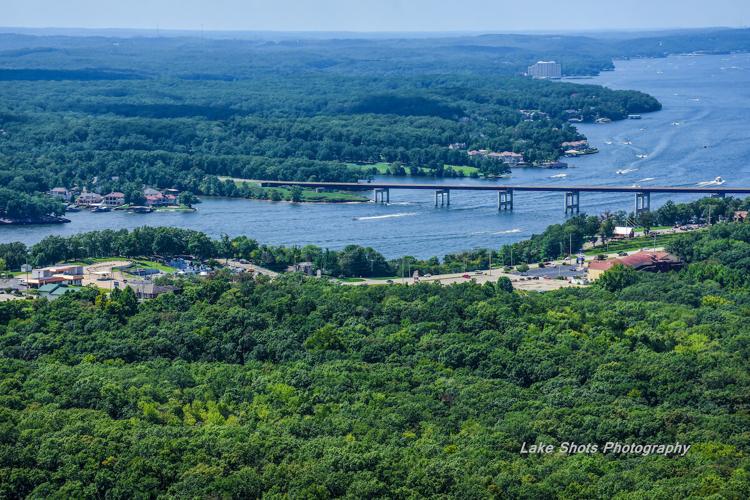
Everyone's talking about it: the Lake of the Ozarks Community (Toll) Bridge payoff date was set for 2026, but the corporation that manages the bridge now says it'll be free for drivers by this summer.
It's a welcome conclusion to a chapter in the story of the Lake's economic development — a story that would have been dramatically different had it not been for the bridge.
Before The Bridge
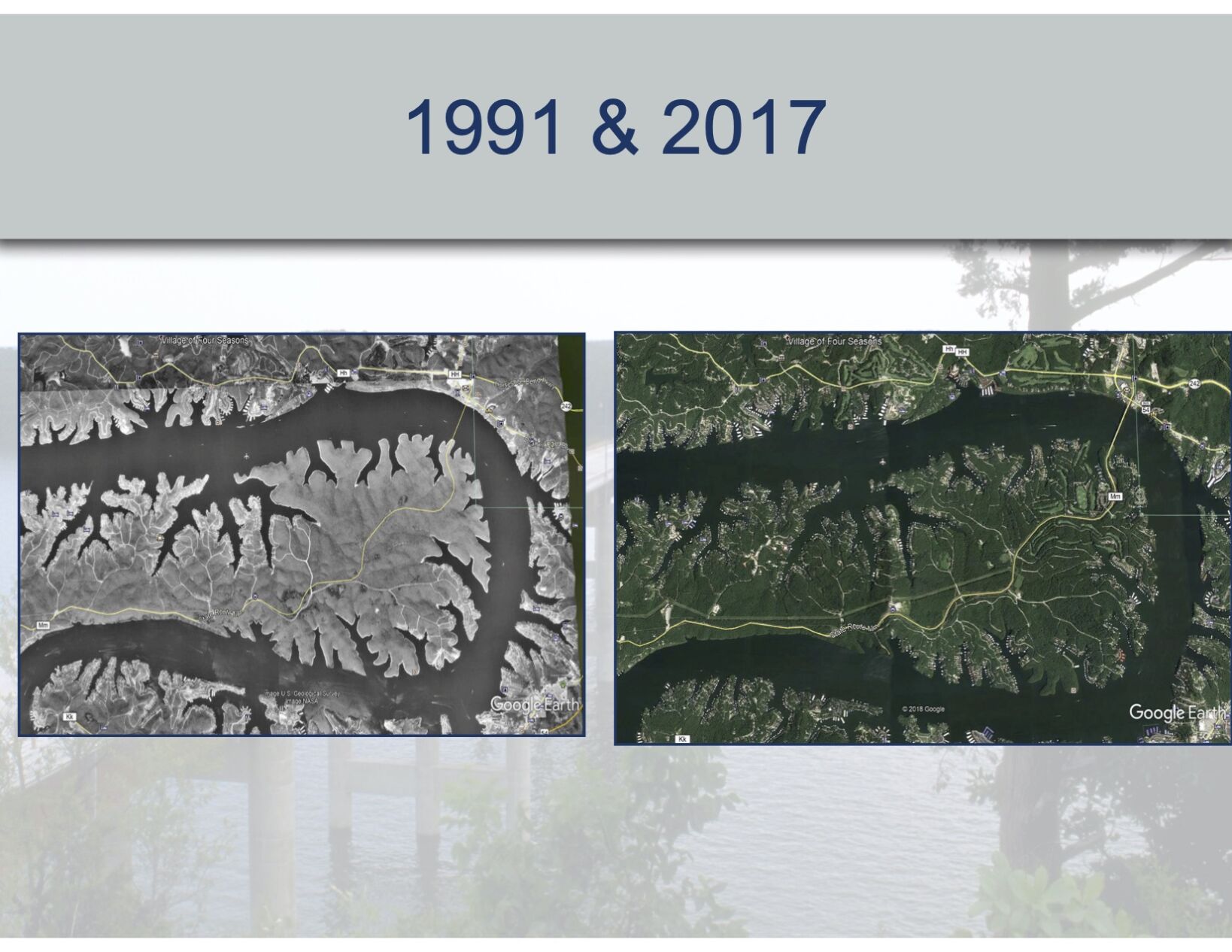
Not very many years ago — in the early 1990s — the area of the Lake that is now known as Porto Cima and The Villages at Shawnee Bend was miles and miles of vacant shoreline.
The geological twin of Horseshoe Bend didn’t even have a name. It was there, but almost no one lived there: much too far of a drive from the hub of the Lake’s activity in communities like Osage Beach, Lake Ozark, and Camdenton, and even too long of a drive down substandard roads from little west side towns like Sunrise Beach and Laurie.
But the bridge across the Lake that most folks know as “the toll bridge” is what changed everything. And though drivers may grumble about shelling out a few bucks every time they cross, the existence of high-end, still-growing Lake of the Ozarks communities like Porto Cima and The Villages as well as much of the growth of Sunrise Beach and Laurie are all indisputably thanks to the bridge.

The impetus to bridge the Lake was — unsurprisingly — an economic one. The Brown family, which owned the Lodge of Four Seasons, also owned a vast portion of Shawnee Bend, and wanted to find a way to bring development potential to it. They dreamed of a bridge.
It was the first project of its kind, and the idea was ambitious in part because of the many obstacles. Building the structure? No problem. But organizing and funding it relied on a brand-new legal mechanism that had never been used before.
How The Toll Bridge Came To Be
The Missouri Transportation Corporation Act, passed in 1990, allowed the formation of transportation corporations in cooperation with the Missouri Highway and Transportation Commission. That all sounds like a lot of mumbo-jumbo, so here’s what it means: a corporation like the Lake of the Ozarks Community Bridge Corporation could actually be formed, to pull off a project as big and as ambitious as the Community Bridge.
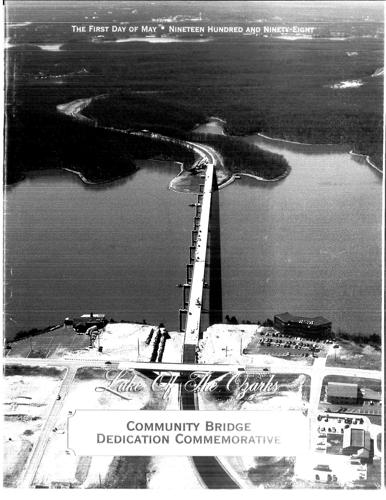
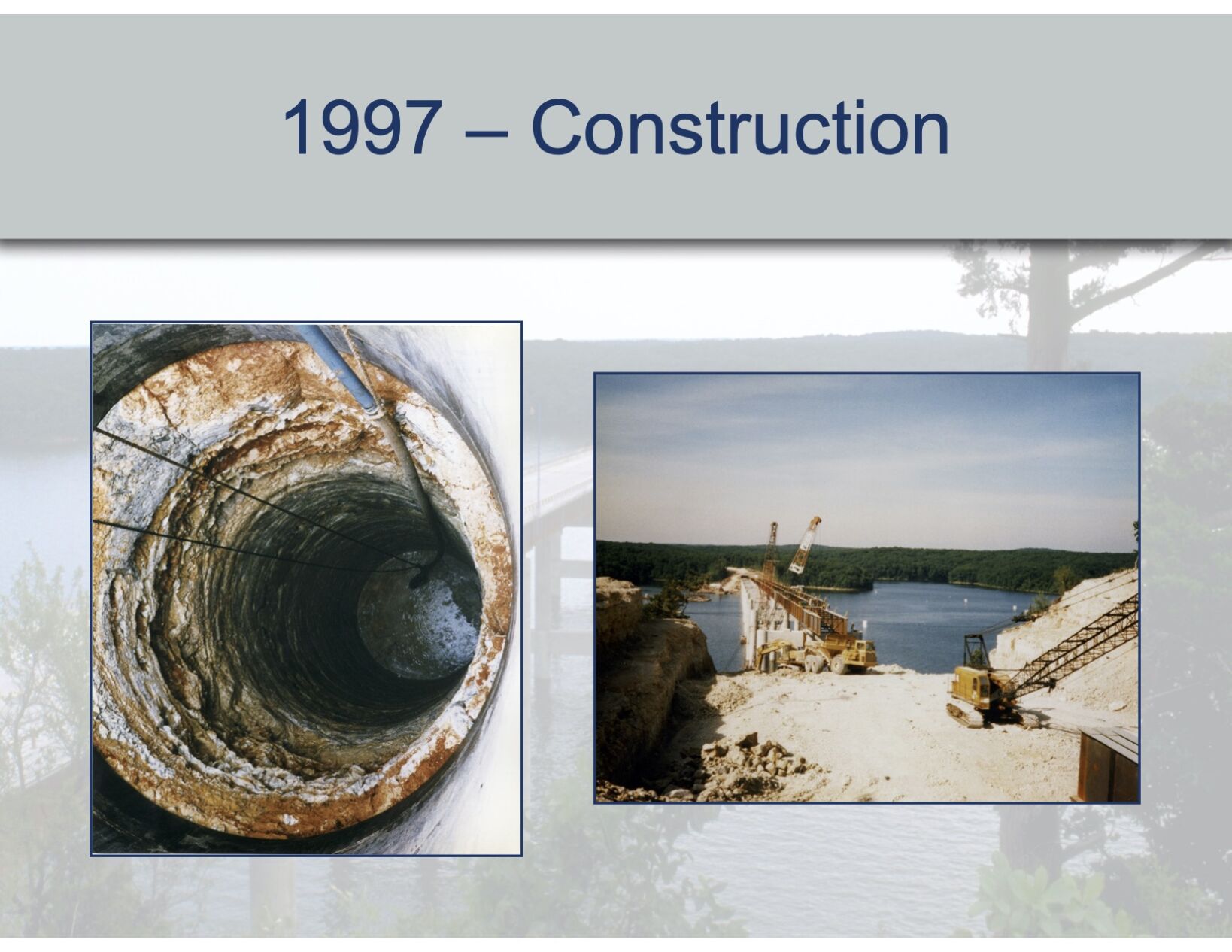
Still, it was a slog. The corporation was formed in July of 1991. They began working with consultants and legal counsel in the fall of 1992. The final design and plans were approved in November of 1995 (with the project going out to bid the following month), and the groundbreaking took place in March 1996. The finished 2,695-foot bridge was dedicated on May 1, 1998, with Governor Mel Carnahan, U.S. Senator Kit Bond, and U.S. Representative Ike Skelton in attendance.
While state funds could not be used — per state law — to pay for the toll bridge, as the project planning progressed, the Missouri Department of Transportation (MoDOT) began allocating money to improve roads on the Lake’s west side that would soon be seeing more traffic: $10 million was set aside for State Routes MM, TT, and F.
The project was bond-funded, and the $40 million in bonds were issued at what was for that time a notably low rate: 6.59%. And though the corporation initially anticipated a total construction cost of $38.2 million for the bridge and the work on the approach roads, they were pleasantly surprised by the low bid of $23,651,925.89, submitted by Edward Kraemer & Sons, Inc. of Plains, Wi. They went with it.
After the bridge’s construction, Lake area title company Arrowhead Title, Inc. was asked by corporation Treasurer Joseph Roeger to assist in providing the research needed to reduce the bond debt. “We had to research basically every piece of property that is affected by the bridge. That includes both ends of it… and of course all the land that’s under water,” Arrowhead Title owner Chris Cisar explained. That involved some deep (pun intended) research into the original acquisition of the land by Union Electric (Ameren) before Bagnell Dam was built. The result was big savings.
The bonds have been refinanced multiple times, and a 2012 debt restructuring dropped the interest rate to 3.375%, cut the annual debt service in half, and re-formed the corporation into a Transportation Development District (TDD).
Free Bridge Ahead

When the bridge first opened, the toll was $2.50 during the busy season, and $1.50 in the offseason, with higher rates for larger vehicles. Now the toll is $3 in-season and $2 the rest of the year. (For comparison, the old Hurricane Deck Bridge toll was 40¢ when it opened in 1936… that’s about $8.50 in today’s dollars.)
When the bridge financing is paid off, the district will pay off any other liabilities, close down the TDD, and hand off the bridge to MoDOT. Roeger emphasized MoDOT cannot (per the Missouri constitution) charge a toll on the bridge: in other words, when the bridge is paid off, drivers will be able to cross it for free.
The Bridge Changed The Lake
Anyone who’s taken the toll bridge knows: it turns what would have been a 30 to 60-mile drive (depending on your destination) into only about 10 miles.
Since the year 2000, more than 1 million vehicles per year have used the bridge to access a part of the Lake that would have once been… well not technically inaccessible, but at any rate not worth driving to. Now, Lake area residents and visitors cross the toll bridge as an everyday activity — for getting groceries, visiting friends, playing a round of golf, or working on one of the many construction projects, as Shawnee Bend continues to grow.


