
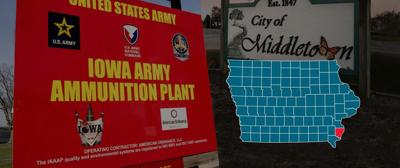
The U.S. Army is planning a controlled detonation of degraded lead azide at the Iowa Army Ammunition Plant in Middletown, Iowa, on Wednesday.
The detonation was postponed to Nov. 25 to allow for more favorable weather conditions and additional safety measures. Depending on wind direction and speed, portions of northeast Missouri could potentially be affected, although Missouri health officials say there is minimal risk to people outside the detonation and plume area. A more specific plume area is expected to be identified closer to the event.
Lead is a toxic metal that can cause serious health effects, particularly for young children and pregnant women. There is no known safe level of lead exposure, and health officials say potential exposure following the detonation could come from breathing lead-containing particles or coming into contact with lead dust deposited on soil, vehicles, buildings, playgrounds, and other surfaces.
Why The Army Says It Is Necessary
According to the Army’s environmental assessment, degrading lead azide was discovered in bunkers at the plant in March 2026. The material had chemically degraded and crystallized over time, making it highly sensitive to shock, friction, static electricity, and heat.
Army explosive ordnance personnel determined the drums should not be moved because handling or transporting them could create a risk of accidental detonation.
After reviewing other options, including chemical neutralization and moving the material to another detonation site, the Army determined an in-place controlled detonation was the lowest-risk option. Leaving the material in place, the Army said, would allow the hazard to continue increasing.
According to the Army’s mitigation plan, containment barriers have been built around the two storage magazines, and water misting will be used before and after the detonation to reduce airborne dust. The operation will also be subject to strict weather requirements and will only proceed under conditions the Army considers favorable for limiting the spread of lead-containing particles.
After the blast, crews will wait 24 hours before entering the site. The Army plans to test soil, surface water, sediment, and groundwater, with soil sampling extending as far as 3,000 feet from the site. Contaminated soil and debris that exceed cleanup standards will be removed, treated if necessary, and disposed of at appropriate facilities.
What Iowa Is Doing
Iowa Gov. Kim Reynolds activated the State Emergency Operations Center, allowing state agencies and federal partners to coordinate their response.
“While the detonation is a federal operation, it’s important for the state to be engaged in the preparation process so we can support the work of our federal partners in responding to the needs of Iowans,” Reynolds said in a statement. “Protecting the health and safety of our people and communities is our highest priority.”
Iowa health officials are evaluating possible public-health effects, while the Iowa DNR is working with the EPA and Army on monitoring plans for air, land, and water. The state also created a dedicated public-information website for updates.
Some residents near Middletown are also making their own preparations.
According to reporting from KCRG's Lacey Reeves, residents said they plan to leave town during the detonation, while others have been removing important documents, family photos, and other irreplaceable belongings from their homes.
"Because of the decisions that have already been made over the course of months, if not years, no good options exist and the situation is more dangerous and unpredictable than it ever should have been," said Iowa Governor-elect Rob Sand. "Iowans deserve transparency over how we got here, then answers and accountability to stop this from ever happening again."
What Missouri Is Doing
Gov. Mike Kehoe activated a multi-agency response involving the Missouri DNR, Department of Health and Senior Services, Department of Agriculture, Department of Public Safety, and State Emergency Management Agency.
Missouri plans to monitor potential impacts to air, water, agriculture, livestock, and public health. DNR is prepared to sample the Mississippi River and other surface-water drinking sources if needed, while DHSS has advised people concerned about possible exposure to stay indoors as much as possible following the detonation.
Kehoe and relevant state officials will hold a press conference at 2 p.m. Monday, Nov. 23, to discuss preparations for the detonation. Watch the livestream here.
What Residents Can Do
State health officials say the main concerns are breathing lead-containing particles and coming into contact with lead dust that may settle on outdoor surfaces.
People in areas identified as potentially downwind of the detonation may be advised to stay indoors with pets, keep windows closed, and shut off fresh-air intakes for 24 to 48 hours after the blast.
After an all-clear is given, health officials recommend cleaning outdoor surfaces in ways that do not stir dust back into the air. That can include using wet, disposable cloths or HEPA vacuums, wiping pets’ paws before they come inside, washing hands before eating or drinking, and removing shoes at the door.


