

LAKE NIANGUA, Mo. — Tunnel Dam, the hydroelectric dam on the Niangua River that creates Lake Niangua, is powering down.
By this summer, the dam will no longer be producing power, and if some in the federal government have their way, the dam could be torn down completely, draining Lake Niangua and dramatically altering the landscape for wildlife and homeowners in the area.
The Dam
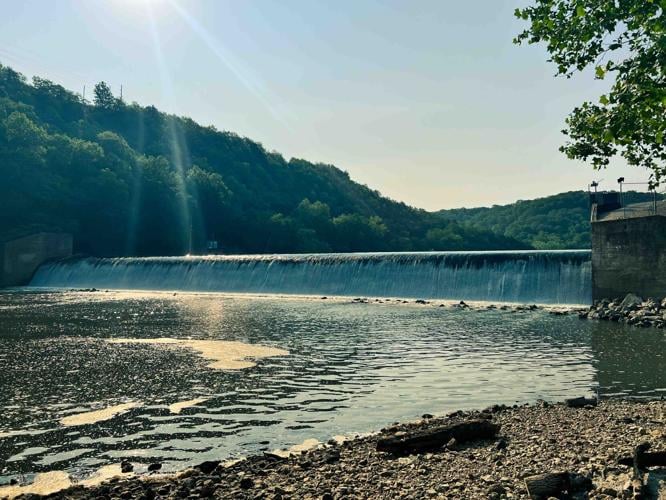
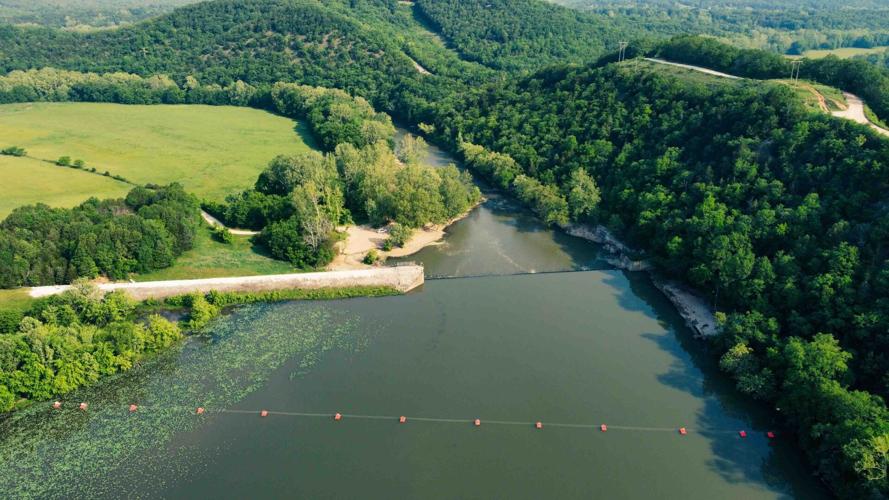
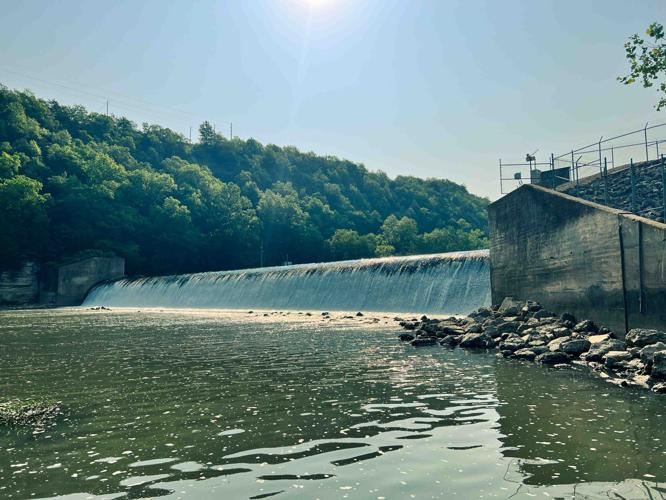
Tunnel Dam, located just a few miles from Lake of the Ozarks, has been generating power for the surrounding area for more than 70 years. The uniquely constructed 2.4 megawatt dam uses the Niangua River to generate electricity. It utilizes a manmade tunnel cut through a ridge, which connects two points of the winding river that pass close by one another: the fall in elevation from the upper point to the lower point creates sufficient water pressure to turn the turbines. A dam was constructed to create Lake Niangua, raising the river level high enough to divert water through the tunnel. Water flows continually over the spillway on Tunnel Dam, keeping the Niangua River flowing downstream.

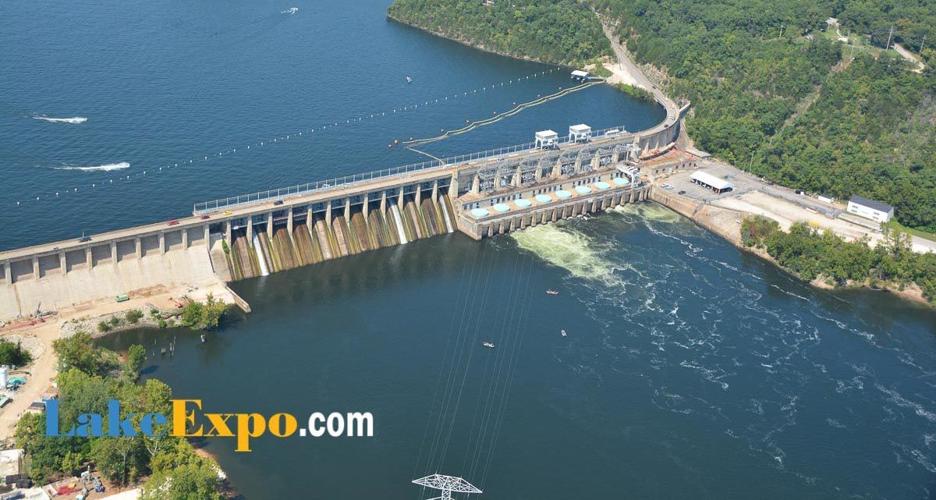
According to the Sho-Me Power Electric Cooperative website, the dam has been producing between 7.5 and 12 million kilowatt hours per year. For comparison, Bagnell Dam, which impounds the Osage River to create Lake of the Ozarks, produces more than 500 million kilowatt hours per year.

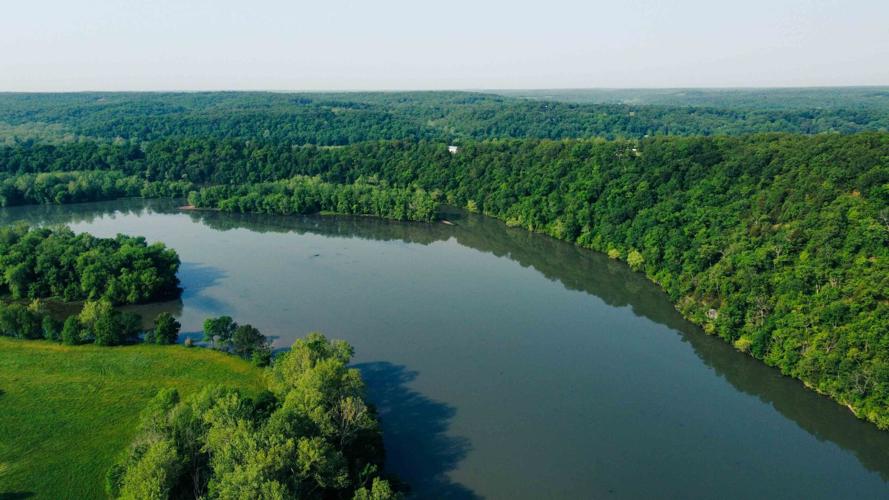
Osage River & Bagnell Dam
According to EIA.gov, the average home uses a little more than 10,000 kilowatt hours per year, which means Tunnel Dam currently powers about 750 homes per year.
However, due to aging infrastructure and the relatively small amount of power generation, the dam is no longer considered financially viable. Hydroelectric dams must be licensed by the Federal Energy Regulatory Commission (FERC) in order to produce power, and the Tunnel Dam operator — Sho-Me Power Electric Cooperative — says their current FERC license is up for renewal. Sho-Me Power says it doesn't make financial sense to renew the license for another 30-to-40-year term.
So, Sho-Me Power plans to surrender their license to the dam, decommissioning the Project and ceasing power generation.

The Future
With Sho-Me Power surrendering the dam, The Federal Energy Regulatory Commission (FERC) makes the final call on what will happen to it.
The contract to take over the dam to produce power was publicly listed by FERC, and possible interested parties were contacted. But in the end, no one wanted the dam.
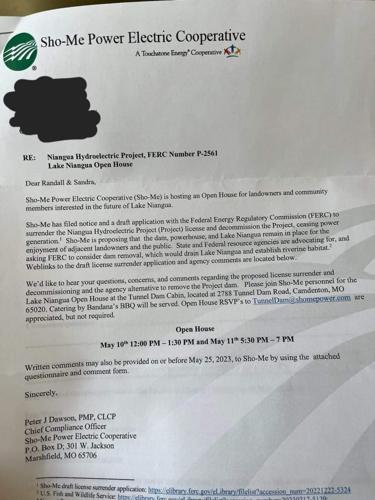
As a result, two possible options for the dam were laid out in a letter sent out last summer to landowners and community members interested in the future of Lake Niangua.
"Sho-Me is proposing that the dam, powerhouse, and Lake Niangua remain in place for the enjoyment of adjacent landowners and the public," Sho-Me Power wrote in the letter. However, it added, "State and Federal resource agencies are advocating for, and asking FERC to consider dam removal, which would drain Lake Niangua and establish riverine [river] habitat."

Editor's Note: The open house mentioned in the letter above took place in 2023. LakeExpo does not know of any further events planned in 2024 in relation to the potential demolition of the dam.
Reader Poll
Reader Poll: Should Tunnel Dam be torn down?
What do you think? Should Tunnel Dam be demolished and the area returned to riverine habitat, or should the dam and Niangua Lake remain?
Residents Worry
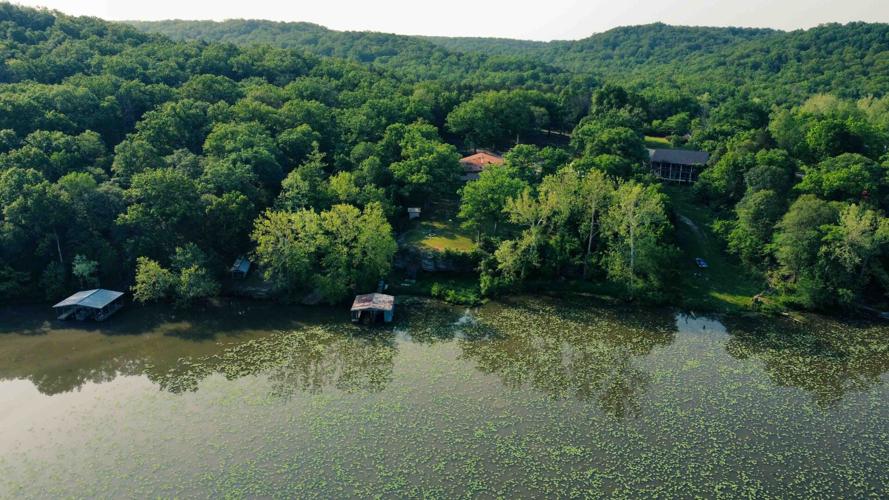
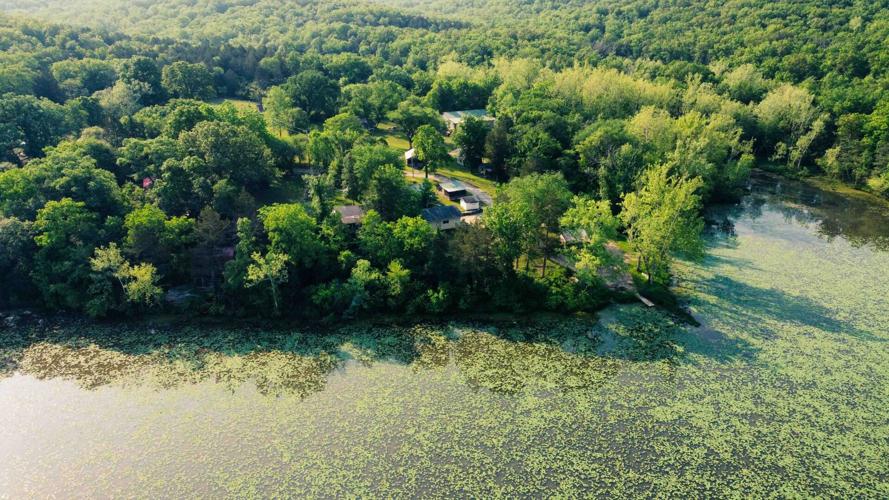
For the roughly 50 residents that live on or near Lake Niangua, the dam coming down would mean the destruction of a lake and lifestyle that residents have been enjoying for more than 70 years.
"I’ve got a place up here, first one on the right. And to us, this Lake is just as important as Lake of the Ozarks is to people up there," said resident Randy Denny. "It’s nice and peaceful, I don’t know what we’d do without it."

For some, visiting Lake Niangua is a tradition that goes back generations.
"I would love to see it stay just how it is," said Caroline Wolverton, who’s been coming to the Lake since she was a young girl. "Our Aunt Geraldine had a house on the lake down here and we visited with her and swam in the lake with our cousins, skied, and the men fished. It’s always been a big deal for us."

Decommissioning the dam for power generation would cause relatively few changes to the dam and lake. It would primarily consist of permanently sealing off the tunnel intake and disconnecting electrical connections from the powerhouse. Sho-Me Power has committed to continuing to maintain the dam as needed even though the structure would no longer be producing power.

But downstream from Lake Niangua is Lake of the Ozarks, and if FERC removes the dam and drains the lake, some worry it it could have a noticeable impact on the Lake of the Ozarks. The specifics of any negative effects are unknown. Since Tunnel Dam uses a spillway, floodwater regulation on the Niangua River would not be impacted one way or the other.
But regardless of the impact on Lake of the Ozarks, those who love Lake Niangua worry the lake may soon be history.
Tunnel Dam will continue to produce power until June of 2024, when Sho-Me Power’s contract expires. A final decision by FERC to keep the dam or tear it down is expected to be made before then.

History of Tunnel Dam
From the Sho-Me Power website:
After the Louisiana Purchase, the extinguishment of Indian titles and the coming of Missouri statehood in 1821, a trickle of white settlers began to appear in the Niangua River basin. The country was rugged and wooded and yielded slowly to these early people. Small bottom farms and timber cutting comprised the main activity including tie hacking and rafting. By 1850, small water power grist mills appeared, thirty-three such mills being erected on twenty-five sites up and down the river through 1920. The possibility of the production of hydroelectric power on the Niangua River came under consideration in the early 1900s. Attention was especially attracted to one potential site where a natural cave or tunnel pierced the base of a narrow ridge, cutting off a seven mile meander of the river, thus affording the opportunity of obtaining an artificial fall of water sufficient to drive a water wheel of some size.
A small city was built on the site and a force of about 350 workmen lived there during the construction of the dam. A new tunnel was driven through the hill. A concrete mixer was placed on top of the hill above the dam site and concrete was sent down a chute on each side–on one to the dam and on one to the power plant. It is interesting to note that all machinery and equipment installed in the powerhouse was transported from the top of the ridge by means of an inclined track and cable car. After construction was finished, the cable car was continued in use for the convenience of the plant operators and to move materials. This arrangement lasted until 1954 when a roadway replaced the car and track.
The Niangua Hydraulic Generating Station, situated on the Niangua River, approximately 24 miles northwest of Lebanon, was completed late in 1930 by the Management and Engineering Corporation and placed in operation by the Missouri Electric Power Company on November 9, 1930.
The gravity type dam, designed to provide a forty-foot head, includes a rock anchored concrete spillway section, 24 feet in height and 300 feet in length and a rock and earth filled embankment with a steel sheet-pile supported concrete core wall extending 500 feet to the west bank. The east end of the spillway section is secured to the rock ledge by a keyed rock-filled crib. The west end of the spillway section joins the embankment section by means of a concrete abutment carried to bed rock and protected by wing walls which are supported by steel sheet piling.
The reservoir created by the dam, irregular in shape, extends 2 1/4 miles upstream and is approximately 1/4 mile wide and varies from 10 to 20 feet in depth at the low water stage. The area of the surface is about 360 acres, indicating a capacity of 2650 acre feet, of which 1550 acre feet is considered available for generating power.
The location of the generating plant, 900 feet east of the reservoir, and approximately 6 1/2 stream miles below the dam, provides a maximum head of 40 feet through a concrete lined tunnel and surge chamber. The reinforced concrete substructure forming the equipment foundations supports the reinforced concrete surge chamber and power house. The tailrace, formed by an excavation in the riverbank, is protected on either side by concrete retaining walls extending from the powerhouse substructure to the stream.
The generating equipment consists of two Allis-Chalmers vertical generators, rated at 1875 KVA capacity each, driven by S. Morgan Smith water wheels with 60 inch adjustable blades, rated at 2030 HP each, operating at 327 RPM under an effective head of 40 feet. Suitable equipment is provided for the automatic control of the intake gates and other equipment.
To secure flowage rights in connection with the Niangua Hydraulic Generating Station, it was necessary to purchase a number of tracts of farm land aggregating 417 acres. Rights had to be obtained on land from seven owners and the water rights from several interests involving thirty sections of land in Laclede and Camden Counties.
The company owns and maintains storehouses, operator’s cottages, electric distribution and water systems, and other facilities considered necessary to the operation of the generating station.
Plant production is limited to a peak capacity of 2,400 kW and annual production of 7,500,000 kWh to over 12,000,000 kWh, depending on useable water flow. Operation of the plant is now integrated into the requirements of Associated Electric Cooperative of Springfield, Missouri.
Although in 1997 Tunnel Dam is small compared to the huge capabilities in both hydro and thermal generating units now available to Associated Electric Cooperative with which it is integrated, it still can help in a small way on peak periods and provide some economies in production of energy. Aside from this, Tunnel Dam can be regarded as a viable and unique sixty-seven year old engineering work. It has been so listed in a survey of historical engineering sites in the State of Missouri conducted by the Department of Social Services at the University of Missouri-Rolla.


