
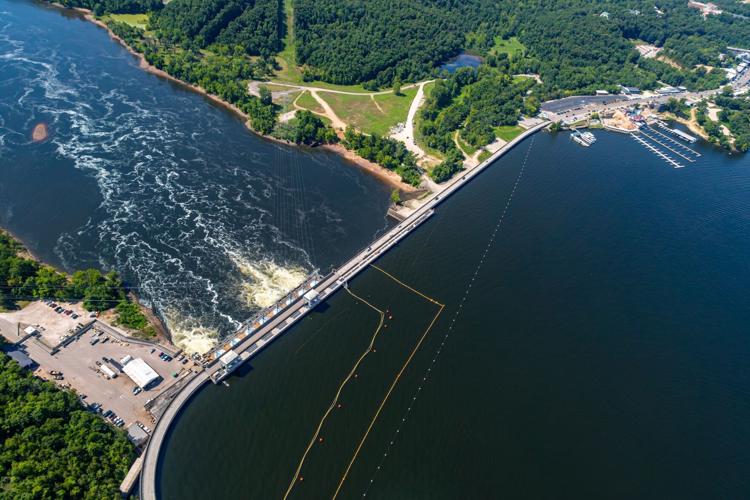

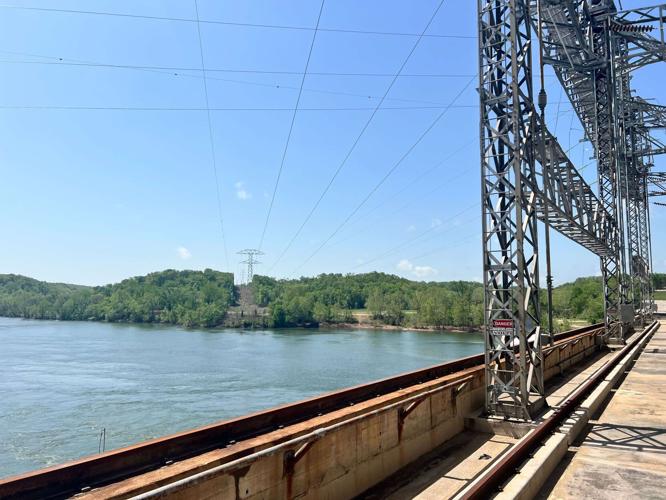
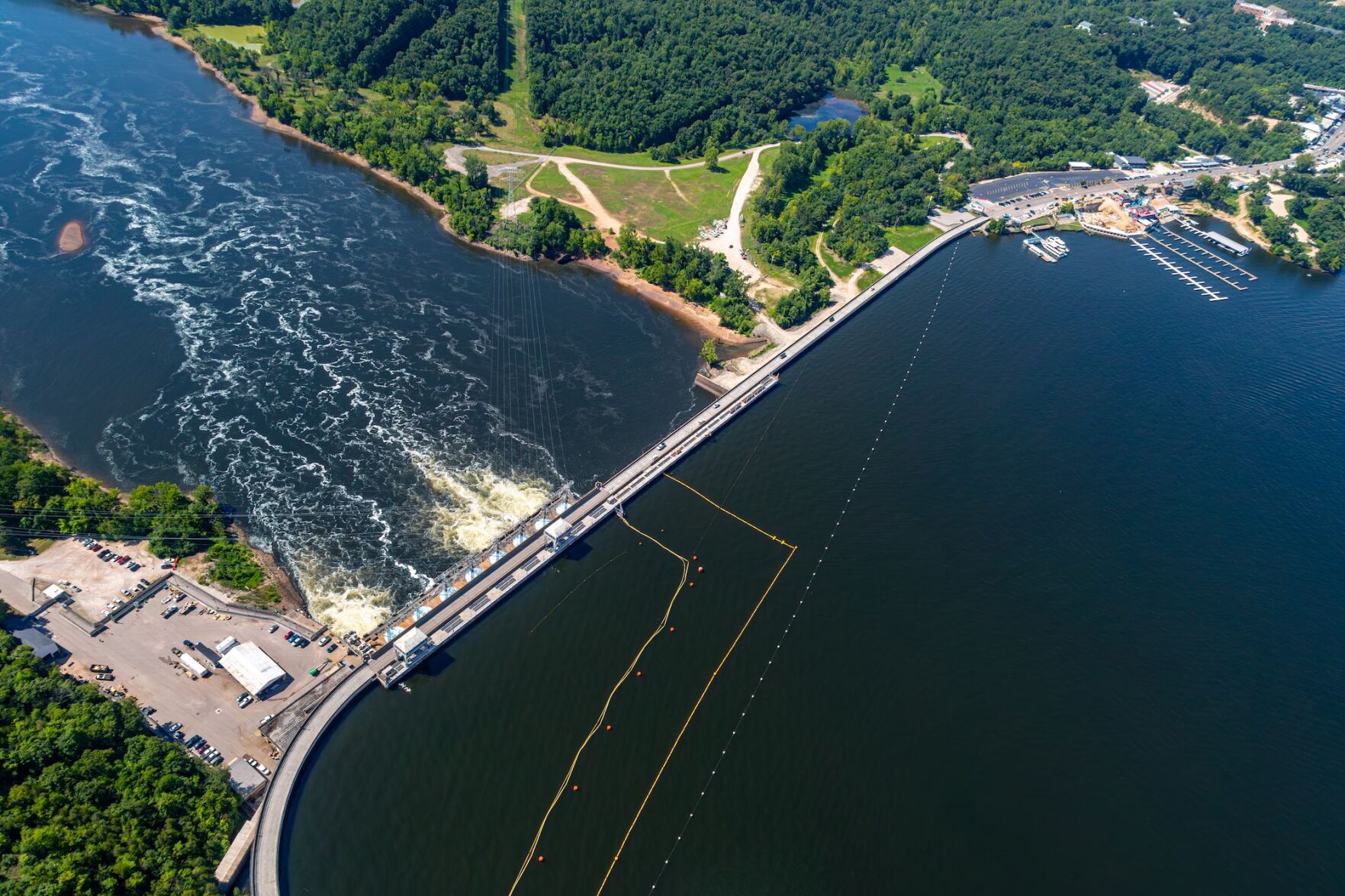
Bagnell Dam, which creates Lake of the Ozarks by impounding the Osage River, is creeping up on its 100th birthday. And in 2025 Ameren — the utility company that owns the dam — finished replacing some of the dam’s most critical components: turbines that have been there ever since the dam was completed in 1933.
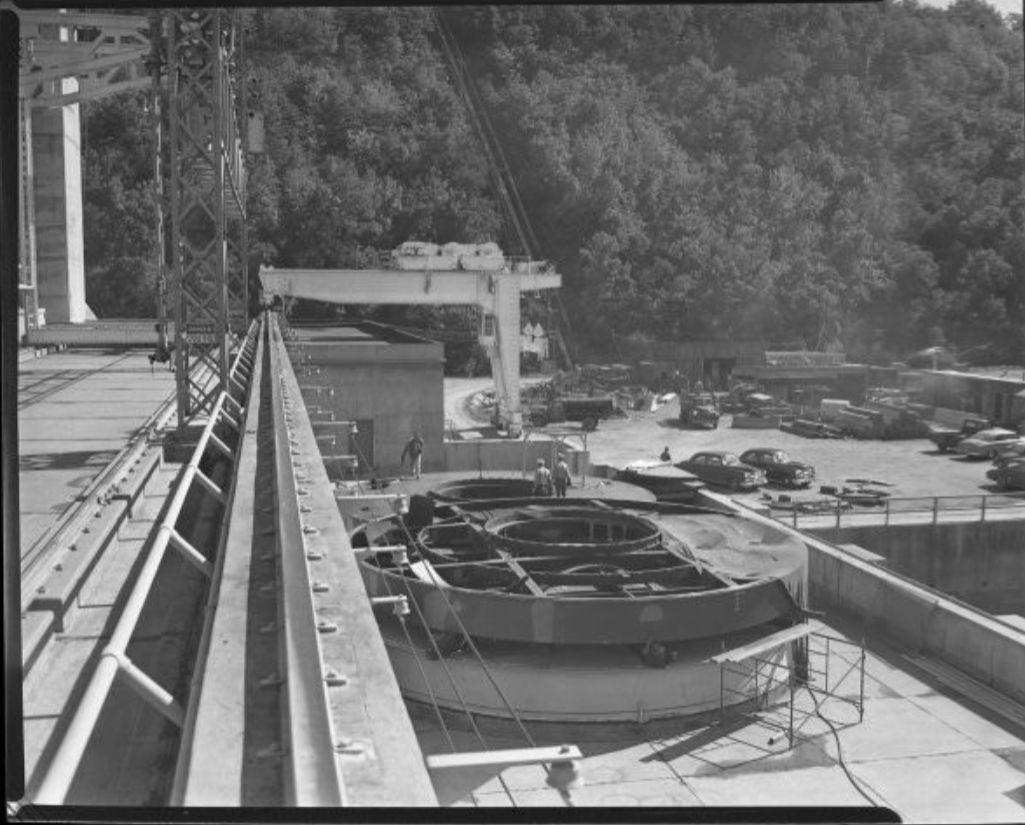
The purpose of the dam was to create a lake for recreation but also to generate power. To that end, inside the dam are eight turbines, which can generate up to 174 megawatts when the dam is running at full speed. Each year the dam generates enough electricity to power approximately 42,000 homes.

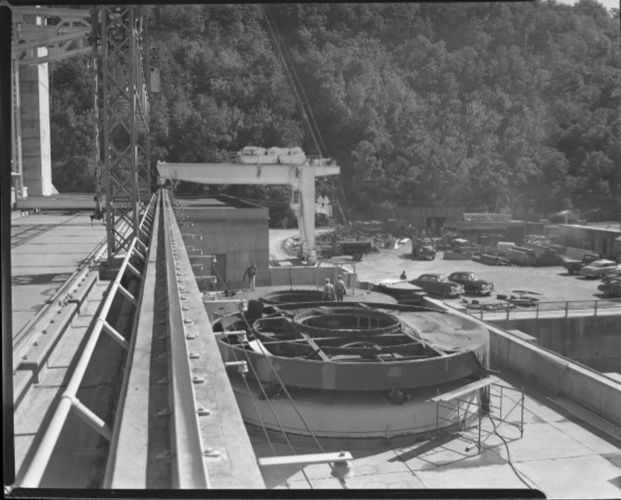
Circa 1955
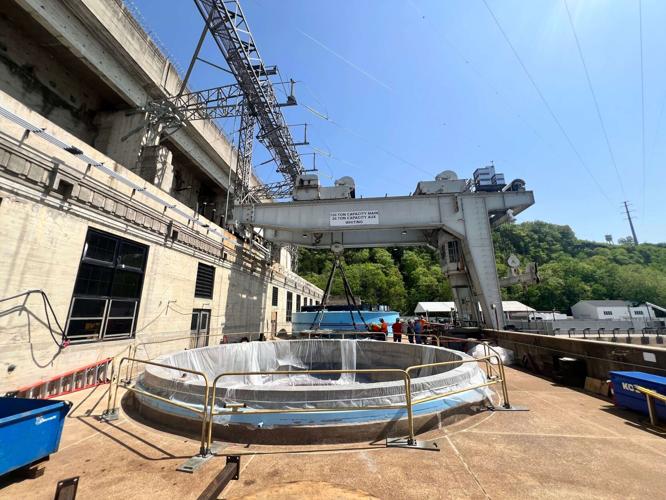
Invited for a rare opportunity to explore the dam behind the security fences, I stroll along the main service deck. Each turbine sits at the bottom of a giant cylindrical chasm. Normally a cover sits on the top of each shaft, but during the replacement process, the pits remain uncovered, surrounded by railing. I lean over the rail, looking down into those chasms. They feel like the perfect setting for a Bond-movie fight scene; a villain is definitely falling into one of those things.
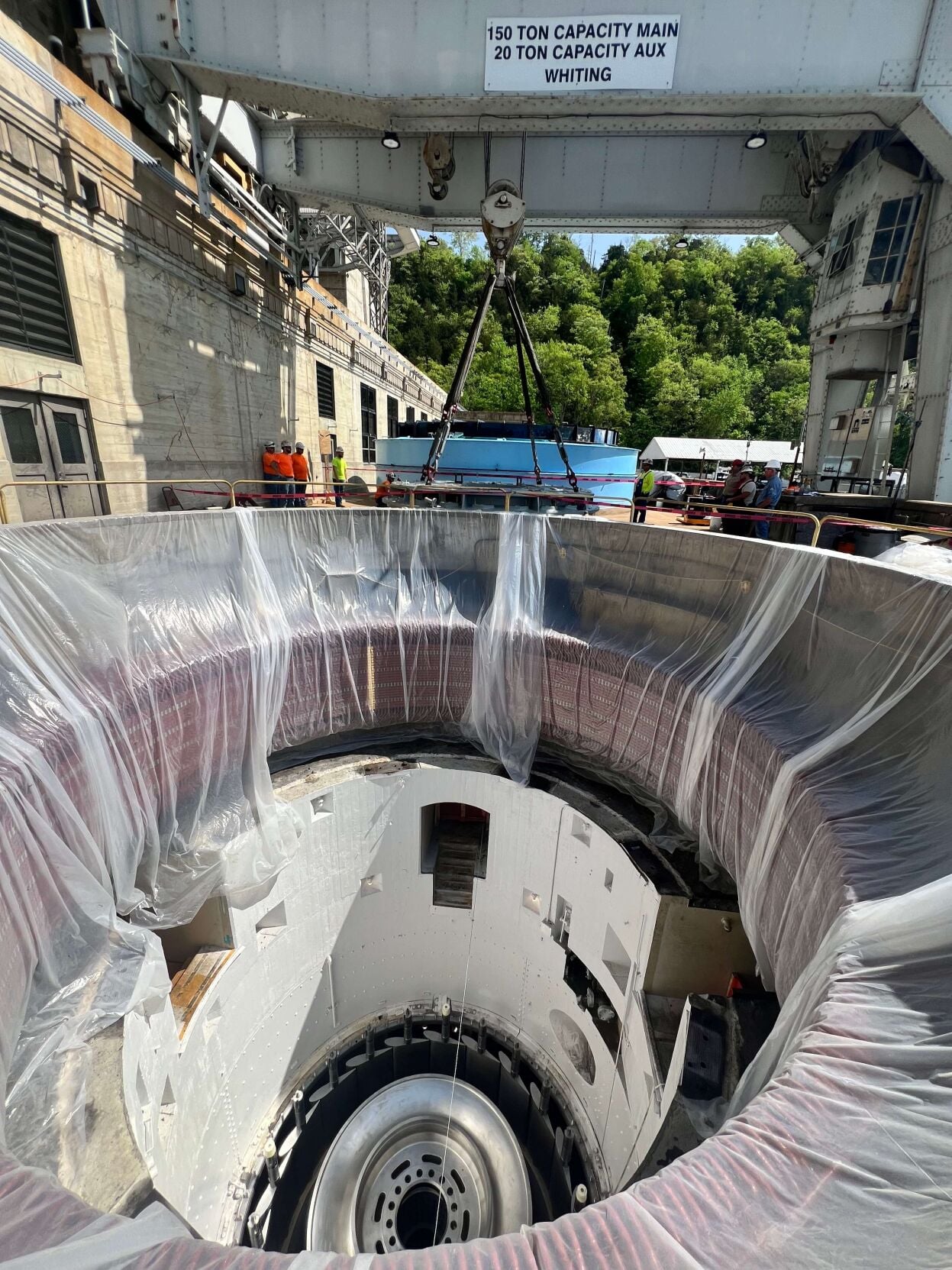
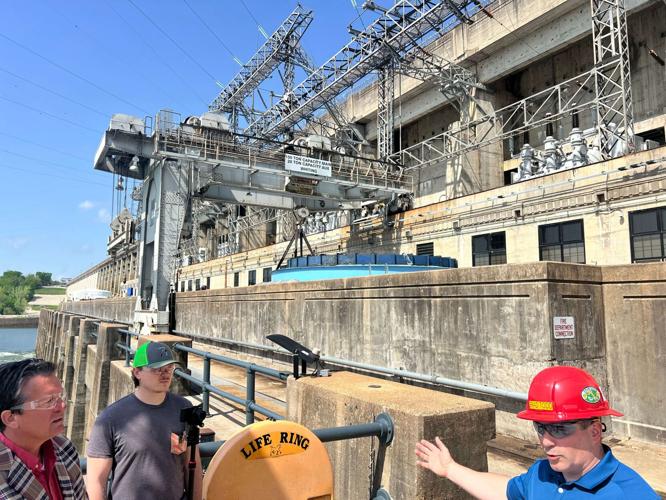
But 007 is nowhere to be seen. Instead, Bagnell Dam Director of Hydro Operations Bradley Todd stands near the turbine pits, explaining the details of the process to this small group that was given exclusive access to the area. For decades, Ameren offered these kinds of facility tours to the public, but that all changed with 9/11. Now, this kind of opportunity is reserved for dam employees and occasional exclusive events like this one.

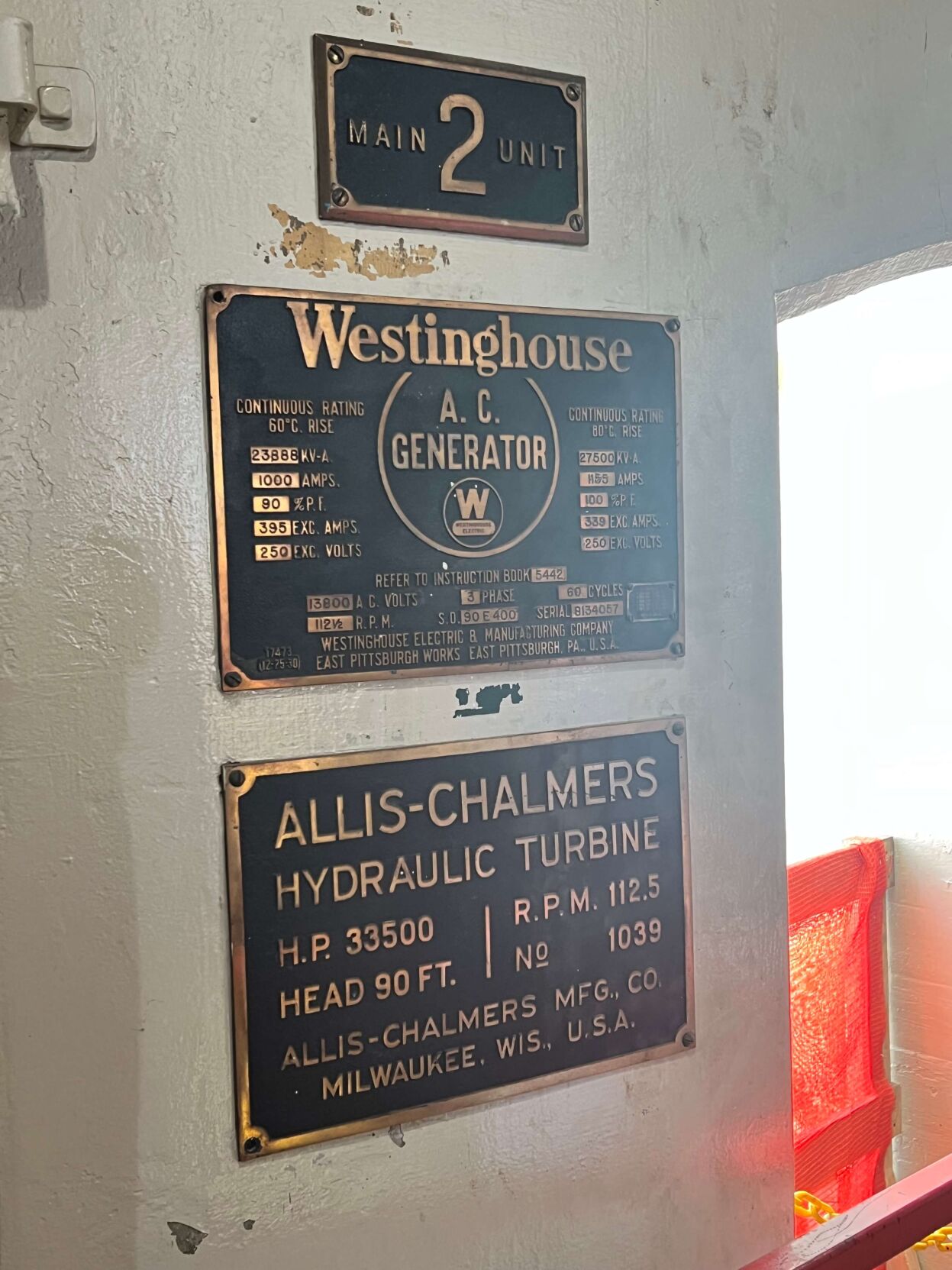
Ameren had already replaced six of the eight turbines in recent years; one of the old ones can be seen at the Bagnell Dam Overlook on the Strip, and another is on display at the park-like overlook area above the dam. So this final work replaced the two remaining turbines that were part of the original build in 1933. One turbine will be put on exhibit. The other? Scrapped. Nobody wants it.
Why bother with this project? Todd explains it’s partly just ongoing upgrades, upkeep, and maintenance of the nearly century-old dam. He also notes the new turbines are much more effective at aerating the water, which creates better aquatic quality downstream.

Conditions below the dam don’t seem too bad, though: from our vantage point on the lower concourse, we spot abundant fish congregating at the concrete wall. Among them: nice-sized spoonbill — an ancient, native fish that lives only in the Missouri and Mississippi rivers and their tributaries — and invasive Asian carp. The carp swim aggressively against the structure; almost as though they’re trying to find a way through the dam, they congregate and crowd up against the edge. However, Todd says there’s been no evidence of Asian carp in the Lake of the Ozarks, and conservationists hope to keep it that way.
It would be impossible to get into Lake of the Ozarks through the dam, of course: the current is impassable, plus the turbines would make short work of any fish that got into them. In fact, years ago, the turbines used to provide a constant source of chopped fish for bald eagles, vultures, and other hungry fish downstream. Nets installed on the Lake side, near the dam’s water inlet, now keep fish from swimming down through the dam to their doom.
After discussing the details of the rehab project, Todd takes us inside the dam.
We walk down a lane of offices and cubicles, past a wall full of very old and very new electric generation management equipment (no photos allowed), and then into a concrete shaft, where we begin to ascend a metal stairwell. The concrete walls are wet in places — “The dam is kind of a living thing,” Todd assures us. It reminds me of that one corner of my basement after a heavy rain. You just live with it.
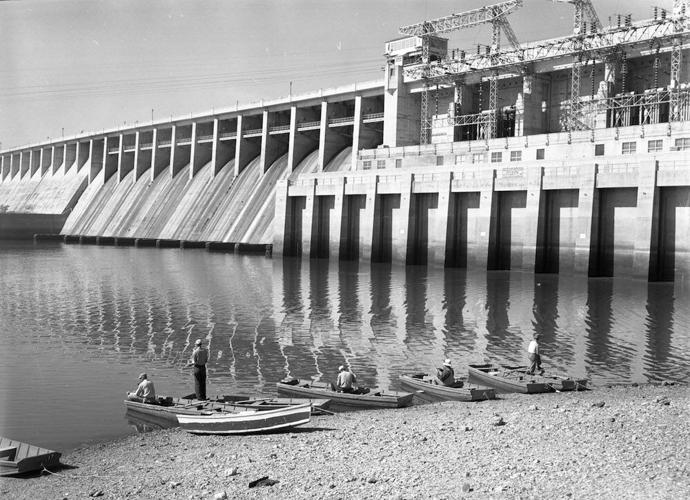
Up we go, first, to a metal catwalk for a view I’d always hoped to see: we are standing right in front of the spillway. To our right are the floodgates — 12 in total, all the way down the face of the dam. Rumor has it the dam had room for 13, but… you know… 13. So they went with 12. The less interesting explanation is that dam builders determined they only needed 12, so why bother building another?

Below us are the spillway chutes, stained black and green by the organic growth that comes from decades of constant moisture. Because, while the spillway gates are technically closed, there’s always just a tiny bit of water seeping through. “A living thing,” indeed.
To our left, the yawning Osage River valley.

These gates aren’t opened often, only when major rainfall threatens to overwhelm the turbines’ ability to keep the Lake at a steady level. Their max flow-rate, somewhere around 40,000 cubic feet of water per second, is usually sufficient. Todd points out that since the dam is a power-generator, any water that flows through the floodgates essentially means lost money, since the gates allow water to bypass the generators. Those 12 gates, though, allow Ameren to hold the Lake level within a surprisingly tight tolerance: it only varies by inches throughout the summer, staying between 659 and 660 feet of elevation above sea level, except in extreme circumstances.

In an incredibly rare instance, the Lake level went above 660 not once but twice, in 2015, due to massive flooding. Even still, the floodgates were critical in helping reduce the pain on the 1,150 miles of lakefront, much of which is developed with private homes, condos, and businesses that are built almost to the water line. Some were flood-damaged, but many were saved. Homes and farms downstream weren’t so lucky.
Further down from the spill gates, the bright-white face of the dam shines in the sun, recalling another recent upgrade. There, Ameren added post-tension anchors to secure the dam to the underlying bedrock, poured concrete between the highway piers to add weight to the dam, and replaced aging concrete on the dam’s face. The cost of that project was $52 million. Eighty-five years earlier, Union Electric had built the dam for a mere $30 million.
After several minutes of photos, video, and discussion, Todd says it’s time to move on. But none of us want to: this is the kind of distinct place where you want to linger, contemplate, and enjoy the view. Nonetheless, we head back to the concrete shaft, and descend into the bowels of Bagnell Dam.
There, we step inside a large, long, high-ceilinged corridor. This is where all the dam’s generation equipment resides. No photos of that area over there, Todd says, pointing. That equipment is proprietary. But then he walks us through turbine-row, where those giant cylindrical pits from above cut through the center of the dam. Peering through the little access points around the pit where the new turbine is being installed, we can see daylight. The turbine is already in, but crews have yet to install the giant shaft that connects to the generation equipment. This is a rare sight, possible only when the turbine shaft is removed. We all crowd around the openings, leaning forward for the best photo op, careful not to fall in… nor drop our phones.
Finally, Todd takes us through the service-area of a turbine that’s currently operating. The whirring shaft nearly drowns out his shouts, as he explains the way the gill-like wicket gates around the turbine open and close to allow varying amounts of water in — just depending on how much flow-through Ameren wants at any given minute. Once upon a time, this was a manual process, managed by men in the bowels of the dam, pulling levers and turning wheels. Now it’s managed by computers: a few keystrokes control millions of gallons of water.
When we finally re-emerge into daylight, we take our final glimpses from an angle on Bagnell Dam that — while commonplace for dam employees — is incredibly uncommon for most folks these days. I can only speak for myself, but we all left the dam in a mood of awe and contemplation. This nearly 100-year-old marvel in the midst of an overhaul still holds immense power to impress, standing as a monument to brilliant men a century ago with the grit and know-how to construct a dam that would change not just the Osage River, but the entire Midwest.
Love SHORE Magazine? Get the latest issue delivered to your doorstep or pick up a copy from racks at businesses around Lake of the Ozarks!


![[VIDEO]: Ferris Wheel Now Standing Tall At The Oasis](https://bloximages.chicago2.vip.townnews.com/lakeexpo.com/content/tncms/assets/v3/editorial/6/45/645bc455-286b-4556-b486-8f36b333dff4/6ab5949ebf5bf.preview.png?crop=1263%2C1263%2C0%2C60)

![Dinner With THIS View?! Inside 1932 Reserve At Lake Of The Ozarks [FLYTHROUGH]](https://bloximages.chicago2.vip.townnews.com/lakeexpo.com/content/tncms/assets/v3/editorial/b/40/b4047402-5958-4f34-92e1-36da52740fea/6aada39fabf69.preview.jpg?crop=1119%2C1119%2C240%2C0)


