
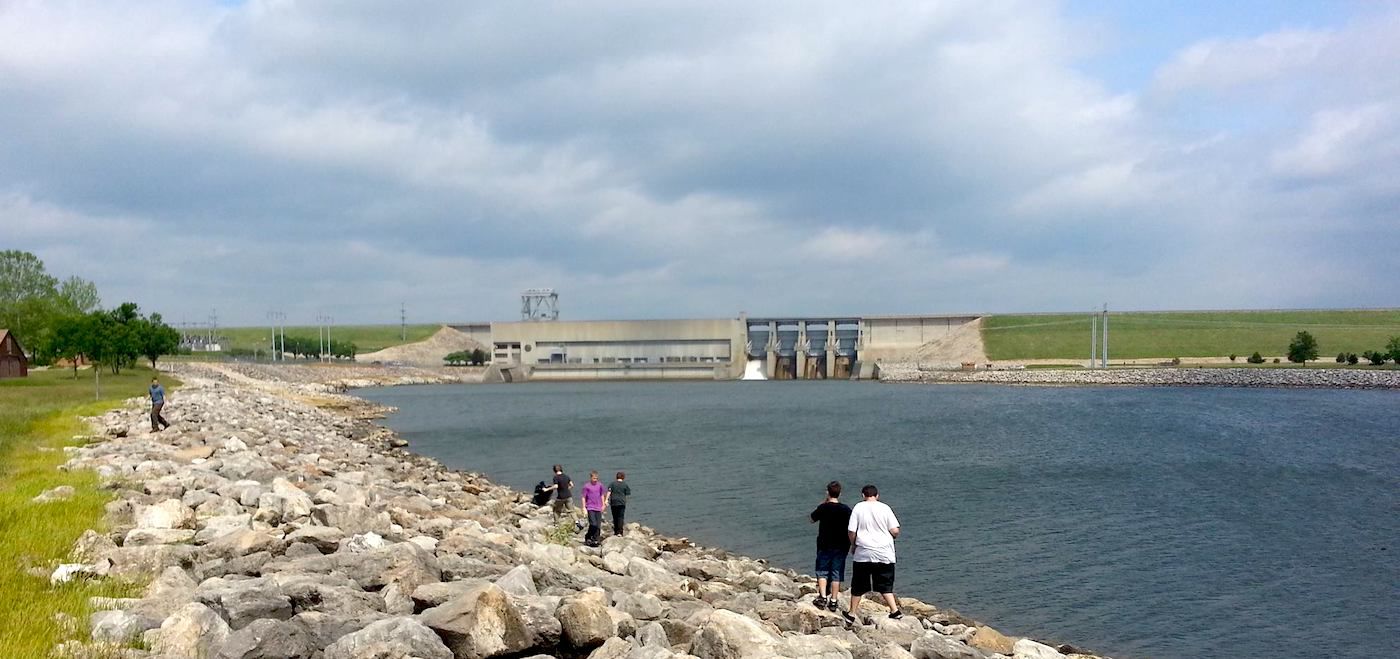
WARSAW, Mo. — The Army Corps of Engineers wants residents on Truman Lake and Lake of the Ozarks to know the dam is structurally sound, but also to be aware of the inherent risks of living near a dam.
Scott Mensing, Dam Safety Expert for the Corps led the discussion and answered questions at a public meeting held at the Truman Dam Visitor’s Center on Wednesday, March 13. The Corps’ Kansas City District announced the meeting would answer questions and discuss the recent re-categorization of Truman Dam with a DSAC 2 rating. A LakeExpo.com article about that rating change generated a cascade of questions, concerns, social media discussions, and articles about Truman Dam’s safety.
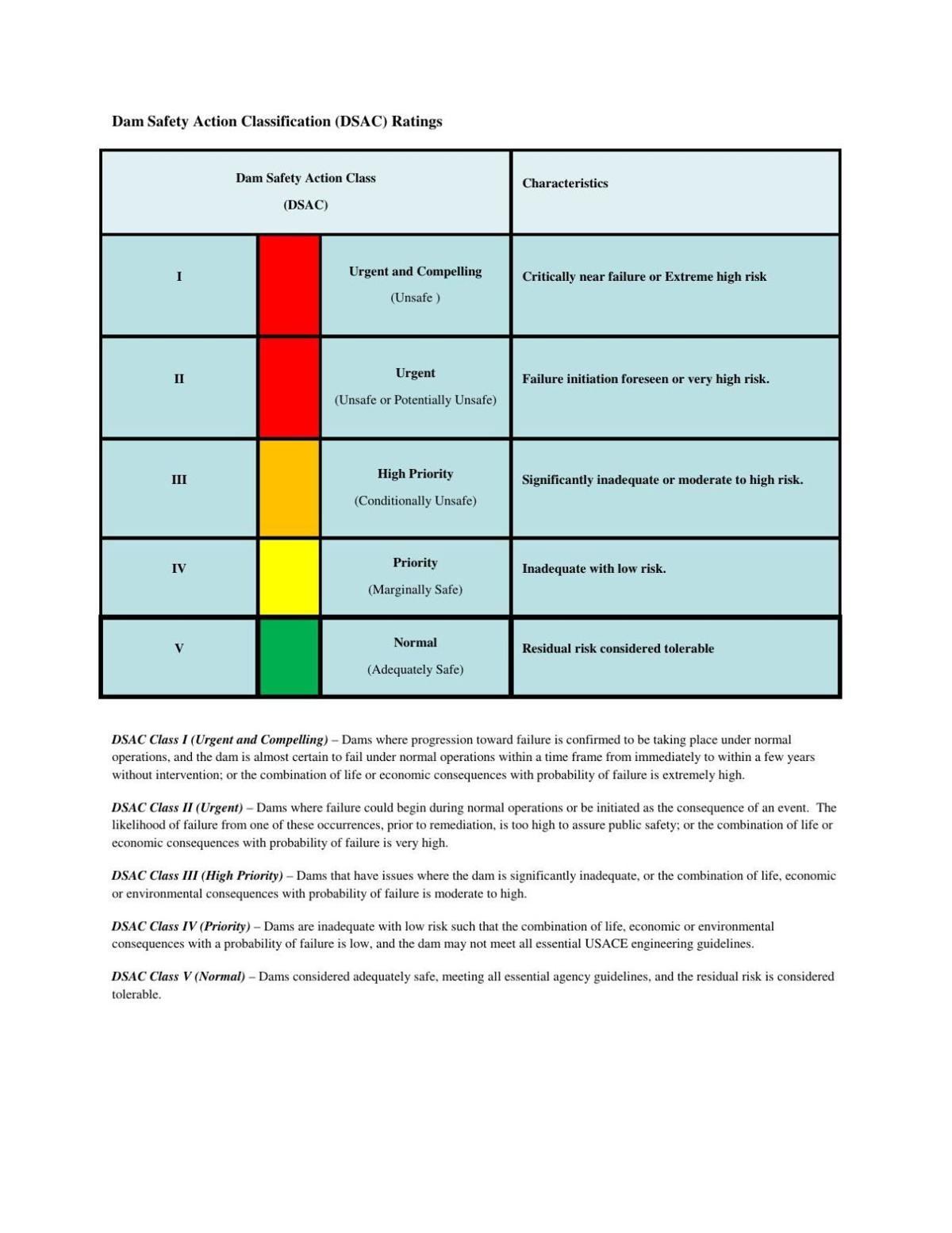
The Corps’ Dam Safety Action Classification system is relatively new, Mensing said, and Truman Dam had originally been given a DSAC 4 rating when the system was adopted (5 is the rating of least concern, and 1 is considered “urgent and compelling”). The new DSAC 2 rating for the dam was the result of a 10-day, in-depth study of the dam in 2018: the first in-depth study for the purpose of a DSAC rating that had been conducted, he explained. (Two videos from the meeting, via Facebook, are viewable below.) That study determined no structural modifications to improve dam safety were needed.
Mensing addressed concerns that the dam was “potentially unsafe”—a term used in multiple headlines, including in LakeExpo.com’s original article. On the Corps’ DSAC explanation chart, a 2 rating is briefly described as “Urgent (Unsafe or Potentially Unsafe) - Failure initiation foreseen or very high risk.” (View the DSAC chart at the end of this article.) Interviews with Dam Safety Program Manager Pendo Duku, cited in LakeExpo.com’s original article, revealed that for Truman Dam, a DSAC rating didn’t mean Truman Dam was in danger of breaking, but that there would be huge implications downstream if the dam were overtopped or breached by extremely heavy inflows and rainfall.
“Every dam in the nation… is potentially unsafe,” Mensing said at Wednesday’s meeting, adding, “Any time you have impounded water, it is potentially unsafe. There are inherent risks. However, Truman Dam itself is structurally sound, it is well-maintained, it is functioning as designed.”
Mensing said the DSAC 2 designation can be given for one of two reasons. “You could be a DSAC 2 due to a high likelihood of failure. Truman is not in that category,” he emphasized. “It could be that you have a high potential for downstream consequences. Truman is in that category. Truman has 90,000 people that reside below Truman.”
“That number… the number 2, is a number to prioritize dams in the corps’ inventory,” he explained. “We needed to better identify ‘Where should we put our time and your money into improving the safety for the nation?’ So that’s what that DSAC, the number 2, represents. It represents a priority: 1 being the most urgent, 2 being the second urgent.”
The downstream consequences of what he called a worst-case scenario would be felt all the way down to the confluence of the Ohio and Mississippi rivers.
It’s not that the Corps expects such a scenario is imminent. But Mensing was candid about the realities of living beneath a dam.
“We can reduce the amount of flooding, but we can’t stop it,” he said “There’s always a chance of a flood that will come that the Corps can’t handle. And it’s that event, even though it is extreme, it is rare, it is highly unlikely… it could happen. I can’t say it can’t happen.”
Those two topics—the structural soundness of Truman Dam and the clear informing of the public about the inherent risks of life with a dam—were the thrust of Mensing’s 15-minute talk.
Truman Dam has inarguably saved downstream communities from greater flood damage since its completion in 1979. According to one Corps document, the dam prevents an average of $103.2 million per year in flood damage. During the 1993 flood, the dam prevented flooding damages of $230 million, the Corps has estimated.
Mensing also pointed out that Truman Lake—the largest lake in Missouri—was capable of absorbing the full impact of a breach from a dam further upstream, without there being any further downstream consequences.
“The amount of water that Truman can hold is tremendous,” he said. “Its primary purpose is flood control.”
As for the dam’s safety, Mensing explained the Corps’ inspection schedule:
“We do daily inspections… the park rangers and the operators that you know, they’re out every day, looking at the dam.”
Once a year, the district office in Kansas City comes out for a two-day walk-through inspection.
Every five years, there is a three-to-four-day inspection. The last was in 2017, where 30 people inspected “darn near every single inch” of the embankment, powerhouse, and the multiple dikes.
Every 10 years, the Corps performs an in-depth risk assessment. It was that risk assessment that led the Corps to raise Truman Dam’s priority level from a 4 to a 2, he said.
“Every one we do, we’re learning from it,” Mensing said of the assessments. “Over the last 10 years, the Corps has learned a lot about what’s a tolerable risk, how to better analyze hydrology, how to better understand dam performance… we’re getting better ideas of how people react to an emergency.”
Mensing said education about the risks—however unlikely an incident may be—is key. Truman Dam will be one of the first Corps dams to install a public alert system already in use at Bagnell Dam, called “RAVE.” It allows anyone downstream to sign up to receive alerts of an incident with the dam, via phone call, email, or text message.
“The more I can share this message,” he said, “the less people I have hiding under their table.”
![Ameren Wrapping Up Massive Bagnell Dam Upgrade [VIDEO]](https://bloximages.chicago2.vip.townnews.com/lakeexpo.com/content/tncms/assets/v3/editorial/1/6c/16c0a49e-b1ea-11e8-b221-778ce52d1f63/5b9148b47c429.image.jpg)
LAKE OZARK — Construction crews have poured the final yards of concrete and are completing f…


![[VIDEO]: Ferris Wheel Now Standing Tall At The Oasis](https://bloximages.chicago2.vip.townnews.com/lakeexpo.com/content/tncms/assets/v3/editorial/6/45/645bc455-286b-4556-b486-8f36b333dff4/6ab5949ebf5bf.preview.png?crop=1263%2C1263%2C0%2C60)

![Dinner With THIS View?! Inside 1932 Reserve At Lake Of The Ozarks [FLYTHROUGH]](https://bloximages.chicago2.vip.townnews.com/lakeexpo.com/content/tncms/assets/v3/editorial/b/40/b4047402-5958-4f34-92e1-36da52740fea/6aada39fabf69.preview.jpg?crop=1119%2C1119%2C240%2C0)


