


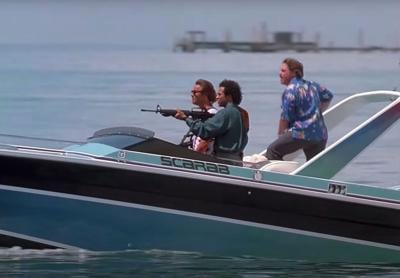
It’s 1985, and Don Johnson is Sonny Crockett in Miami Vice. Episodes open with glitzy, superfast boats cutting Vs across the water of Miami’s Biscayne Bay. And all you can think is: “Rad!”
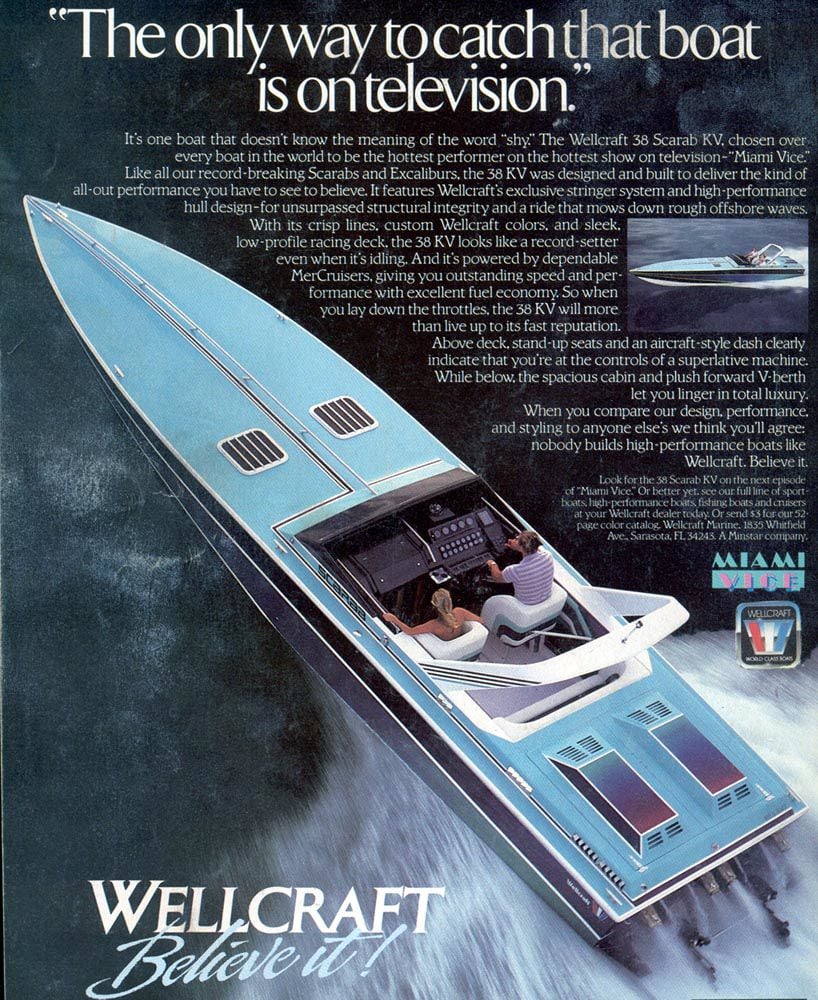
Despite the woeful economy for much of the decade, innovations and popular media caused boaters to feel a sudden… ahem… “need for speed.” Wellcraft, the maker of Sonny Crocket’s 38 Scarab KV, reported a 21 percent sales increase on that boat in a single year.
Technology was making leaps and bounds. In 1982 Mercury introduced the first 300HP V6 outboard, but it floundered, as the boats of the day weren’t designed to handle that much power. Suzuki pioneered the automatic oil injection in its two-stroke motors, and Volvo Penta in 1983 introduced twin counter-rotating props to offset the prop torque that had caused boats to turn off a straight line when running. Not to be outdone, Evinrude and Johnson introduced the first V8 outboard motors. Technology advances in the late 1980s included the introduction of electronic fuel injection by Mercury.
Don Johnson, in his quest for speed, created a dilemma for Wellcraft with his design requirements for his racing Scarab: he wanted to use twin Lamborghini V12 power plants. The successful endeavor was known as the 43' SCARAB Excel Don Johnson Signature Series.
As boats got faster, boaters (and the water patrol) felt the need to channel their speed into a controlled environment. Emergency services personnel and a few visionaries organized an official event that became the Lake of the Ozarks Shootout. Originally hosted at (the now long-gone) Shooters 21 restaurant, the first Lake Rescue Shootout was held in 1989. The fastest racer that year? Randy Scism, with a 101 mph run.
Whether for family fun or to quench their need for speed, more and more Americans were becoming boaters: by 1985, the total number of recreational boats in use had reached 13 million.
Banning Boating?!
At Lake of the Ozarks, the 1980s was the decade when the national economy and even the boating industry were experiencing a downturn. The gasoline crisis of the 1970s pushed fuel over a dollar per gallon (expensive in those days!), and programs were floated by the Department of Energy that would curtail gasoline usage. Among the Department of Energy's ideas: a proposed ban on weekend boating! That resulted in a strong write-in campaign fostered by the newly formed National Marine Manufacturers Association, which tied the hopes for a quick recovery from the recession to the economic benefits of having 700,000 good jobs held by those in the recreational boating industry.
Economic Trouble
Meanwhile, Midwestern farm families were experiencing total economic ruin at an alarming rate. Nationwide unemployment hit 8 percent and from 1981 to 1982 business bankruptcies increased 50 percent.
Missouri became a leading state in the national protests over farm policy that cost the American farmer most of the gains made in previous decades. And amidst this troubled waters, Lake of the Ozarks held its own in some ways and struggled in others.
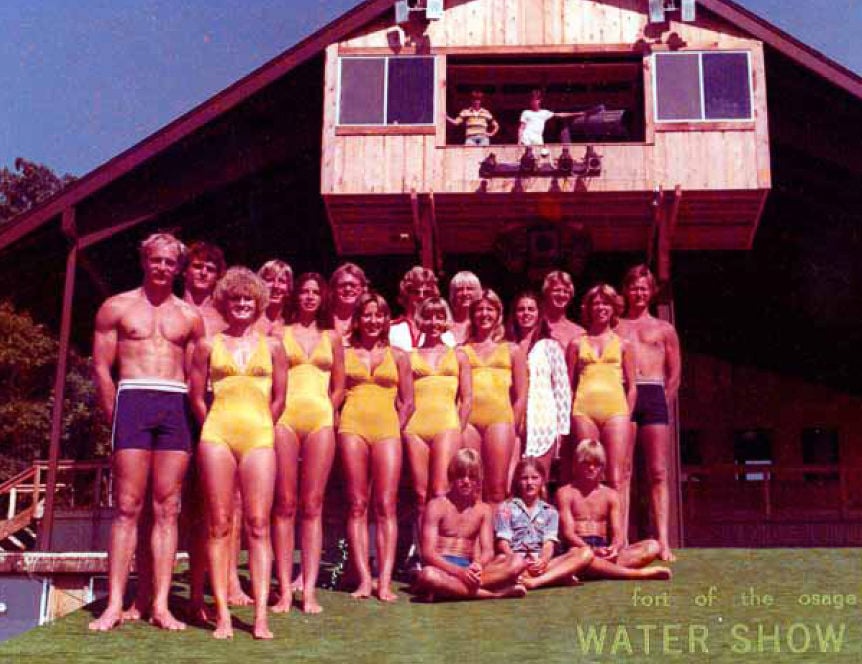
In the early 1980s, the Lake’s economy continued to grow with the development of new entertainment and lodging venues. A second ski show, the Fort Osage Water Show, performed for huge sell-out crowds and fed the desire for vacationers to have their own ski boats so they could learn and perform moves they were seeing in the shows.
Not everything was smooth sailing for the boating industry in the economically turbulent 1980s, but at Lake of the Ozarks, three incredibly important things happened that set the stage for the Lake to become the nation's top recreational boating destination in the decades to come.
Three Things In The 1980s That Changed The Lake Forever
#1 - A Stable Lake Level
Today we think of the lake level as stable and reliable, within an average five-foot rise and fall as the Lake level is adjusted for seasonal rains as well as Truman discharges. Ameren closely follows a Guide Curve, set by the Federal Energy Regulatory Commission (FERC).
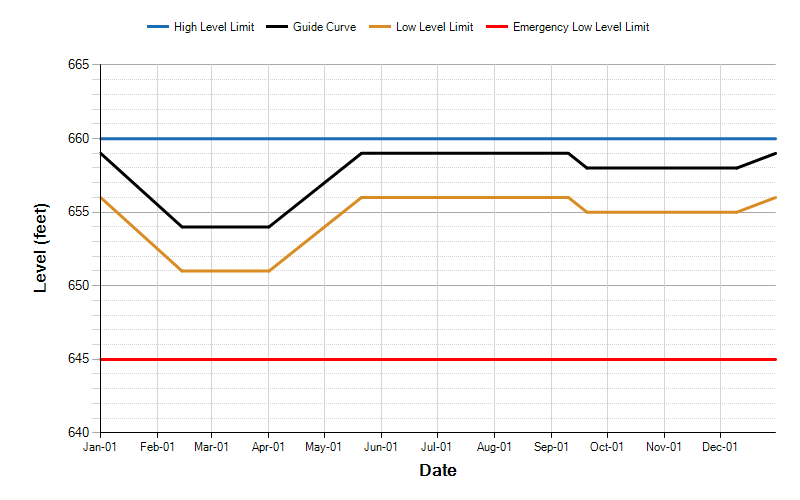
As the fortunes of companies and individuals relying upon the recreational boating market rose and fell drastically, so did the Lake level. In 1981, the tension between local owner interests, Union Electric operating Bagnell Dam, and the Corp of Engineers operating Truman Dam, reached a critical point. The Federal Energy Regulatory Commission (FERC), Union Electric, Truman-Ozark Lakes Association, Army Corps of Engineers, the Missouri Conservation Commission, the Environmental Protection Agency, the Federal Power Administration, the Osage River Flood Control Association, and elected officials met in an effort to stabilize policy and standards regarding lake levels. Local owners believed that waterfront tourism was endangered by low water levels.
FERC granted an operating license to Union Electric (now AmerenUE) allowing the private company to run the whole Lake as an electric power generating station. That license limited the drawdown at that time to between 10 and 15 feet total rise and drop. A newspaper article in 1981 explained this was much more livable than the previous allowable limit of 30 feet of fluctuation under the old license.
#2 - The Waterfront Restaurant Boom
The first floating restaurant on the lake began in the 1970s. The ability to pull a boat into a slip and order a meal fueled what has become a dizzying array of waterfront bars and restaurants. The conflict resolution in the early 1980s helped build the waterfront industry.
Today we talk about the 100+ days of summer when the summer people flock to the Lake and boats are so thick it’s hard to navigate a straight line from home to our favorite lakeside watering hole.
#3 - The Shootout
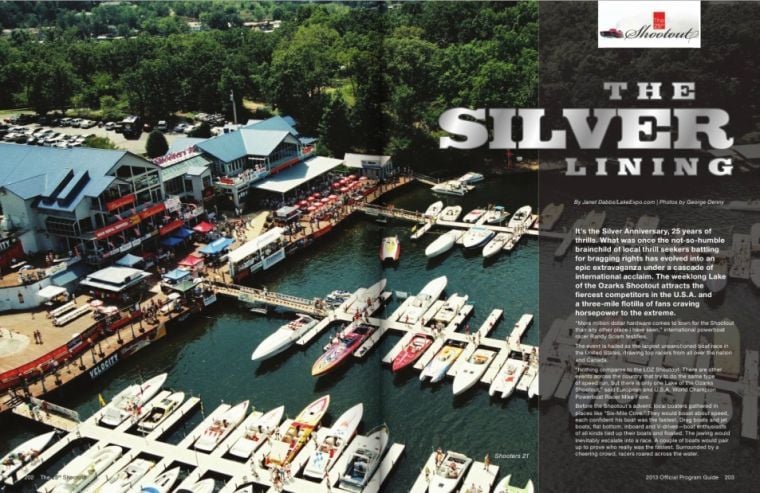
The Shootout was born at Shooters 21 in 1989.
As the economy lurched along in the 80s, enough people prospered that there was still a desire for bigger and faster boats at the Lake. The final years of the decade saw the formation of an event that would come to dominate speed boat racing and draw worldwide attention to the Lake.
From impromptu races, like street drag races in the early years of muscle cars, and the attention of the water patrol clamping down on high speed competition between 100 mph boats during a normal weekend boating day, emergency services personnel and a few visionaries organized an official event that became the Shootout at the Lake of the Ozarks.
Beginning as an organized race event at the old Shooters 21 Restaurant and Marina, Mile Marker 21, the focus of the race has always been for bragging rights. The money raised by the event went to help local charities and purchase equipment for emergency services. As the technology improved and boat design and power plants evolved, speeds rapidly increased. The first years saw 100 miles per hour boats running a two-way course with the speeds averaged.

As the decade closed, with pleasure boating having suffered one of its worst decades ever and the fortunes of many major marine related companies in free-fall, the vision of those that organized the first Shootout at the lake would blossom into the largest unsanctioned boat race in the nation and draw competitors from around the globe. With international participation, the fortunes of those local entrepreneurs who participated and promoted the event would grow. Recreational areas were littered across the American countryside, but the Lake of the Ozarks grew into the number-one recreational lake in the nation. The Shootout propelled that growth.
The last years of the decade saw the final season of Miami Vice, but not the end of Don Johnson in a fast boat. His time in the Scarab led him to form Team USA with other Hollywood stars and began an off-shore racing career that culminated in a world championship. Now those specialized ocean racers are trucked into the middle of Missouri for a race that has not only raised thousands for charities annually, but also has been the springboard for one local company to have completely revolutionized an entire segment of the boating industry beginning in the 1990s.
This article is republished in part from Shore Magazine's new 2023 issue. Pick up Shore Magazine at the winter & spring LOMDA boat shows, or order your copy online -- shipped to your door -- at ShoreBoatingMag.com.


