


Well it’s that time of year again. I really do like fall weather. I know it ends up being winter and in the Midwest that can mean no boating. But, sometimes that’s okay. Having a break can reinvigorate the boating season.
I actually just got back from an event in Orlando and couldn’t be happier to step off the airplane into cooler weather. It was 95 degrees and 95 percent humidity in Florida. I like warm weather, but too hot is sometimes just too hot. And I was at an aviation event (not on the water) so that probably made a difference too.
Anyway, just because it's getting cold doesn’t always mean we have to stop boating. Many people leave their boats in the water all year, as long as icing-in is not an issue. Even then you can take precautions, like using a bubbler, to keep the boat from being damaged by the ice. And while inboard boats need to be winterized, outboards can handle winter just fine. No one knows this better than winter anglers, some of whom say snowy days are the best for fishing. Their boats don't mind the winter, and with the increasing popularity of outboards for recreational boaters—center-consoles in particular—more people have the option to enjoy boating well into the cooler months.

LAKE OF THE OZARKS, Mo. – It's a clear, warm, sunny day. The lake is like glass, the wind is…
Crisp weather can be very good for boating, and if you fish, I don’t think the fish can taste better than out of a really cold lake. But while cool-weather boating can be nice, the cold temps also pose the biggest risk. Wet hands can stick to metal. Cold water drowns. Ok, so even warm water has its hazards, but cold water just speeds things up.
One year at the Seattle boat show I listened to a speaker discuss cold water survival and I think he used the “50-50-50” line. If memory is correct that meant in 50-degree water, a 50-year-old would last 50 minutes. After a bit of research, I discovered that was just an old sailor's myth.
In reality, it looks like 50 degree water can be an almost an instant end. Any temp less than 70 degrees is dangerous. So really, probably the worst thing about cold weather boating is the danger if you fall in. If it's really cold and you are bundled up, you don’t have as much flexibility. If you have gloves on, you can’t get the same grip. If there is ice on the deck... you get the picture.
And the water temperature falls quickly as the autumn sets in and the nights approach freezing. In late-October, the Lake of the Ozarks temperature is already in the mid-60s.
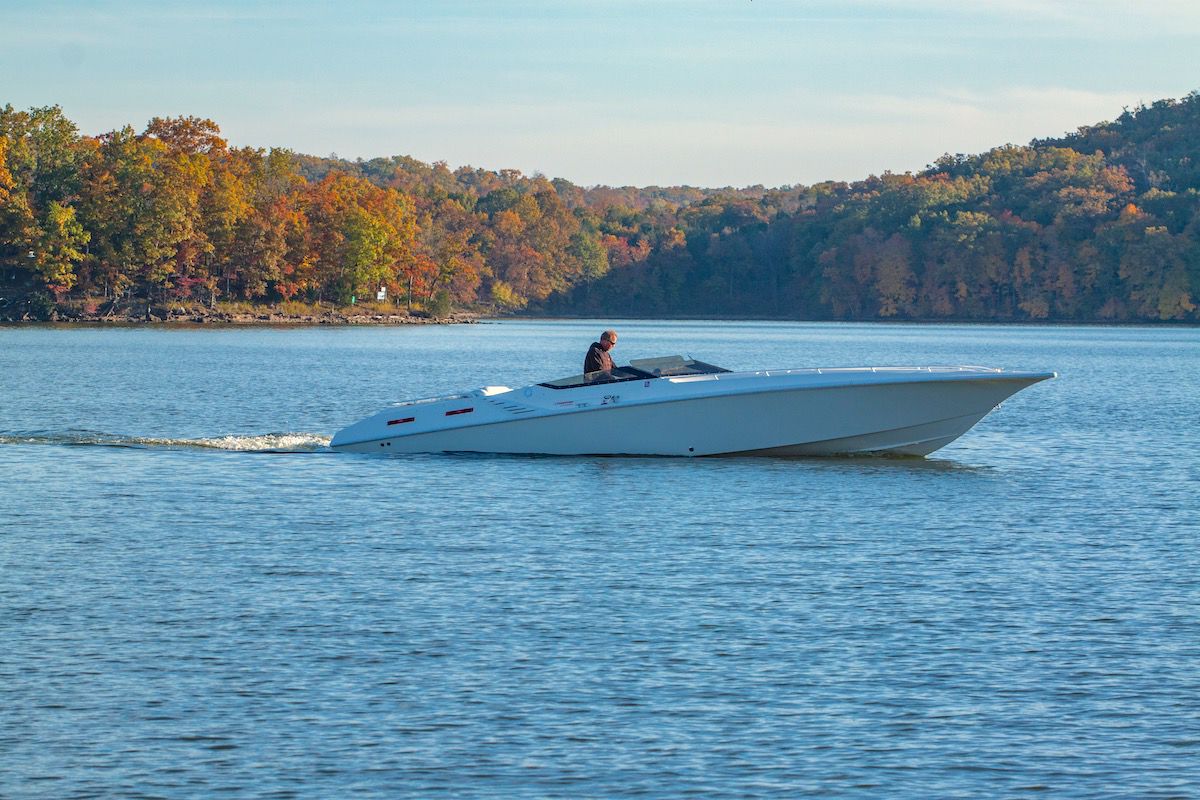
Before you shove off, here are a few more things to be aware of...
“Cold Shock”
Cold shock results in a lack of breathing control. When a person hits cold water they have an involuntary “gasping” for air reaction. With the gasp, often times a person fills their lungs with water, hence the danger. Gasping underwater = bad.
With cold water, muscle movement or control disappears. If you are bundled up, you already have reduced movement, and clothing can absorb water, making it difficult to stay afloat.
That is where a flotation device comes in handy. But if it's not on you before you hit the water, you probably won’t be able to get a life preserver on. And the wrong flotation device won't hold your head out of the waves, especially if you have a lot of heavy clothing on. Life jackets can help, but only if they fit good and hold your head out of the water and waves. Oh, and hypothermia will set in after about 30 minutes (though more body mass can delay the onset of hypothermia for a little longer).
Readying Your Boat For The Cold
Cold water can also play havoc on your cooling systems if you do not have the engine protected with antifreeze. Additionally other water systems in the boat can freeze. So even if the boat is in the water, you need to winterize the systems.
It’s also important to keep tabs on check valves and thru hulls, which can be frozen. This usually isn’t a problem, unless there is water in the lines and they freeze and become damaged... then you need a through hull valve to work!
So seriously, cold water boating can be refreshing, fun and exciting. Don’t be scared to go out when the water is cold. Just make sure you take a few precautions before you head out.
If you want to read more interesting information check out this site: www.coldwatersafety.org


![[VIDEO]: Ferris Wheel Now Standing Tall At The Oasis](https://bloximages.chicago2.vip.townnews.com/lakeexpo.com/content/tncms/assets/v3/editorial/6/45/645bc455-286b-4556-b486-8f36b333dff4/6ab5949ebf5bf.preview.png?crop=1263%2C1263%2C0%2C60)
![Dinner With THIS View?! Inside 1932 Reserve At Lake Of The Ozarks [FLYTHROUGH]](https://bloximages.chicago2.vip.townnews.com/lakeexpo.com/content/tncms/assets/v3/editorial/b/40/b4047402-5958-4f34-92e1-36da52740fea/6aada39fabf69.preview.jpg?crop=1119%2C1119%2C240%2C0)


